Disclaimer: Information found on CryptoreNews is those of writers quoted. It does not represent the opinions of CryptoreNews on whether to sell, buy or hold any investments. You are advised to conduct your own research before making any investment decisions. Use provided information at your own risk.
CryptoreNews covers fintech, blockchain and Bitcoin bringing you the latest crypto news and analyses on the future of money.


Financial powerhouses BlackRock and Fidelity are engaged in tokenized funds both directly and indirectly, while Citi, the largest global bank, has joined a notable initiative aimed at creating a worldwide tokenization ecosystem.
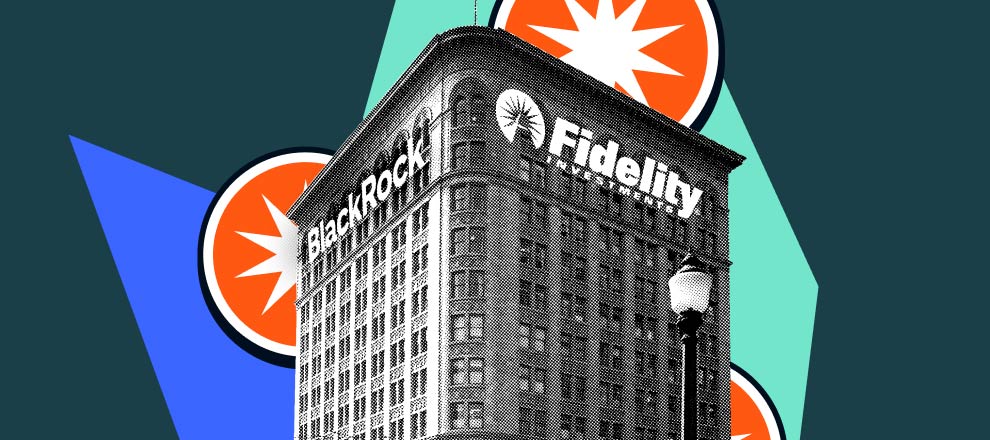
Leading financial institutions are increasingly participating in tokenized assets. BlackRock, a financial holding entity, has submitted an application to the Securities and Exchange Commission (SEC) to register a new investment vehicle — the BlackRock USD Institutional Digital Liquidity Fund. Securitize, which focuses on the tokenization of real-world assets (RWA), is the launch partner for BlackRock.
Records indicate that the fund was established in 2023 under the jurisdiction of the British Virgin Islands but has remained inactive until now. As per Etherscan, the fund will be tokenized on the Ethereum blockchain. Its tokens adhere to the ERC-20 standard and carry the BUIDL ticker, with Securitize managing their sale. The minimum investment requirement is set at $100,000, while the documents do not outline a maximum fund size.
Fidelity, another financial giant, is also indirectly participating in asset tokenization activities. For example, Signum, a global banking group focused on digital assets, has announced plans to tokenize Matter Labs’ $50 million equity investment in the Fidelity Institutional Liquidity Fund. The tokens will be issued on the zkSync blockchain and will serve as part of Proof-of-Reserves to confirm the stability of Matter Labs’ treasury reserves.
Related Posts
This marks the initial phase of Matter Labs’ long-term strategy to transition its treasury reserves to a blockchain network overseen by trusted institutional custodians. Sygnum, in turn, aims to enhance the connection between the crypto market and traditional finance (TradFi), establishing a foundation for the development of a tokenized financial ecosystem.
Additionally, Citibank and the Brazilian Development Bank (BNDES), one of the largest banks of its kind globally, have joined the global ecosystem of enterprise-level blockchain technologies established by the Hyperledger Foundation. This association now comprises over 130 significant institutional entities.
The organization is working on Hyperledger Besu, a Java-based EVM-compatible software that is among the most widely used solutions in the global tokenization ecosystem. The Hyperledger Foundation has announced the formation of a Besu-based financial services working group led by The Depository Trust and Clearing Corporation (DTCC). Other participants in the group include Accenture, Banco Central do Brasil, Consensys, Citi, Japan Securities Clearing Corporation (JSCC), Kaleido, LACNET, Mastercard, Santander, Visa, Web3 Labs, and various other major institutional entities. The organization’s goal is to develop and implement Ethereum-based open-source solutions for corporate applications, including asset tokenization.
Nearly all experts surveyed by CP Media at the end of last year identified the asset tokenization sector as one of the key trends in the Web3 industry for 2024.
Сообщение Major Institutional Companies Participate in Asset Tokenization появились сначала на CoinsPaid Media.
