Disclaimer: Information found on CryptoreNews is those of writers quoted. It does not represent the opinions of CryptoreNews on whether to sell, buy or hold any investments. You are advised to conduct your own research before making any investment decisions. Use provided information at your own risk.
CryptoreNews covers fintech, blockchain and Bitcoin bringing you the latest crypto news and analyses on the future of money.


Russia may be on the verge of legalizing Bitcoin (BTC) and altcoin mining following the approval of a bill by a State Duma committee, which is set to be voted on later this month.
TASS reported that the State Duma’s Committee on Financial Markets has “recommended that the lower house of parliament” support a new bill “on regulating mining in Russia” when it meets for business on July 23.
Russia Crypto Mining Bill: Progress at Long Last?
The bill originates from a “group of lawmakers from various factions.” Notably, one of its signatories is Anatoly Aksakov, the chairman of the State Duma Committee on Financial Markets.
Aksakov is effectively the principal architect of Russia’s legislation concerning cryptocurrencies. Although the country has not made significant strides in crypto regulation, it is improbable that Aksakov would endorse a bill that lacks the potential for success.
The bill seems to be the result of several months of vigorous lobbying by the Russian industrial crypto mining sector.
This sector has been urging Moscow to legalize industrial mining for several years. While this would require miners to start paying taxes on their earnings, it would also attract potential investors.
At present, miners operate in a legal “grey zone,” where mining is neither explicitly legal nor illegal. Currently, power companies can only disconnect miners suspected of stealing electricity from their grids.
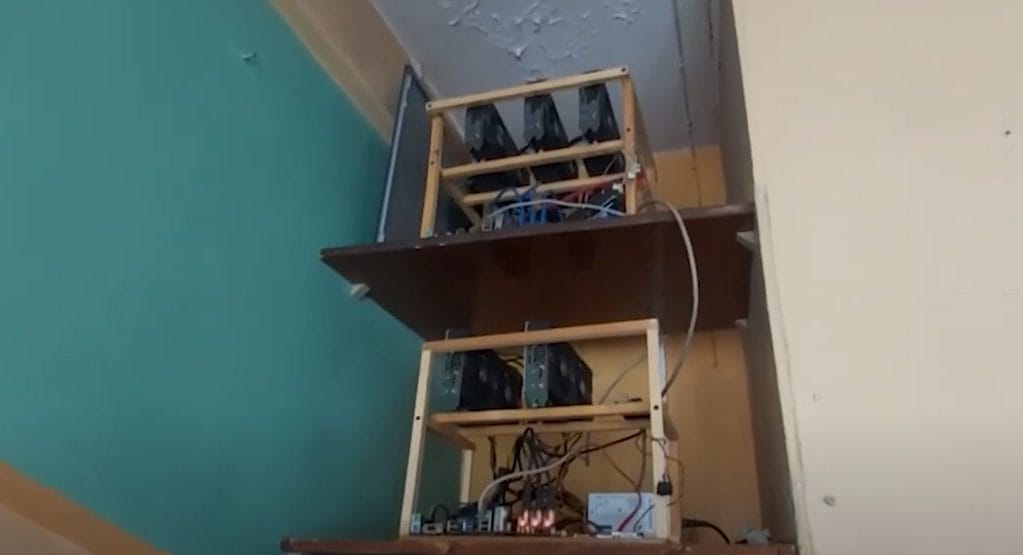 A suspected illegal crypto mining “farm” in Russia. (Source : AktisTV/YouTube)
The initial version of the private member’s bill was circulated in November 2022. However, the latest iteration of the bill suggests granting regulatory authority to both the Russian government and the Central Bank.
It also proposes empowering the Ministry of Digital Development to “monitor” how miners “implement” new regulations.
The bill additionally suggests allowing Russian companies and “individual entrepreneurs” the “right to mine” cryptocurrencies if they register with a central “register.”
Russian imports from China began to recover in June despite challenges with foreign trade payments, triggered by the US’s threat of secondary sanctions https://t.co/mkQXr0z3ej
— Bloomberg (@business) July 12, 2024
However, the bill could bring positive developments for home-based and smaller-scale miners. It stipulates that individuals “who do not exceed established energy consumption limits will have the right to mine digital currency without being included in the register.”
Previous draft mining bills suggested an outright prohibition on all forms of private mining. They also proposed allowing power providers to “target” home-based miners.
The bill further suggests “introducing a set of measures to control the circulation of [cryptoassets] to prevent their use for illegal purposes.”
Related Posts
Miners Would Have to Abide by AML Protocols Under Draft Law
If the bill is enacted, miners will reportedly be required to “report” the amount of crypto they have mined and disclose the “addresses where it is stored” to the authorities.
The nation’s anti-money laundering agency Rosfinmonitoring will also “create a list of suspicious addresses associated with money laundering and terrorist financing.”
The bill appears to address many concerns raised by the Ministry of Energy and power companies.
It proposes granting the government the authority to “impose a ban on mining in certain areas” of the country.
Iris Energy’s shares fell the most since January after Culper Research questioned the Bitcoin mining company’s ability to serve the high-performance computers that enable generative AI. https://t.co/P7IHsEdhDw
— Bloomberg Markets (@markets) July 11, 2024
The Ministry of Finance has also reportedly formulated its own “response.” Interfax reported that the ministry seeks to restrict crypto exchange access to a “small group of [professional] investors.”
Ministry Wants More Crypto Regulation
The ministry also reportedly aims to expedite crypto laws that would facilitate global business for Russian firms.
Currently, many companies are hindered by Western sanctions that restrict trading with Russian businesses.
Moscow views crypto as a potential workaround, following the examples set by countries like Iran and Venezuela.
The US designated Venezuela’s Tren de Aragua gang as a transnational criminal organization that is expanding into the US. https://t.co/KUFmB9Csly
— Bloomberg (@business) July 11, 2024
The ministry seeks to “allow” all “participants in foreign economic activity” to conduct transactions “in digital currencies.”
Industry officials estimate that 90% or more of Russian crypto miners focus primarily on BTC, while a smaller portion opts to mine altcoins such as Litecoin (LTC).
News regarding the bill’s advancement will likely be welcomed by many miners. In March, Aksakov suggested that crypto regulation might be postponed until 2025.
The post Russia Crypto Mining Bill Finally Set for Parliament appeared first on Cryptonews.
