Disclaimer: Information found on CryptoreNews is those of writers quoted. It does not represent the opinions of CryptoreNews on whether to sell, buy or hold any investments. You are advised to conduct your own research before making any investment decisions. Use provided information at your own risk.
CryptoreNews covers fintech, blockchain and Bitcoin bringing you the latest crypto news and analyses on the future of money.


When a family was defrauded of $25,000 at a Bitcoin ATM in Texas, law enforcement took decisive action.
Investigators utilized power tools to access the machine and retrieve the cash inside, resulting in a total seizure of $31,900.
While assisting a victim of fraud is commendable, this situation resembles robbing Peter to pay Paul. Such actions do not bring the scammer to justice; instead, they adversely affect the small business owner who operates the machine.
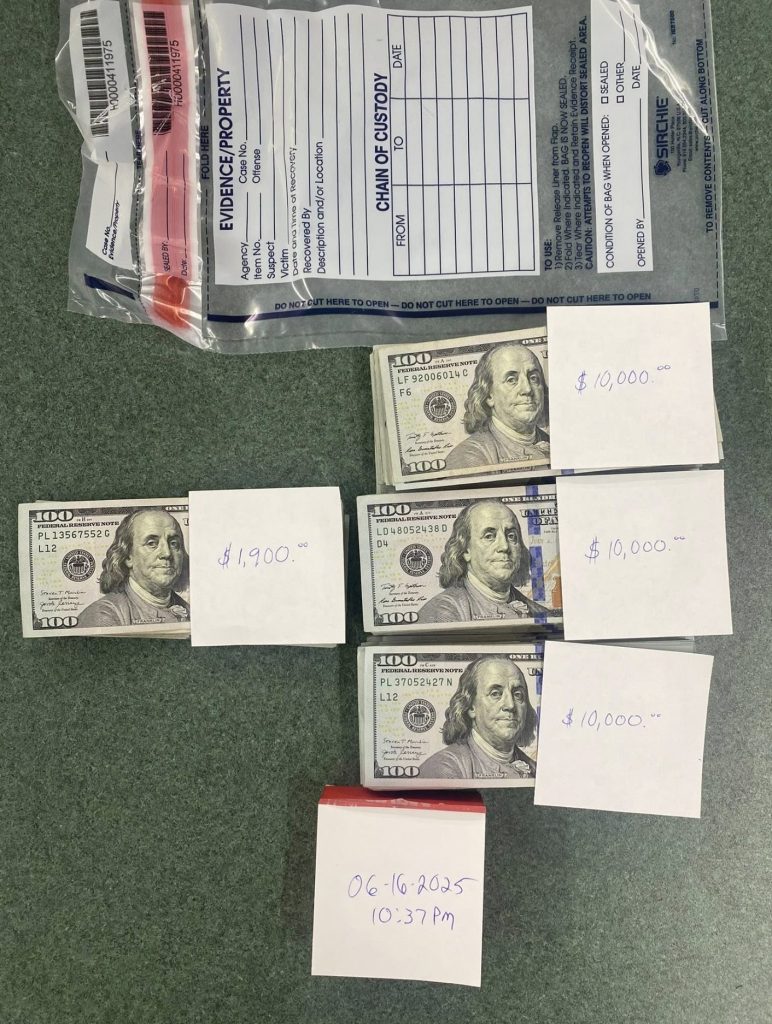 Image: Jasper County Sheriff’s Office
Nevertheless, incidents like this vividly highlight the ongoing crackdown on Bitcoin ATMs occurring throughout the United States.
Spokane in Washington State has completely prohibited them, while other states and municipalities are proposing regulations aimed at making it more difficult for fraudsters to exploit unsuspecting consumers.
In Illinois, any cash-to-crypto transactions conducted through these ATMs will require documentation of the address to which funds have been sent. This could theoretically assist detectives in tracing scammers later, although many experienced criminals may employ obfuscation techniques to hide their activities.
A potentially more reasonable approach comes from Vermont, which has enacted legislation imposing a daily transaction limit of $1,000 on Bitcoin ATMs. This measure could significantly reduce the financial losses suffered by victims.
Meanwhile, states like Nebraska have begun licensing ATM operators. This requirement entails submitting quarterly reports containing transaction data, and capping fees at 18% to protect vulnerable consumers from being exploited.
A Growing Problem
The Federal Trade Commission has expressed its stance on Bitcoin ATMs, labeling them as a “payment portal for scammers.”
Official statistics indicate that fraud losses associated with these machines reached $12 million in 2020, skyrocketing nearly tenfold to $114 million by 2023. Preliminary data suggested losses exceeded $66 million in the first half of 2024 alone, signaling yet another record-setting year.
FTC research also provides insights into how victims are targeted, the amounts they lose, and which demographics are most at risk. Scammers frequently impersonate government officials or businesses, or claim to be from tech support. The median loss is reported to be an “exceptionally high” $10,000, with the agency noting:
Related Posts
“In the first half of the year, individuals aged 60 and older were more than three times as likely as younger adults to report a loss using a BTM. In fact, over two-thirds of the total dollars reported lost to fraud involving these machines were lost by older adults.”
In other words, there are more victims over 60 than in all other age groups combined.
 Image: Federal Trade Commission
U.S. Senate lawmakers are also working to enhance the stricter regulations being implemented at state and local levels, led by Illinois Senator Dick Durbin.
He has introduced the Crypto ATM Fraud Prevention Act, which aims to establish protective measures for the public while minimizing inconvenience for compliant users.
New users would be restricted from spending more than $2,000 daily at these machines, with a maximum of $10,000 over a 14-day period. Operators would also be required to engage in a detailed discussion whenever a new user attempts a transaction exceeding $500. Importantly, users would be eligible for refunds if a police report is filed within 30 days.
This legislation places the responsibility on ATM operators to monitor activities in their establishments and intervene if anything appears suspicious.
The deadline is approaching for the Crypto ATM Fraud Prevention Act to be enacted. Durbin has announced that he will not seek re-election during the midterms in 2026, with the 80-year-old Democrat stepping down after many years of service.
Durbin also proposed an amendment during the progression of the GENIUS Act through the Senate, cautioning:
“Enough is enough. I urge my colleagues on both sides of the aisle: listen to the people you represent, particularly the senior citizens who are losing their life savings to these scams, and realize that with 30,000 crypto ATMs across the country, more and more of this will occur.”
It remains uncertain whether any of the initiatives aimed at reducing crypto ATM losses will be effective. As Bitcoin’s value increases and approaches all-time highs, a larger number of opportunistic fraudsters may seize the chance to exploit the situation.
The post Why the U.S. is Clamping Down on Bitcoin ATMs appeared first on Cryptonews.
