Disclaimer: Information found on CryptoreNews is those of writers quoted. It does not represent the opinions of CryptoreNews on whether to sell, buy or hold any investments. You are advised to conduct your own research before making any investment decisions. Use provided information at your own risk.
CryptoreNews covers fintech, blockchain and Bitcoin bringing you the latest crypto news and analyses on the future of money.


Bolivia’s government has authorized the state-owned oil company Yacimientos Petrolíferos Fiscales Bolivianos (YPFB) to utilize cryptocurrency for the acquisition of oil and gasoline products.
The Bolivian news source Urgente reported that President Luis Arce’s cabinet has also permitted YPFB to procure US dollars from local financial institutions, including the state-owned Banco Unión.
Bolivia: Crypto Transfer
The Cabinet indicated that YPFB is permitted to use either USD or cryptocurrency to engage in fuel import transactions with international suppliers.
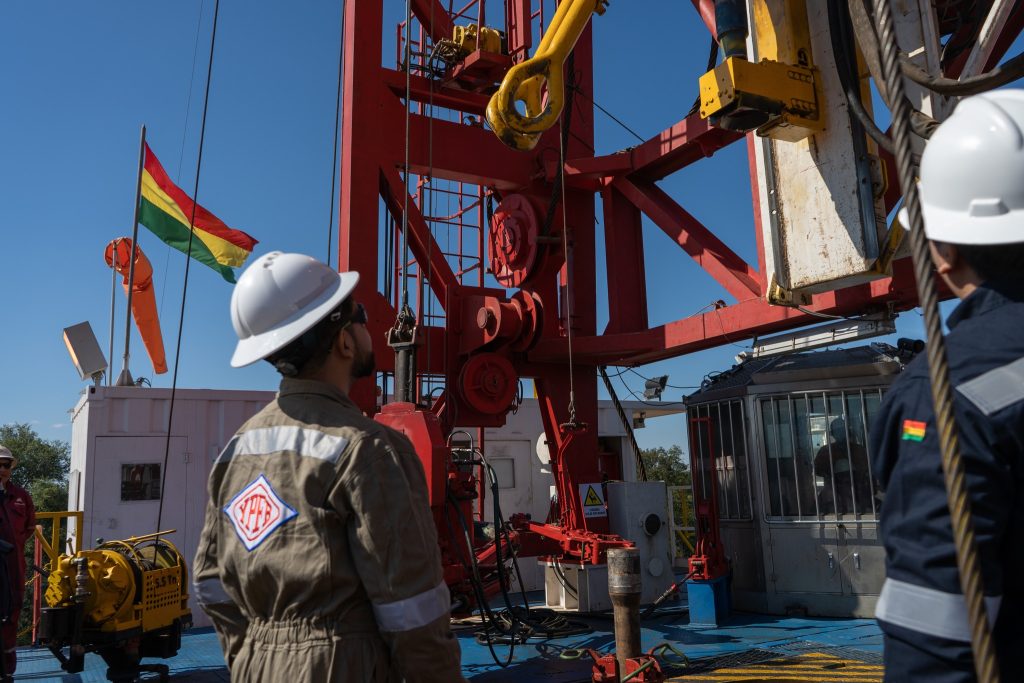 YPFB engineers at a facility in Bolivia. (Source: YPFB/Facebook)
The government issued a specific decree allowing the company to utilize cryptocurrency and USD specifically for the purchase of “crude oil and diesel.”
The company may also employ cryptocurrency to acquire related products necessary for refining fuel.
Arce’s government, which is facing a crisis, has been in a standoff with former President Evo Morales since last year.
Conflicts between factions loyal to Arce and those supporting Morales have resulted in armed takeovers of military posts and road blockades.
Arce’s administration has also encountered challenges within the Bolivian parliament, the Plurinational Legislative Assembly.
La Paz has stated that this has “hindered the access to foreign currency” by “blocking the approval of loans totaling over $1.667 billion.”
This situation has left YPFB short of the foreign currency required for fuel imports, consequently leading to a reduction in the availability of both diesel and gasoline.
Reports from media outlets in Bolivia indicate that “long lines of vehicles” have formed at gas stations throughout the Latin American nation.
 A YPFB vehicle at a facility in Bolivia. (Source: YPFB/Facebook)
La Paz: ‘Budgetary Changes’ Required
Related Posts
The same media outlet noted that the country “requires at least $60 million per week to import fuel, both diesel and gasoline.”
The decree directs YPFB to “make budgetary adjustments to enable it to cover […] financial costs.”
The Cabinet has also instructed the Ministry of Hydrocarbons and Energy and the National Hydrocarbons Agency to “determine the subsidies” for fuel purchases “in accordance with applicable regulations.”
The Arce administration has previously allocated a budget of approximately $2.2 billion for fuel imports.
Residents of the Codavisa neighborhood in Bolivia’s capital of La Paz attempt to salvage their belongings and pets from their wrecked properties after a landslide pic.twitter.com/VVD1iB4YKM
— Reuters (@Reuters) March 12, 2025
The Rise of Crypto-powered Oil Funds
The number of countries utilizing cryptocurrency for the buying and selling of oil and gas is believed to be increasing.
Experts suggest that nations facing sanctions are now turning to cryptocurrency as a payment method.
The Iranian government approved the use of cryptocurrency for imports in 2022, with some in Moscow referring to Tehran as a “pioneer” in crypto-enabled trade.
Venezuela has also employed cryptocurrency in fossil fuel trade agreements, which reportedly led to the Nicolás Maduro-led government accumulating a significant “stash” of Bitcoin (BTC) and Ethereum (ETH) coins.
Bolivia’s economy is “on the brink of collapse” as companies go bankrupt amid road blockades, fuel shortages, and a lack of foreign currency, according to a business leader in the country’s largest city https://t.co/PdQsM7hxWC
— Bloomberg Middle East (@middleeast) October 25, 2024
Last year, Maduro urged Venezuela to “return to the crypto path,” following a crackdown on crypto-related corruption.
Many believe that Russian oil companies have extensively utilized cryptocurrency. Moscow has also openly discussed using cryptocurrency to circumvent US, EU, and UK sanctions for both imports and exports.
Last year, Bolivian lawmaker Mariela Baldivieso stated that farmers in the country might soon begin using cryptocurrency as a remittance tool.
She also asserted that the nation was on track to rank among the top five countries globally for cryptocurrency adoption.
The post Bolivia Grants State-run Company Permission to Use Crypto to Purchase Oil and Gas appeared first on Cryptonews.
