Disclaimer: Information found on CryptoreNews is those of writers quoted. It does not represent the opinions of CryptoreNews on whether to sell, buy or hold any investments. You are advised to conduct your own research before making any investment decisions. Use provided information at your own risk.
CryptoreNews covers fintech, blockchain and Bitcoin bringing you the latest crypto news and analyses on the future of money.

A Republican Senator Has Indicated Opposition to the Crypto Clarity Act Unless Trump Is Prohibited from Endorsing Cryptocurrency

Republican Senator Thom Tillis is making his support for the Senate Clarity Act contingent upon the inclusion of ethics provisions that prevent White House officials from promoting or issuing digital assets; without his backing, the numbers do not add up.
Tillis is a member of the Senate Banking Committee, which plays a crucial role in advancing the bill, and his withdrawal would indicate a wider Republican division at a critical time for cryptocurrency legislation.
“The bill must contain ethics language before it leaves the Senate, or I will transition from being one of the negotiators to voting against it,” Tillis stated.
This is not a negotiating tactic from a senator with a lengthy timeline; Tillis is set to retire early next year, which eliminates any political motivation to soften his stance.
The House has already approved its version, the CLARITY Act, in July. The Senate now represents the bottleneck, and this ethics issue is the most significant aspect of that blockage.
Key Takeaways
- Tillis’s condition: Ethics provisions that restrict White House officials from sponsoring, endorsing, or issuing digital assets must be included for him to vote in favor.
- Democratic position: Senator Ruben Gallego asserts there is “no final bill” without bipartisan consensus on ethics language; Senator Adam Schiff indicates that discussions are becoming more focused.
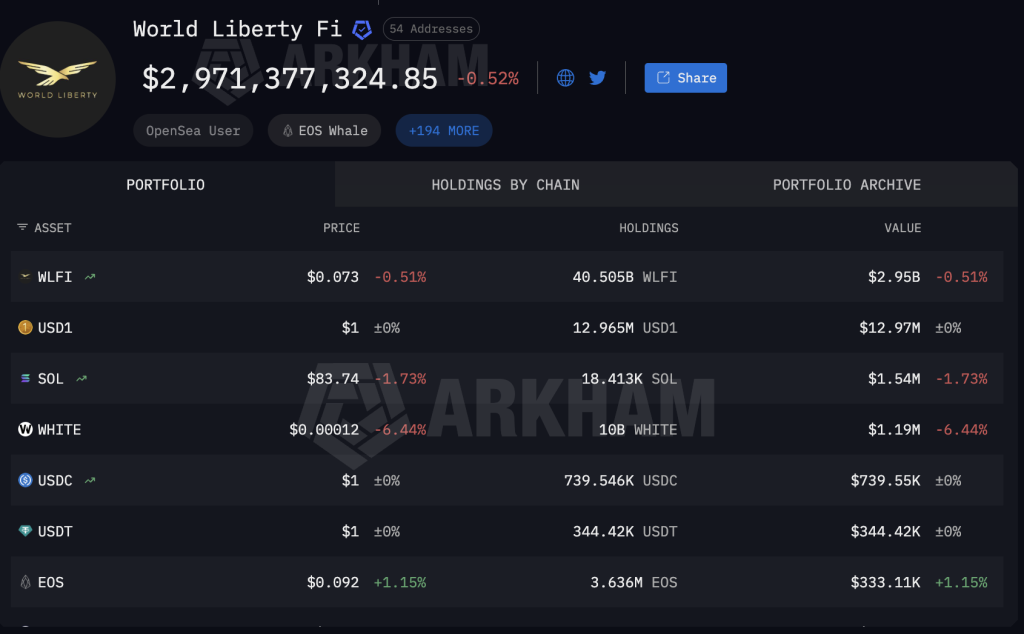
- Trump family exposure: The Trump family’s cryptocurrency endeavors exceed $1 billion in value, including World Liberty Financial and the USD1 stablecoin, which has driven the Democratic push for restrictions.
- Procedural complication: The Senate Banking Committee does not have jurisdiction over ethics provisions, meaning the language must be incorporated outside the committee markup process prior to floor consideration.
- Bill structure: The legislation allocates crypto oversight between the CFTC and SEC; disputes over stablecoin yield payments have also hindered progress.
Discover: The best pre-launch token sales
What Tillis Actually Wants in the Clarity Act Bill
The ethics provision that Tillis is insisting upon would limit how White House officials interact with cryptocurrency, particularly regarding promotion, endorsement, and issuance.
Democratic Senator Adam Schiff has characterized the Democratic request as “a ban on sponsoring, endorsing, or issuing digital assets that applies to all federal employees,” including the president.
This language directly addresses the Trump family’s growing crypto portfolio. World Liberty Financial, a project linked to the Trump family, has launched the USD1 stablecoin and is seeking a federal banking license. The family’s total crypto ventures are valued at over $1 billion, a figure that has made Democratic support for any crypto legislation dependent on conflict-of-interest safeguards.
Related Posts
 Source: Arkham
Tillis’s stance is noteworthy because he is not a Democrat leveraging the bill – he is a senior Republican on the Banking Committee who has been actively involved in the legislation.
His transition from negotiator to potential no-vote represents a significant shift in the bill’s direction, rather than mere political posturing.
Patrick Witt, the White House’s chief crypto policy adviser, is reportedly working on the ethics language alongside GOP Senators Cynthia Lummis and Bernie Moreno, indicating that the administration is engaged rather than obstructing.
Schiff remarked that discussions are progressing: “We’re making headway. We have been conversing for a long time without much advancement, and now that other aspects of the bill are beginning to align, we’re narrowing our differences.” However, progress does not equate to resolution.
Can the Crypto Bill Pass Without Tillis?
Senate Republican leadership cannot easily accommodate Tillis’s withdrawal. The bill requires bipartisan support to secure 60 votes for cloture, and Democratic Senator Ruben Gallego has firmly stated the Democratic bloc’s position: “no final bill, there is no final movement, unless there is a bipartisan agreement regarding the ethics provision.”
 The likelihood of the Clarity Act being enacted into law in 2026 is currently estimated at 46% / Source: Polymarket
If Tillis maintains his stance and Democrats remain united, the bill will stall regardless of leadership’s desires. This delay has immediate downstream effects, as the CFTC-SEC regulatory division established by the bill remains unresolved, leaving exchanges and token issuers without the jurisdictional clarity necessary to deploy capital effectively.
The stablecoin yield payment dispute, combined with the ethics issue, presents two distinct obstacles to the bill’s progress. This pattern of single-point resistance reshaping US crypto policy timelines is not unprecedented – regulatory friction has consistently delayed crypto product approvals beyond anticipated timelines.
If leadership agrees to ethics language that satisfies both Tillis and the Democratic bloc, the bill can proceed to markup and then to floor consideration.
Discover: The best crypto to diversify your portfolio with
The post A Republican Senator Just Threatened to Kill the Crypto Clarity Act Unless Trump Is Banned From Promoting Crypto appeared first on Cryptonews.
