Disclaimer: Information found on CryptoreNews is those of writers quoted. It does not represent the opinions of CryptoreNews on whether to sell, buy or hold any investments. You are advised to conduct your own research before making any investment decisions. Use provided information at your own risk.
CryptoreNews covers fintech, blockchain and Bitcoin bringing you the latest crypto news and analyses on the future of money.


Ethereum co-founder Vitalik Buterin provided a crucial reminder that while blockchain security can thwart even a majority of validator collusion from misappropriating on-chain assets, this safeguard disappears entirely when users place their trust in validators for off-chain responsibilities.
He emphasized that if 51% of validators conspire or are compromised by software flaws, they cannot misappropriate assets stored on-chain; however, this robust protection is lost the moment users rely on validators for tasks outside the blockchain’s direct oversight.
Regular reminder:
A fundamental characteristic of a blockchain is that even a 51% attack *cannot render an invalid block valid*. This indicates that even if 51% of validators collude (or are affected by a software bug), they cannot take your assets.
Nonetheless, this characteristic does not apply if you begin to trust…— vitalik.eth (@VitalikButerin) October 26, 2025
This caution particularly underscores a vital yet frequently misinterpreted boundary within blockchain architecture.
While on-chain assets remain cryptographically secured even against majority-attacker scenarios, any off-chain actions that depend on validator integrity expose users to potential manipulation without any means of recourse.
The Security Boundary Blockchain Cannot Surpass
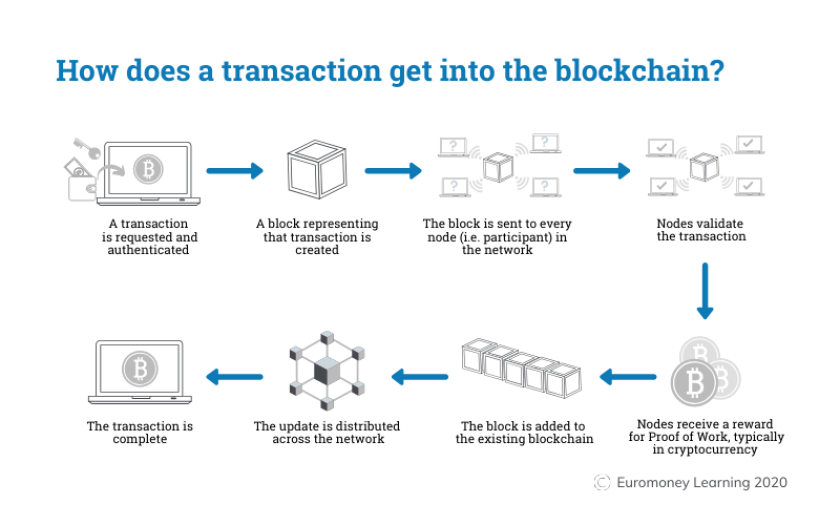
Blockchain protocols impose stringent validation criteria that each node independently confirms by verifying transaction signatures, preventing double-spending, and ensuring that state transitions adhere to the protocol’s logic.
This decentralized validation ensures that colluding validators cannot fabricate transactions or generate invalid blocks that would misappropriate user funds.
The system’s distributed architecture guarantees that even majority control cannot bypass these essential protections.
 Source: EMLearning
However, this safeguard deteriorates when validators engage in off-chain activities such as oracle data feeds, governance choices, or restaking services.
These functions lie outside the blockchain’s algorithmic enforcement and instead depend on the honesty of validators.
A colluding majority could supply false information or manipulated results without the cryptographic assurances that secure on-chain transactions.
Users impacted by such off-chain collusion lack an automatic dispute-resolution or recovery system.
The blockchain is unable to verify or challenge decisions made outside its consensus framework, leaving victims without the protections that ensure on-chain assets are fundamentally secure.
Why Off-Chain Trust Increases Risk
However, when users transfer funds off-chain, through custodial wallets, centralized exchanges, or validator-managed computations, they relinquish the blockchain’s inherent protections.
Off-chain systems do not benefit from the independent verification that each on-chain node provides, making them susceptible to manipulation by a majority of validators.
Related Posts
This distinction is significant because blockchain consensus functions through algorithmic rule enforcement that no single entity controls.
 Source: B2BINPAY
Off-chain operations rely on coordinated actions and validator integrity, but not on protocol-level verification.
Smart contracts that depend on oracle data supplied by validators could produce incorrect results if a majority colludes to disseminate false information, potentially leading to financial losses that on-chain mechanisms cannot avert or rectify.
When questioned whether his warning pertained to restaking protocols like EigenLayer, Buterin confirmed that the platform addresses this risk through slashing mechanisms utilizing its own token.
Eigenlayer relies on slashing (for subjective criteria using its own token) for this exact reason
— vitalik.eth (@VitalikButerin) October 26, 2025
This economic penalty framework offers some level of protection but cannot rival the cryptographic assurances that secure on-chain block validity against majority attacks.
Balancing Privacy with Blockchain’s Transparency Shield
Buterin’s security reminder coincides with Ethereum’s pursuit of significant privacy enhancements that differ from the network’s traditionally transparent nature.
Earlier this month, he elaborated on GKR, a cryptographic method that verifies computations 10 times faster than conventional techniques while enabling zero-knowledge proofs, allowing computers to confirm the correctness of calculations without disclosing the underlying data.
The Ethereum Foundation also established a 47-member Privacy Cluster in September to make network privacy a default setting rather than an optional feature, addressing concerns that public blockchains reveal excessive financial information.
Beyond enterprise interest, Vitalik views this as essential for global adoption, particularly for Ethereum.
Imagine if your bank account had a public URL. That’s the reality of crypto today, and why it “will never scale beyond a niche,” says Petro Golovko.#Crypto #Blockchain #Privacy https://t.co/qQJ1BJInWt
— Cryptonews.com (@cryptonews) August 25, 2025
Recently, in a conversation with Cryptonews, industry expert Petro Golovko likened current blockchain transparency to the pre-encryption internet era, asserting that systems that disclose salaries and account balances remain “unusable for regular people and impossible for institutions.”
The initiative aims to facilitate private transactions, selective identity disclosure, and an enhanced user privacy experience without compromising the verification mechanisms that prevent validator manipulation.
However, the push for privacy creates an evident paradox. If transactions become private, how can the network sustain the transparent verification that safeguards against off-chain manipulation, as Buterin cautioned?
The answer lies in cryptographic methods like GKR that enable the validation of transaction legitimacy without revealing transaction specifics, maintaining the blockchain’s core security feature where invalid blocks are consistently rejected even under majority attacks, while protecting sensitive financial information from public exposure.
The post Your Crypto Isn’t Safe Outside the Blockchain, Vitalik Buterin Warns appeared first on Cryptonews.
