Disclaimer: Information found on CryptoreNews is those of writers quoted. It does not represent the opinions of CryptoreNews on whether to sell, buy or hold any investments. You are advised to conduct your own research before making any investment decisions. Use provided information at your own risk.
CryptoreNews covers fintech, blockchain and Bitcoin bringing you the latest crypto news and analyses on the future of money.

Investigation Unveils Finding Satoshi: Journalists Explore the Creator of Bitcoin, 2026/04/22 23:29:50

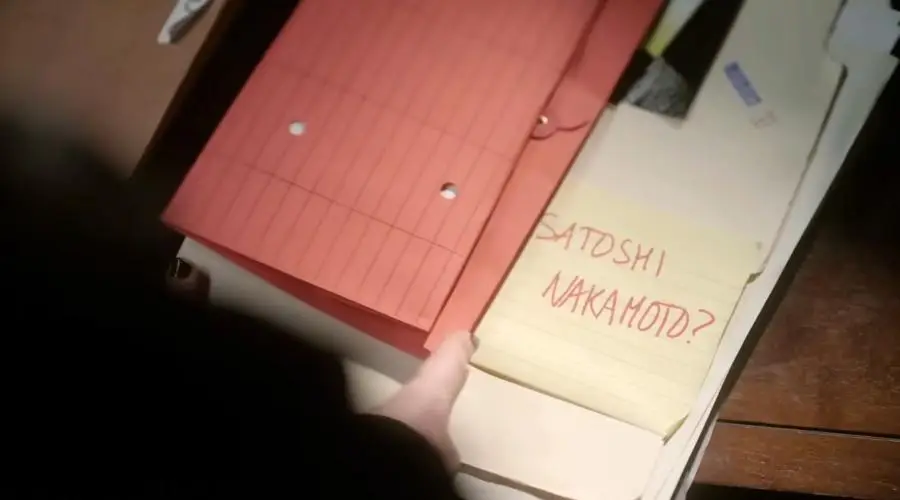
In the spring of 2026, interest in the identity of Bitcoin‘s anonymous creator, Satoshi Nakamoto, intensified. Initially, journalists from The New York Times identified a potential creator of Bitcoin, and now, on Wednesday, April 22, the filmmakers of Finding Satoshi have unveiled the findings of their four-year investigation.
In Search of Satoshi
Finding Satoshi («В поисках Сатоси») is a documentary that narrates the story of a four-year investigation led by prominent American journalist William D. Cohan and private investigator Tyler Maroney. The film was released as a fully independent project on a dedicated YouTube channel and website.
Related Posts
The filmmakers interviewed various industry figures, including Strategy chairman Michael Saylor, former chairman of the U.S. Securities and Exchange Commission (SEC) Gary Gensler, co-founder of the cryptocurrency exchange Coinbase Fred Ehrsam, and many others.
The authors conclude that the development of Bitcoin is attributed to not one, but two cryptographers: Hal Finney and Len Sassaman. Each had distinct roles: Finney wrote the original Bitcoin code, while Sassaman likely prepared the technical documentation and authored the White Paper.
Several arguments support this theory.
-
Firstly, Len Sassaman and Hal Finney were close friends. Finney became the first recipient of BTC in history. In other words, this could have been a test transaction between the two developer-creators of the system.
-
Secondly, it is noted that Nakamoto’s activity hours corresponded to the time zone of the friends. This theory connects Satoshi’s disappearance with the passing of both alleged candidates: Sassaman died in 2011, and Finney in 2014 after a prolonged illness.
Hal Finney’s identity, along with Adam Back’s, has frequently appeared on the list of candidates for Satoshi. Furthermore, while Adam Back created the Proof-of-Work concept within Hashcash, Hal Finney proposed the Reusable Proof of Work (RPoW) consensus, which enabled the resolution of the double-spending problem. As for Len Sassaman, he was known to be part of the cypherpunk movement and developed solutions for network anonymity, particularly Mixmaster. He built upon the work of another notable cryptographer, David Chaum, the creator of eCash, a precursor to cryptocurrencies.
Other candidates are generally dismissed by the filmmakers, but it is worth mentioning all of them.
Following the Cypherpunk Trail

Why has the identity of Bitcoin’s creator been regarded as the primary mystery in the crypto industry for over 17 years? The long-standing interest from the community is easily explained — at the beginning of 2026, the market capitalization of the leading cryptocurrency exceeds $1.5 trillion.
On the other hand, estimates from Patoshi mining research suggest that the accumulated wealth of the mysterious developer could exceed 1.1 million BTC. This implies that Nakamoto could potentially be one of the wealthiest individuals on the planet. His actions or inactions directly influence the price of a financial asset used as a strategic reserve by major corporations and even entire nations.
However, the quest to unravel Nakamoto’s mystery is driven not only by the value of BTC. It remains uncertain whether the developer acted alone or as part of a group, whether he has disappeared, is alive, or is working on new projects — this is of great interest. The scale of the technology created speaks for itself. In attempts to identify the anonymous figure, researchers gather and compare any available information.
The few clues typically include the text of the Bitcoin White Paper and the posts/messages from the developer on the Bitcointalk forum. Both the overall technical proficiency and the specifics of the program’s development are analyzed. For instance, Satoshi used C++ as the programming language, and the first version of the Bitcoin client was designed for the Windows operating system, which some enthusiastic sleuths interpret as indicative of experience working at Microsoft.
The connection between Satoshi and the cypherpunk movement is also compelling: for many years, various representatives of this movement have sought to create electronic money that is not controlled by governments and banks. A hidden message left by Nakamoto in the Bitcoin genesis block hints at the shortcomings of the traditional banking system — clearly resonating with the cypherpunk ethos.
Additionally, the White Paper contains direct references to the works of other prominent cypherpunks, including Wei Dai and Adam Back.
On April 8, journalists from The New York Times, following their own investigation, declared Adam Back to be the creator of Bitcoin.
The New York Times and Adam Back

British cryptographer Adam Back has consistently ranked among the most likely candidates for the role of Satoshi for many years. He is currently best known as the founder of the blockchain company Blockstream, but in the past, Back proposed the Proof-of-Work concept implemented in Hashcash as an anti-spam mechanism for email.
The Proof-of-Work consensus algorithm in Bitcoin essentially interprets the electronic cash ideas proposed by Back and addresses the double-spending issue. Interestingly, a reference to the original Hashcash work is included in the Bitcoin White Paper. This fact is cited as evidence by journalists from the American newspaper. Another argument is based on linguistic analysis: both Back and Nakamoto frequently confused “it’s” and “its,” wrote “half way” and “down side” separately, placed unnecessary spaces, and used British spellings.
However, the British/American language usage differences in Nakamoto’s messages are not particularly sensational. In a piece by Bits.media published prior to the NYT article, we had already pointed this out, as well as the reference in the genesis block to the British newspaper The Times. It is likely that the cryptocurrency creator is an English speaker, suggesting he lived in an English-speaking country, such as the USA or the UK.
Notably, Adam Back has worked at Microsoft. However, since Windows dominates the OS market, this choice of operating system simply facilitated the rapid spread of BTC. Additionally, Adam Back has denied for many years that he is the enigmatic developer.
Alternative Theories

It is also important to mention other frequently cited candidates for the role of Satoshi among the cypherpunks: Nick Szabo, who proposed the BitGold system, and Wei Dai with his b-money system, which Nakamoto referenced in the White Paper — just as he did with the works of Adam Back.
Special attention should be given to programmer and cryptographer Paul Calder Le Roux. He is the head of a criminal syndicate. His imprisonment may explain Nakamoto’s disappearance. Furthermore, he developed encryption software, including in C++, produced stylistically similar documentation, and used the pseudonym Solotshi in forged documents long before the emergence of BTC.
Finally, there are conspiracy theories suggesting that Bitcoin is a creation of American intelligence agencies. Interestingly, in 1996, the National Security Agency (NSA) published an article titled “How to Create a Mint: The Cryptography of Anonymous Electronic Cash.” This work closely resembles the technical documentation of Bitcoin, not only in format but also in its discussion of cryptography and the potential for creating an electronic monetary system. Additionally, the SHA-256 hashing algorithm used in Bitcoin was also invented by NSA employees.
Conclusion
There is still no consensus regarding the identity of Bitcoin’s creator: journalists from The New York Times point to Adam Back, while the creators of the film Finding Satoshi lean towards the partnership of Hal Finney and Len Sassaman. Meanwhile, many, including well-known crypto enthusiasts, believe that Nakamoto’s identity is not crucial and is better left a mystery.
