Disclaimer: Information found on CryptoreNews is those of writers quoted. It does not represent the opinions of CryptoreNews on whether to sell, buy or hold any investments. You are advised to conduct your own research before making any investment decisions. Use provided information at your own risk.
CryptoreNews covers fintech, blockchain and Bitcoin bringing you the latest crypto news and analyses on the future of money.


A revised draft of the CLARITY Act, which merges the Senate Banking Committee and Senate Agriculture Committee bills, is expected this week. The update adds approximately 70 pages to the text but excludes the ethics provision that Senate Democrats have made a precondition for their support.
Without this language, securing the seven or more Democratic votes needed to reach the 60-vote threshold for Senate cloture appears structurally difficult before the August recess.
The vote arithmetic is straightforward: Republicans hold 53 seats, meaning the bill requires at least seven Democrats to cross the 60-vote mark. The ethics standoff has been the central obstacle since Democrats first outlined their full demands last year, and this dynamic has not shifted with the new draft.
One person familiar with the talks stated directly that without the ethics language, securing sufficient Democratic support will be difficult.
A new CLARITY Act draft could arrive this week; SEC/CFTC roles and custody rules are the first lines to watch. pic.twitter.com/am11leV0Mx
— BYDFi Alpha (@BYDFiAlpha) July 13, 2026
Galaxy Research has revised its 2026 passage odds down from 75% following Senate Banking Committee clearance to roughly 50-50. Prediction markets currently show approximately 37% odds of passage before August, a figure that reflects both the compressed timeline and the substantive impasse.
What Democrats Are Demanding, And Why the White House Won’t Budge
The ethics provision at issue, Section 604 conflict-of-interest language, would bar senior government officials, elected officials, and their immediate family members from holding financial interests in or profiting from crypto assets while in office.
Sen. Kirsten Gillibrand (D-NY) has been unambiguous: no ethics language, no Democratic votes. The Van Hollen ethics amendment was defeated 13–11 along party lines in committee, and the White House has indicated it will not accept language that specifically targets the President – a direct reference to the Trump family’s crypto holdings and business interests.
The U.S. House will hold a hearing on the Crypto CLARITY ACT in just 4 days, on July 17. pic.twitter.com/2f3qB2yttx
— Ash Crypto (@AshCrypto) July 13, 2026
This framing makes a clean compromise difficult. Any ethics language strong enough to satisfy Gillibrand and her Democratic colleagues is, by the White House’s own definition, the kind of language it has said it will reject.
Related Posts
The merged draft released this week sidesteps that problem by omitting the provision entirely, which solves nothing regarding the Democratic vote count. Democratic positioning on crypto legislation has hardened around this issue specifically, making a floor vote without a resolution a high-risk procedural move.
The July Window and What a Miss Would Mean for Crypto Regulation
Senate Majority Leader John Thune said last month he intends to bring the bill to the floor in July. The weeks of July 20 and July 27 are the two dates under active discussion for a floor vote, both of which fall immediately before the August recess, making this the last viable legislative window before the midterm campaign cycle absorbs the Senate’s attention.
The CLARITY Act passed the House 294–134 in July 2025, cleared the Senate Banking Committee 15–9 on May 14, 2026, and now sits on the Senate Legislative Calendar awaiting floor action.
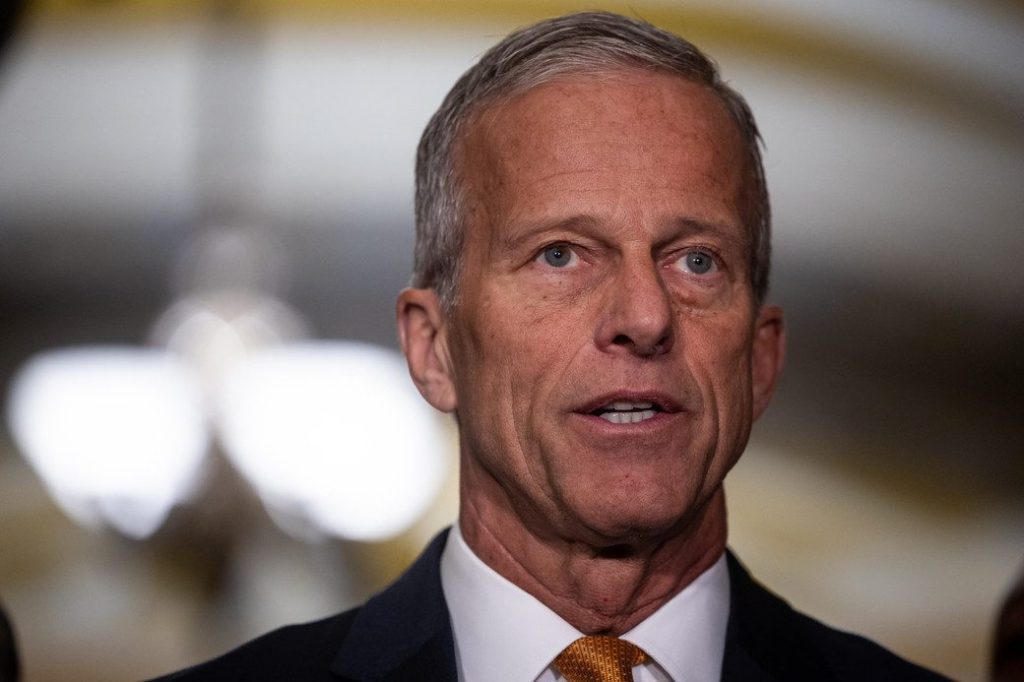
Photo: John Thune
If the bill misses the summer window, analysts project its 2026 prospects deteriorate materially. The calendar resets, and there is no obvious mechanism to restart the process before midterm positioning takes over. Markets and institutional investors have been pricing in passage risk accordingly, with the bill’s progress, or lack of it, directly influencing sentiment across large-cap assets.
The optimistic path still exists: ethics language gets resolved in the three-to-four-week window after the draft release, a floor vote happens late July, and the bill reaches the President’s desk in early August.
The pessimistic path, where the impasse holds, Democrats withhold votes, and the bill stalls, would prolong the patchwork of state regimes and enforcement-by-litigation that institutional participants have consistently identified as the primary barrier to deeper U.S. market participation.
The merged draft this week is a step in the legislative process; whether it is a step toward resolution or a formality before another delay depends entirely on what happens to the ethics provision in the next two weeks.
The post Ethics Dispute Clouds CLARITY Act Path as July Vote Window Narrows appeared first on Cryptonews.
