Disclaimer: Information found on CryptoreNews is those of writers quoted. It does not represent the opinions of CryptoreNews on whether to sell, buy or hold any investments. You are advised to conduct your own research before making any investment decisions. Use provided information at your own risk.
CryptoreNews covers fintech, blockchain and Bitcoin bringing you the latest crypto news and analyses on the future of money.


Decentralized prediction markets experienced significant growth within the cryptocurrency industry last year. These platforms represented $1.4 billion in market activity in 2024, with forecasts suggesting an increase to $95.5 billion by 2035, according to Metatech Insights.
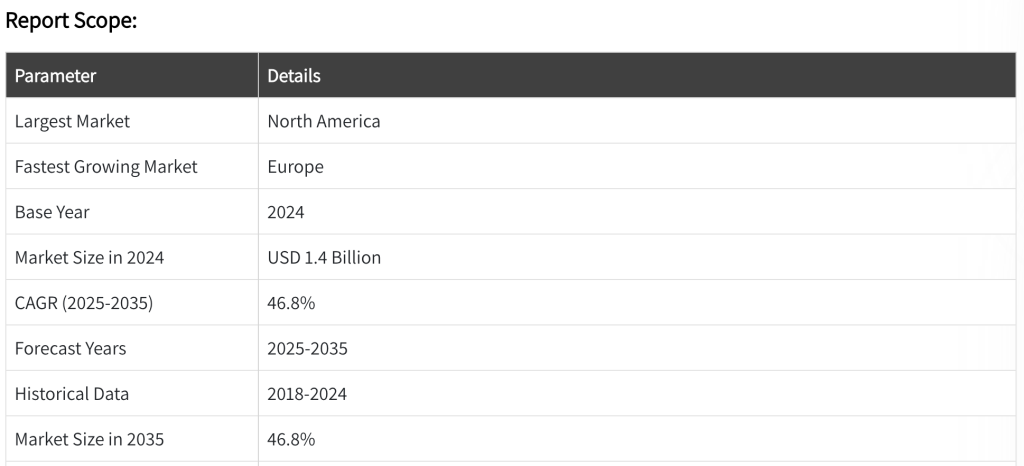 Source: Metatech Insights
Decentralized prediction markets leverage blockchain technology and cryptocurrency to enable betting on future events.
These platforms utilize smart contracts and oracles to automate transactions and incorporate real-world data, enhancing their efficiency, transparency, and reliability compared to centralized prediction markets.
Decentralized Prediction Markets in Scientific Research
While sports events and election outcomes have fueled the popularity of decentralized prediction markets, there is an increasing interest in applying these platforms to forecast scientific research results.
Benji Leibowitz, the founder of the decentralized science (DeSci) platform pump.science, informed Cryptonews that pump.science employs crypto-funded research to produce open-source data and reshape the future of longevity studies.
“Pump.science enables scientists to finance their own projects with tokens, while making that data publicly accessible. Users can also engage in prediction markets regarding the research outcomes,” Leibowitz stated.
Recently, pump.science collaborated with Solana-based prediction market Hedgehog Markets, allowing users to bet on the results of longevity experiments involving mice.
welcome to the RODeo – a mouse rotarod experiment
mice are positioned on a rotating rod (therefore – RODeo)
the rod accelerates
the mice hold on for dear life
when they fall, the experiment concludes
if this isn’t hodling idk what’s pic.twitter.com/9ROfuIO0Dn— Pump Science (@pumpdotscience) January 11, 2025
Leibowitz described one such experiment, referred to as “RODeo,” which features weekly live-streamed tests using the rotarod device, a commonly utilized tool for evaluating mouse endurance and motor skills.
“Each week, mice are given potentially life-extending compounds and undergo endurance testing,” Leibowitz explained.
Participants can access video footage of the mice, preliminary data, and insights from previous experiments to make informed predictions on which mouse will remain on the rotarod the longest.
“Our aim is for anyone to be a scientist and make predictions about experimental outcomes. If research can be gamified and entertaining, this entertainment value can also help fund its advancement. Here, citizen scientists can utilize predictive data, such as the speed at which the mice move around their cage, to make an informed choice on which mouse will be the fastest,” Leibowitz added.
Kyle DiPeppe, CEO of Hedgehog Markets, informed Cryptonews that creators on pump.science also receive a share of all the incorrect predictions made on the platform.
The platform utilizes USD Coin (USDC) for transactions and operates on the Polygon blockchain to benefit from its scalability and reduced transaction fees.
“Users wager on which drugs or placebo will perform the best, but a portion of the incorrect predictions is returned to the creators. This incentivizes scientists to establish these markets to help finance their own research,” DiPeppe clarified.
Expanding Participation in Scientific Research Through Prediction Markets
Related Posts
The DeSci platform Stadium Science is adopting a similar approach by promoting wider participation in scientific research.
Michael Fischer, the founder of Stadium Science, informed Cryptonews that the platform essentially allows anyone to act as a scientist. “The essence of what we do is create prediction markets around scientific topics,” Fischer stated.
For instance, Stadium Science organizes competitions to determine which of its users are the best sleepers, who may have the most motile sperm, and how intermittent fasting affects resting heart rate, or how vitamin C influences sleep quality.
who will win? @_TomHoward or @0xMikeyF pic.twitter.com/3cZJpuRTMz
— Stadium Science
(@StadiumScience_) January 14, 2025

Fischer believes that competition among users will encourage individuals to strive for their best selves, discover what works for them, and learn from others.
“There is an intermittent fasting challenge where participants follow intermittent fasting protocols to observe changes in their resting heart rate. This aids in understanding the effects of fasting on cardiovascular health,” Fischer explained.
The Role of Prediction Markets in Advancing Research
According to Fischer, the challenges hosted by Stadium Science generate unique datasets that are invaluable for scientific research.
“Prediction markets bring together a wider range of contributors,” he noted. “Science flourishes on interdisciplinary collaboration. Marginal knowledge areas can often lead to breakthroughs. With more individuals involved, science can accelerate.”
Echoing this sentiment, DiPeppe remarked that having users predict which drugs are most effective on platforms like pump.science should facilitate more accurate datasets.
Furthermore, data is streamed in real-time to Stadium Science, which may help mitigate data fabrication commonly seen in traditional science. Since the platform is fully decentralized, the data generated belongs to the participants.
Challenges Hindering Adoption
Despite the advantages, there are challenges associated with prediction markets and DeSci platforms.
Fischer pointed out that demonstrating the accuracy and utility of the data remains a significant obstacle. Limited on-chain data storage capacity and the high costs of storing large datasets also present challenges.
Additionally, legal and compliance issues must be addressed for these platforms to achieve widespread adoption.
For instance, privacy concerns such as the right to erase data conflict with blockchain’s immutable nature.
“We believe DeSci will begin with simple ‘toy’ experiments, allowing individuals to witness their benefits and limitations firsthand,” Fischer stated. “As trust and understanding grow, more complex trials can be conducted, ultimately making DeSci the standard approach in scientific research.”
The post Decentralized Prediction Markets Aim to Advance Science appeared first on Cryptonews.
