Disclaimer: Information found on CryptoreNews is those of writers quoted. It does not represent the opinions of CryptoreNews on whether to sell, buy or hold any investments. You are advised to conduct your own research before making any investment decisions. Use provided information at your own risk.
CryptoreNews covers fintech, blockchain and Bitcoin bringing you the latest crypto news and analyses on the future of money.

BlackRock Allocates $350,000 for Cryptocurrency Executives: Is the Wall Street Acquisition of Digital Assets Beginning?

Prominent Wall Street firms such as BlackRock, Goldman Sachs, Morgan Stanley, and Citigroup are actively advertising crypto positions, not for experimental blockchain initiatives, but for established digital asset desks engaged in live revenue operations. This represents a structural development rather than a trial program.
The figures illustrate the magnitude of this trend. Crypto companies had 5,154 job openings in early 2025, marking an increase of over 40% from late 2023.
BlackRock has listed a Managing Director position for crypto in New York with a salary range of $270,000–$350,000. Goldman Sachs has revealed $2 billion in crypto exposure. The approval of ETFs was not a trigger; it served as the starting point.
Key Takeaways:
- ETF Catalyst: The recovery of Bitcoin ETF inflows has compelled Wall Street to establish permanent middle-office, trading, and compliance roles – positions that were nonexistent within these firms two years ago.
- Named Institutions: BlackRock, Goldman Sachs, Morgan Stanley, and Citigroup all have active crypto job openings; JPMorgan has listed a Lead Software Engineer for blockchain infrastructure.
- Role Categories: The current demand focuses on institutional trading, fund accounting, ETF market-making, digital asset compliance, and tokenization engineering – rather than R&D or innovation labs.
- Compensation Signal: BlackRock’s Managing Director crypto position is advertised at $270,000–$350,000; global crypto salaries increased by 18% year-over-year into 2025, with North America offering the highest base salaries.
- Geographic Expansion: New York remains the central hub, but crypto job postings in Singapore surged by 158% – indicating that the institutional growth is global rather than solely domestic.
- What to Watch: The competition between TradFi retention packages and token incentives from crypto-native firms will influence the speed at which these desks expand.
Discover: The best crypto to diversify your portfolio with
What the Shift Actually Signals – and Why This Cycle Is Different From 2021
The previous instance of Wall Street’s rush into crypto jobs occurred in 2021, driven by retail speculation, NFT enthusiasm, and internal pressures to appear innovative.
The collapse of FTX in 2022 and the ensuing market downturn eliminated over 70% of crypto jobs worldwide – and many of those TradFi crypto divisions quietly disappeared as well.
This current cycle is fundamentally different. The driving force behind demand is regulated product infrastructure: spot Bitcoin ETFs, Ethereum ETFs, and the tokenization of real-world assets (RWAs).
BlackRock’s IBIT has achieved unprecedented AUM growth, necessitating an expansion of middle-office functions – reconciliation, fund accounting, reporting – roles that are operational rather than experimental.
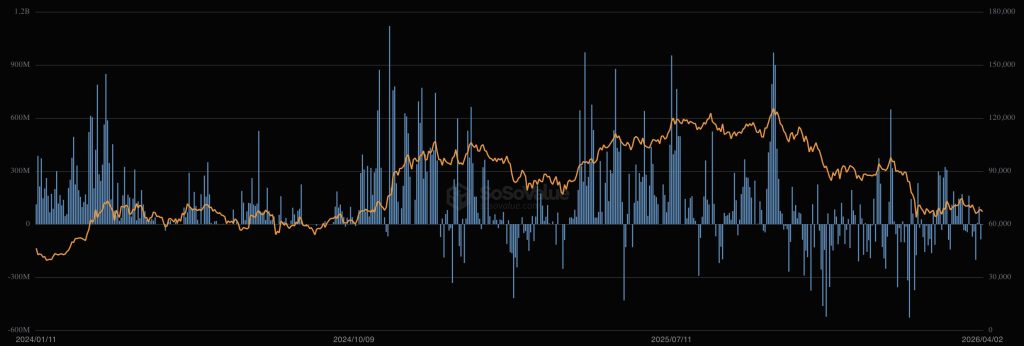 iShares Bitcoin Trust(IBIT) Net Flow / Source: SOSOValue
Sam Wellalage, founder of the recruitment agency WorkInCrypto, stated: “When I converse with CEOs from TradFi who are now developing digital assets, they consistently express the same sentiment: Crypto will ultimately be integrated into TradFi, rather than existing independently.” This perspective is significant – integration suggests a permanent workforce, not temporary project teams.
Related Posts
The regulatory landscape has expedited the timeline. The Trump administration’s supportive stance towards crypto – characterized by light regulation and an explicit aim to establish the US as the global crypto capital – has empowered compliance and legal teams to build rather than delay. Regulatory clarity at the federal level is precisely what enables a permanent digital asset division to function within a bank that is accountable to the SEC.
Wellalage highlighted the skills threshold that will define the 2026 hiring landscape: “Institutional recruitment in 2026 will focus on identifying digital asset leaders who can navigate the intersection of capital, markets, and regulation – not merely crypto enthusiasm.” This distinction – capital plus markets plus regulation, rather than enthusiasm – differentiates this expansion from the 2021 experiment.
Discover: The best pre-launch token sales
TradFi vs Crypto Desk: The Role Map
The talent pipeline flows in both directions, but the prevailing trend currently is from TradFi to institutional digital assets – with specific role categories. ETF market makers, crypto derivatives traders, digital asset compliance officers, tokenization engineers, and custody operations specialists are the positions attracting the most competitive offers.
BlackRock is hiring for senior portfolio and product roles that directly support IBIT’s operational framework.
NEW: BLACKROCK ADDS $350K HEAD DIGITAL ASSETS ROLE
BlackRock is seeking a Managing Director of Digital Assets in NYC to spearhead its crypto, stablecoin, and tokenization strategy, underscoring that crypto is now a core focus for Wall Street. pic.twitter.com/wCrEsxxknR— Coin Bureau (@coinbureau) March 30, 2026
 NEW: BLACKROCK ADDS $350K HEAD DIGITAL ASSETS ROLE
Goldman Sachs – which has noted a significant increase in clients trading crypto derivatives – is enhancing its existing trading desk capabilities. Citigroup has listed a VP-level backend engineer for digital finance. JPMorgan, which introduced its Onyx blockchain platform for tokenized assets in 2021, is now recruiting lead engineers to expand that infrastructure rather than merely prototype it.
The skills that transfer seamlessly from TradFi include fixed income structuring, derivatives risk management, fund accounting, regulatory compliance, and institutional sales. The skills that must be acquired on the job encompass on-chain settlement mechanics, wallet custody architecture, tokenomics, and DeFi protocol risk – areas where crypto-native firms like Coinbase, Galaxy, and Grayscale maintain a significant advantage.
This advantage also poses a competitive threat. Firms establishing permanent digital asset divisions – including exchange operators now functioning under formal regulatory licenses – are competing for the same talent pool as the major banks. The retention dynamics favor those who can provide a superior combination of institutional prestige and potential upside exposure.
Compensation is already being utilized as a differentiator. Global crypto salaries increased by 18% year-over-year into 2025. North America leads in base pay; Asia leads in growth rate, partly driven by token grants. Job listings for crypto in Singapore surged by 158%, indicating how aggressively regional hubs are vying for the same senior institutional profiles targeted by New York firms.
The US Bureau of Labor Statistics anticipates a 22% increase in demand for blockchain developers by 2026 – significantly outpacing average tech roles. With institutional adoption solidifying through regulated ETFs and RWA platforms, that demand trajectory is unlikely to soften.
Discover: The Best Crypto Presales Live Right Now
The post BlackRock Is Paying $350,000 for Crypto Executives: Is Wall Street Digital Asset Takeover Just Getting Started? appeared first on Cryptonews.
