Disclaimer: Information found on CryptoreNews is those of writers quoted. It does not represent the opinions of CryptoreNews on whether to sell, buy or hold any investments. You are advised to conduct your own research before making any investment decisions. Use provided information at your own risk.
CryptoreNews covers fintech, blockchain and Bitcoin bringing you the latest crypto news and analyses on the future of money.


Finance and technology are evolving swiftly, with cryptocurrency at the forefront. Frequently underestimated by those who confuse volatility with disorder, the genuine strength of crypto lies in shifting financial authority from a select few to the broader populace. Founded on the principles of decentralization, financial inclusion, and universal access, cryptocurrency resonates strongly with progressive ideals. As we near a pivotal election cycle, Democratic leaders risk overlooking a significant opportunity—to empower their supporters, attract younger voters, and advance the struggle for economic justice in the digital realm.
Indeed, crypto has encountered skepticism—real concerns regarding volatility, fraud, and its environmental effects have surfaced. However, these issues do not undermine its progressive potential; rather, they offer avenues for innovation and prudent regulation. Emerging from the aftermath of the 2008 financial crisis, Bitcoin was created as a response to a system that had failed the most vulnerable populations. It was intended to decentralize authority, redistributing financial power from centralized entities to individuals globally. This transition transcends technology; it addresses systemic inequalities and empowers those who have been marginalized.
Decentralization and Financial Freedom
Central to crypto is a fundamentally progressive idea: decentralization. By eliminating intermediaries such as banks, crypto grants individuals direct control over their assets, liberated from institutions that have historically favored the powerful. For too long, conventional financial systems have benefited those at the top while excluding marginalized communities. Crypto alters this dynamic, providing anyone with internet access the opportunity to engage in the global economy, dismantling barriers to wealth accumulation.
Additionally, there exists significant potential for wealth creation through decentralized finance (DeFi) platforms. DeFi enables users to lend, borrow, and invest without the need for central bank approval, leveling the playing field. This allows young individuals, people of color, and women—groups traditionally overlooked by conventional finance—to finally accumulate wealth based on merit, creativity, and innovation, rather than connections or privilege. By democratizing financial instruments, DeFi dismantles the economic constraints that have hindered many.
Banking the Unbanked
One of crypto’s most revolutionary promises is its capacity to bank the unbanked. Worldwide, 1.4 billion adults remain outside the conventional financial system, often due to limited access. Crypto provides an alternative. With merely a smartphone, individuals can access global markets, conduct transactions, save, and invest—no bank account necessary. This accessibility promotes economic equity and diminishes barriers that have kept marginalized communities from wealth accumulation.
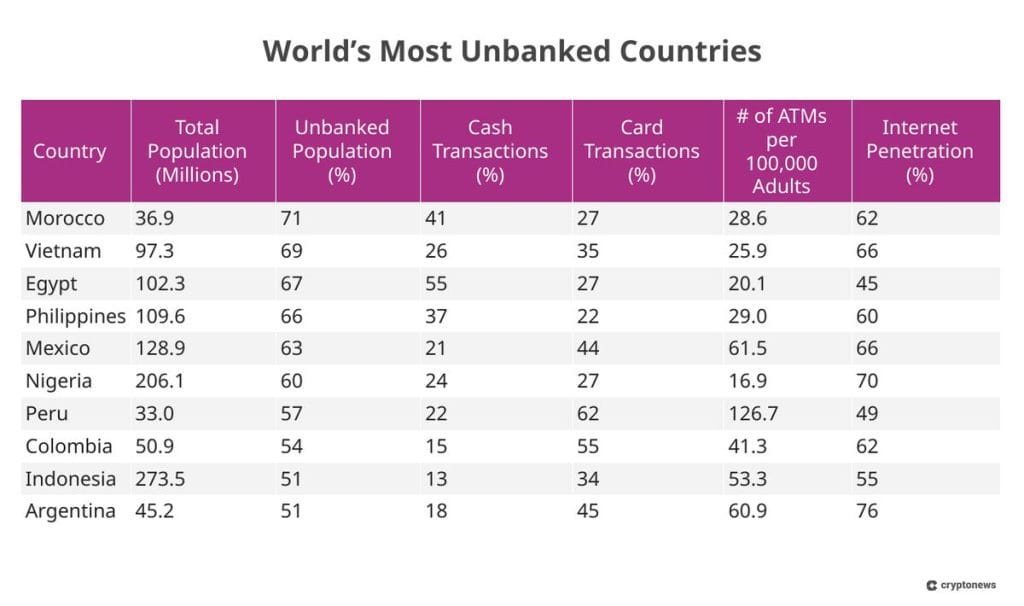 Top 10 most unbanked countries in the world as of 2021. Data source: Global Finance.
We are already witnessing the impact of crypto in practice. In nations like Nigeria and El Salvador, where traditional banks have let many down, crypto adoption is surging. Individuals are taking charge of their financial destinies without relying on flawed systems. For Democratic leadership, endorsing crypto signifies advocating for global financial inclusion and reaffirming a commitment to equality on a worldwide scale.
Transparency, Accountability, and Empowerment
In addition to financial inclusion, crypto provides unparalleled transparency and accountability, particularly in public services. Blockchain’s immutable ledger technology allows for real-time tracking of public funds, minimizing corruption and ensuring that taxpayer money is utilized responsibly. This degree of transparency is fundamental to democracy, fostering public trust in governmental institutions. By adopting blockchain for open governance, Democrats can spearhead the creation of more transparent and accountable systems.
Related Posts
Crypto is also transforming how creators—especially those from underrepresented backgrounds—can generate income and retain ownership of their work. Non-fungible tokens (NFTs) are revolutionizing the art and music sectors, enabling creators to monetize their work while circumventing exploitative intermediaries. By returning power to individual creators, NFTs embody the principles of equity and economic empowerment. Initiatives like “World of Women” demonstrate that NFTs can democratize wealth in industries historically inaccessible to women and minorities.
Environmental Concerns and Regulatory Challenges
Critics frequently highlight crypto’s environmental impact, particularly regarding the substantial energy consumption associated with mining. However, this critique is becoming increasingly outdated. Ethereum’s transition to proof-of-stake has significantly lowered energy usage, and Bitcoin mining is progressively utilizing renewable energy sources. Bitcoin mining can also assist in energy grid management by harnessing excess energy during off-peak periods. Instead of dismissing crypto, forward-thinking leaders should perceive these challenges as opportunities for innovation. By advocating for energy-efficient solutions, Democrats can align crypto with environmental objectives and demonstrate that a sustainable digital economy is achievable.
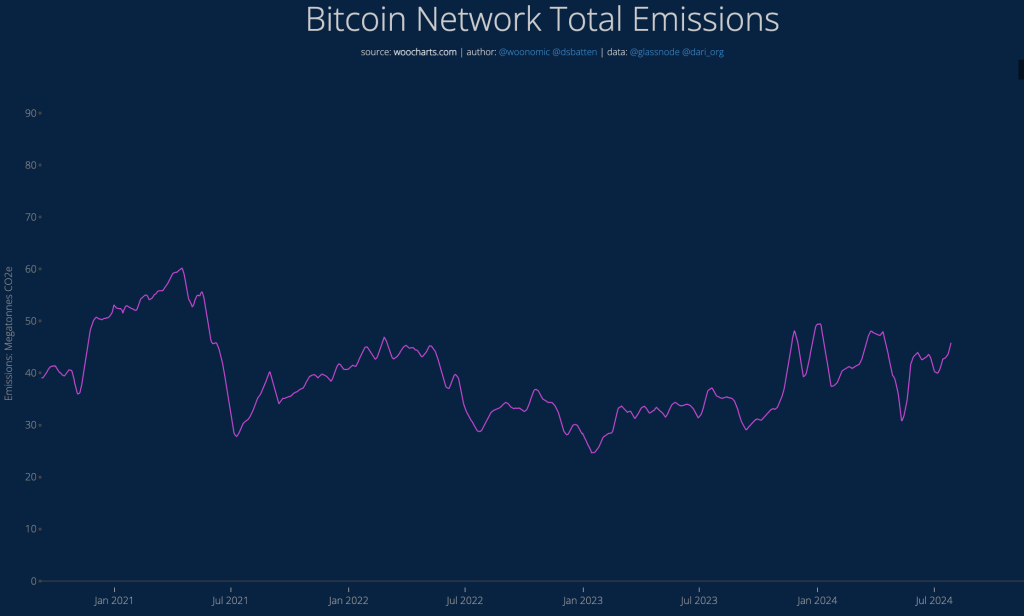 Bitcoin emissions have remained static in recent years. Source: Woocharts
Similarly, concerns regarding fraud and volatility are valid but manageable. The answer lies in responsible regulation—policies that safeguard consumers without hindering innovation. By developing balanced regulations, Democrats can ensure the crypto sector evolves responsibly, benefiting not only the affluent but also those excluded from traditional finance.
A Political Opportunity Not to Be Missed
Despite crypto’s alignment with progressive principles, numerous Democratic leaders have been reluctant to fully embrace it. However, this reluctance risks alienating vital constituencies—particularly younger voters. Millennials and Gen Z perceive crypto as more than just an economic instrument; they regard it as a movement toward decentralization and democratization. These voters are not seeking caution; they desire bold leadership. They want leaders who confront outdated systems, adopt innovative solutions, and guide us into the future.
For Democratic leaders, grasping the intricacies of crypto is not merely about sound policy—it is a political imperative. By advocating for progressive crypto policies, Democrats can demonstrate their dedication to economic justice, innovation, and inclusion—values that are central to their platform. This election cycle presents a crucial opportunity to lead with a bold, forward-looking agenda that acknowledges crypto’s transformative potential.
As election day approaches, discussions surrounding economic equity, access, and empowerment will take center stage. Crypto must be included in this dialogue. By prioritizing crypto, Democratic leaders can advocate for the millions of Americans who have been marginalized by traditional financial systems, presenting a bold vision for a more inclusive, transparent, and decentralized future.
The moment for decisive leadership is now. Embracing crypto as a progressive instrument for change would not only illustrate Democratic leaders’ commitment to economic justice but also position them as advocates for innovation. This is an opportunity they cannot afford to overlook. By seizing it, Democrats can guide us toward an inclusive financial future—one that embodies progress, equity, and innovation.
The post Opinion: Why Crypto Must Be a Top Priority for Democratic Leadership appeared first on Cryptonews.
