Disclaimer: Information found on CryptoreNews is those of writers quoted. It does not represent the opinions of CryptoreNews on whether to sell, buy or hold any investments. You are advised to conduct your own research before making any investment decisions. Use provided information at your own risk.
CryptoreNews covers fintech, blockchain and Bitcoin bringing you the latest crypto news and analyses on the future of money.


Crypto-driven narcotics organizations have transformed Korean-language Telegram channels into “drug department stores” and a “playground” for youth in South Korea, media sources reported on April 28.
Publications like Seoul Kyungjae highlighted that it has been nearly a year since South Korean President Yoon Suk-yeol initiated an “all-out war” against crypto-fueled drug trafficking.
Yoon’s remarks followed police reports detailing numerous instances of drug transactions involving teenagers and individuals in their 20s.
However, it now seems that certain Telegram channel operators are aware of police surveillance and are reacting by openly “mocking detectives.”
South Korea ‘Affected by Crypto-powered Drug Pollution’ – Report
Here’s a summary
— Cryptonews.com (@cryptonews) February 2, 2024

Crypto-driven Narcotics ‘Playgrounds’ on Telegram
Cryptonews.com has identified numerous Telegram channels that seem to openly promote “nationwide” deliveries of methamphetamine (crystal meth), ecstasy, and other substances.
Additionally, Cryptonews.com has observed several dozen Korean-language accounts on X (Twitter) that direct users to these Telegram channels.
All operators appear to post without fear of repercussions, including images of drug bags and Telegram handles in their messages.
In every instance, Cryptonews.com was able to locate these channels and accounts effortlessly by searching for commonly used Korean slang terms for methamphetamine and other drugs.
The media outlet asserted that Telegram has effectively become an online “department store” for young drug consumers.
It also mentioned that in a post on one popular channel, a drug distribution group “mocked” police officers by stating:
“Dear detectives, If you want to be promoted faster than your colleagues, please contact us and we will assist you in finding [people to arrest].”
The poster ridiculed detectives, humorously suggesting they could offer police officers “wholesale” rates.
Crypto-paying Drug Dealers ‘Hiring Staff’
The media outlet further noted that Telegram channels have effectively become informal job agencies for young individuals, advertising crypto-paying “positions” such as “dead-drop delivery person.”
Dealers typically employ “dead-drop” methods to distribute narcotics. They conceal bags of drugs in public areas like apartment staircases, fire hydrants, and flower beds.
They then notify buyers about the locations of the hidden items once they have safely vacated the vicinity.
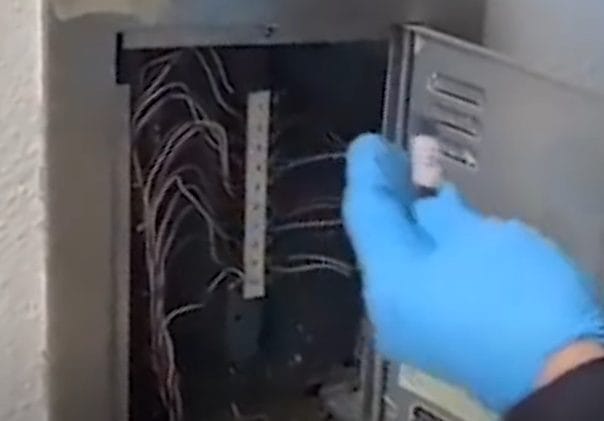 A police officer removes a hidden bag of methamphetamine from an electrical box in a South Korean apartment stairwell. (Source: KBS News/YouTube)
The “recruiters” behind these “job postings” seem to be gathering sensitive information from their “staff,” including social security numbers and “family certificates.”
Related Posts
Blockchain Monitoring Tools Assisting South Korean Police?
Despite a significant increase in arrests and several successful police operations targeting crypto-driven narcotics crime, law enforcement is privately acknowledging that it remains “challenging to track Telegram users.”
Officers have invested millions of USD in blockchain network monitoring tools and Telegram surveillance.
This investment has yielded results, with police recently announcing a significant raid in Busan and the Philippines.
Authorities apprehended 49 individuals in the operation, asserting that the group had managed 11 Telegram channels and utilized crypto as their payment method.
Nonetheless, the majority of similar channels seem to be active at the time of this report. The media outlet indicated that many Telegram chat rooms “appeared to have devolved into a ‘playground’ for drug suppliers.”
More Tech Solutions to Assist Police?
Investigators have sought additional IT solutions as they aim to shift the momentum in the “war.”
Late last year, the Supreme Prosecutor’s Office introduced an AI-driven drug monitoring software solution that has since been distributed to 18 local prosecutors’ offices.
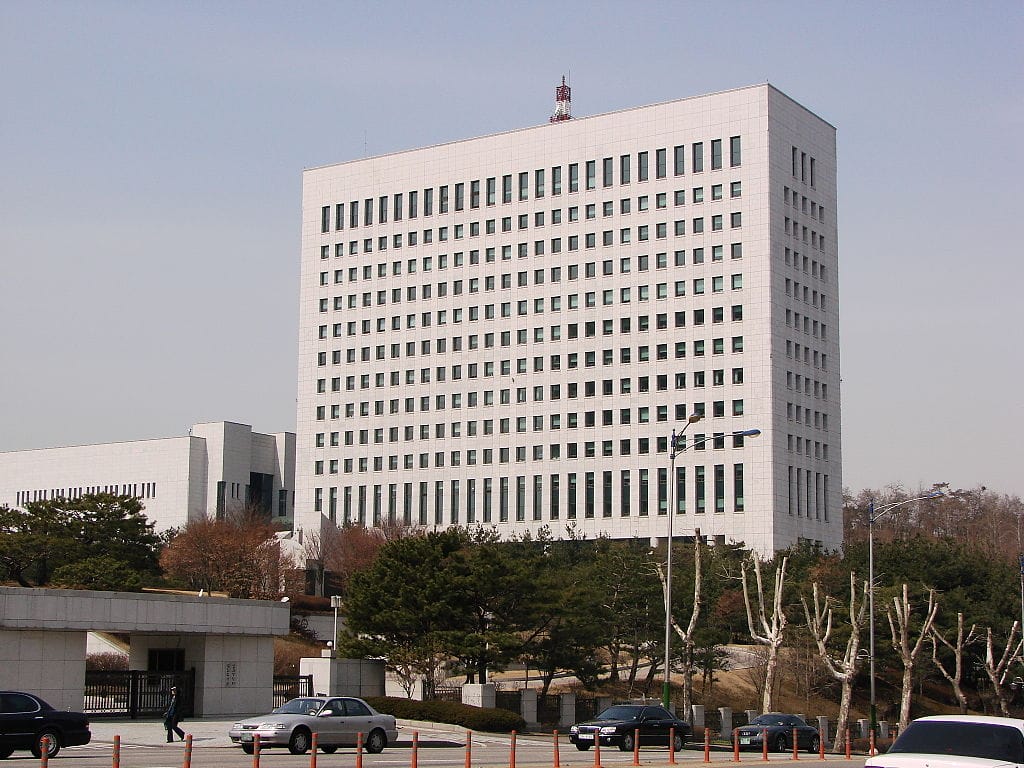 The South Korean Supreme Prosecutor’s Office. (Source: Pectus Solentis (formerly Baribandi) [CC BY SA 2.0])
The solution scans images and text on Telegram, Facebook, Tumblr, Pinterest, and Instagram, searching for narcotics-related material.
As most drugs enter the country from Southeast Asia, South Korean law enforcement agencies have also deployed agents to collaborate internationally.
South Korea has sent officers abroad to partner with Thailand’s National Narcotics Bureau. Seoul also intends to send agents to work alongside Malaysian and Indonesian drug enforcement agencies.
The central government has also increased the budget for the Supreme Prosecutors’ Office, doubling its annual funding to nearly $6 million.
However, critics have argued that this budget increase “is still inadequate,” as crimes related to crypto-powered narcotics “are rising each year.”
Just six days before its planned retail expansion, the crypto exchange https://t.co/1aQemhmjuy postponed its launch in South Korea so it can communicate further with regulators https://t.co/JL9DzJk37Y
— Bloomberg (@business) April 23, 2024
A lawyer informed the media outlet that the low prices of narcotics in Southeast Asia were proving “too appealing” for many individuals.
Smugglers can achieve substantial profits by distributing drugs sourced from Southeast Asia in South Korea.
The lawyer concluded that while “digital forensic technology” was aiding law enforcement, it still faced significant “limitations.”
The post Telegram Becoming ‘Crypto-powered Narcotics Department Store’ for South Koreans appeared first on Cryptonews.
