Disclaimer: Information found on CryptoreNews is those of writers quoted. It does not represent the opinions of CryptoreNews on whether to sell, buy or hold any investments. You are advised to conduct your own research before making any investment decisions. Use provided information at your own risk.
CryptoreNews covers fintech, blockchain and Bitcoin bringing you the latest crypto news and analyses on the future of money.

South Korean Courts Struggle to Determine If Cryptocurrency is a Security, Leading to Legal Delays

“Is cryptocurrency a security?”– South Korean courts appear to be struggling to reach a consensus, and a recent report indicates that this uncertainty is leading to a backlog in legal proceedings.
According to Newsis, judges at the Seoul Southern District Court are becoming involved in discussions regarding whether specific coins possess “security characteristics.”
‘Is Crypto a Security?’ – Judges Confronting Challenging Decisions
The Seoul Southern District Court is currently overseeing two of the most notable altcoin “price manipulation” cases in the history of South Korean law.
The court is addressing multiple cases related to the collapse of the Terra ecosystem in May 2022, along with the art-themed Pica Coin token.
Both cases are based on allegations from prosecutors that the coins were intentionally marketed as securities.
At present, South Korean legislation does not classify any coin as having security designation. Nevertheless, judges are being urged to consider precedents established in the United States.
Regulators in Washington have asserted that certain coins may be classified as securities, while others are deemed to have commodity attributes.
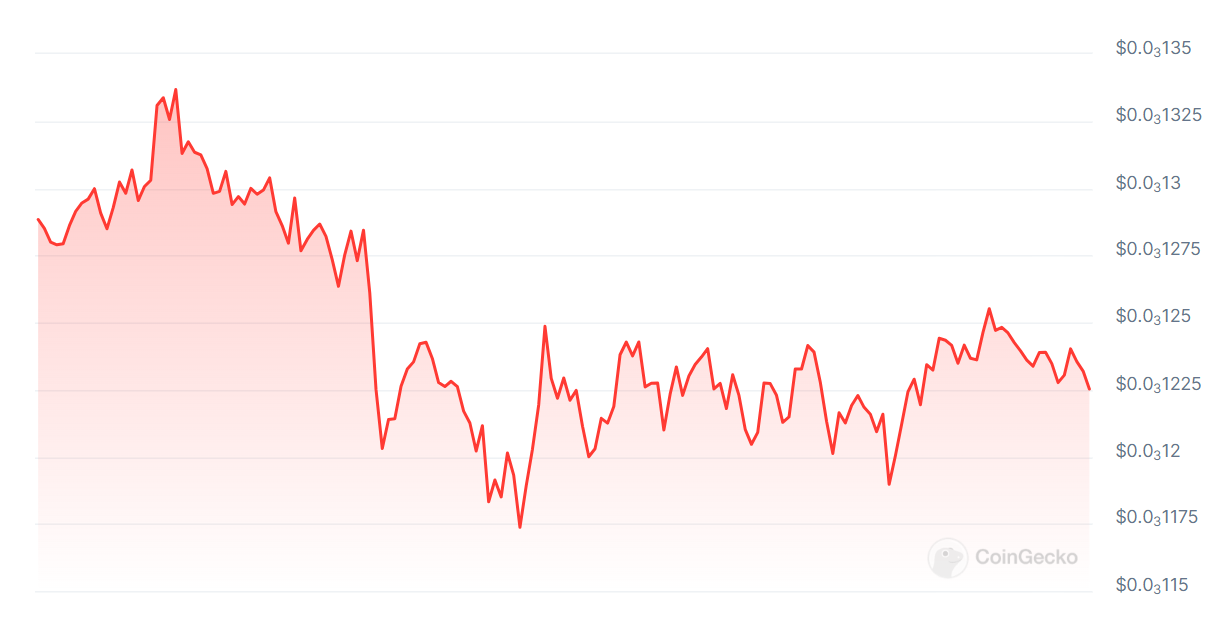 LUNC prices over the past seven days. (Source: CoinGecko)
Terraform Labs, the company behind Terra ecosystem coins such as LUNC (previously LUNA), has centered much of its defense in South Korea on the argument that cryptoassets should not be classified as securities.
However, judges at the Seoul Southern District Court “have consistently struggled with their rulings” on this issue. Newsis reported:
“‘Is crypto a security?’ Judges at the Seoul Southern District Court pose this question in every trial.”
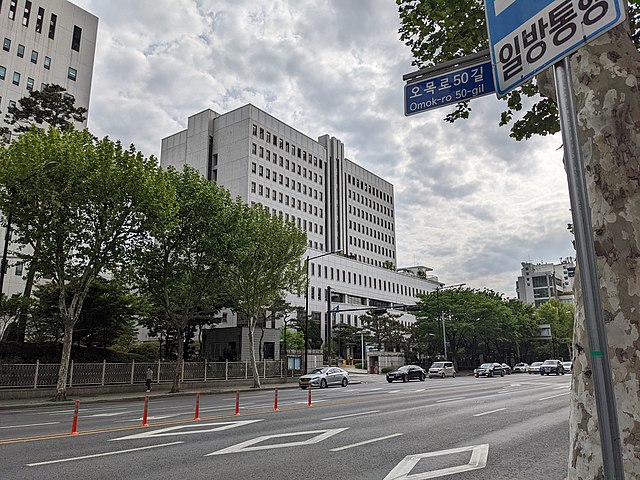 The Seoul Southern District Court. (Source: Ho Ro Jo [CC BY-SA 4.0])
Judges ‘Struggling’ with Complex Crypto Decisions
A judge from the same court sentenced a former crypto exchange executive to four years in prison on February 15.
The individual was convicted of obtaining a low-cap altcoin listing to inflate prices. However, during sentencing, the judge expressed frustration, stating:
“It is challenging to clearly identify the illegality of the act. This is due to the absence of clear [legal] standards.”
Unnamed experts from the legal community have indicated that South Korea’s crypto market is “growing.” They also noted that “the number of fraud cases is on the rise.”
Related Posts
However, they pointed out that South Korea lacks a “suitable legal framework” to address these issues.
In the Pica Coin case, media reports indicate that prosecutors have urged the court to classify the token as a security.
This classification would enable prosecutors to pursue charges of price manipulation under the provisions of the Capital Markets Act.
A preference for trading altcoins in South Korea is diminishing as momentum-seekers turn their attention to Bitcoin instead https://t.co/3CPZyiH6IF
— Bloomberg (@business) February 22, 2024
However, defense attorneys related to Pica Coin have argued that “coins are not securities” according to national law.
A defense attorney stated during a hearing:
“The Pica Coin [police] investigation was unlawful. Furthermore, the subsequent prosecution is also unlawful. This case was investigated and prosecuted in a nation where virtual assets are not acknowledged as securities.”
Lee Jeong-yeop, the CEO of the Lawjipsa legal firm and the President of the Blockchain Law Society, remarked:
“It appears that [trials] will become prolonged when courts must assess potential [violations of] the Capital Markets Act. […] Crypto-related offenses have caused significant damage. However, if judges conclude that the Capital Markets Act does not apply in these instances, it will be problematic.”
If this is the case, Lee suggested that defendants should be “acquitted” or “receive lesser sentences.”
An unnamed former Supreme Court Justice stated:
“In a criminal trial, there should be no room for broad or analogical interpretation. Therefore, it would be challenging for a court to determine that virtual assets possess securities characteristics here. However, in civil cases, […] it does seem feasible.”
Kim Hyun-kwon, a lawyer at LKB & Partners, expressed that “legal experts continue to hold differing views, making it impossible to definitively state what is correct or incorrect.”
Kim concluded that without legislative changes, a clearer understanding would need to be developed based on the rulings of individual courts on the subject.
Those seeking an answer to the question “Is crypto a security?” in South Korea seem to have no option but to wait.
K-pop Stars Choi Si-won, Cho Hyun-young Deny South Korean ‘Scam Coin’ Involvement
K-pop stars Choi Si-won and Cho Hyun-young have refuted claims that they were involved in endorsing alleged South Korean “scam coins.”#CryptoNews #SouthKoreahttps://t.co/XZoy8Se6pJ
— Cryptonews.com (@cryptonews) February 16, 2024
Claims of crypto fraud and crimes related to cryptocurrency have been prevalent in South Korean news this year.
Authorities have reported an increase in crypto-related scams, fraudulent OTC transactions, and drug trafficking involving cryptocurrencies.
The post Is Crypto a Security? South Korean Courts Can’t Decide – and It’s Causing Legal Backlogs appeared first on Cryptonews.
