Disclaimer: Information found on CryptoreNews is those of writers quoted. It does not represent the opinions of CryptoreNews on whether to sell, buy or hold any investments. You are advised to conduct your own research before making any investment decisions. Use provided information at your own risk.
CryptoreNews covers fintech, blockchain and Bitcoin bringing you the latest crypto news and analyses on the future of money.

South Korean Central Bank Aims to Utilize CBDC for Distributing $79.3 Billion in Government Subsidies

The Governor of the Bank of Korea has stated that Seoul intends to utilize its Central Bank Digital Currency (CBDC) to distribute over 110 trillion won ($79.3 billion) in government subsidies.
The South Korean publication Hankook Ilbo reported that Bank of Korea (BOK) head Rhee Chang-yong mentioned these payments would be part of a new “digital currency pilot project.”
Rhee made these comments during a press conference in central Seoul on August 28, following a Monetary Policy Committee meeting earlier that day.
South Korean CBDC: Revived Interest?
This initiative has come as a surprise in Seoul. The BOK had announced in late June this year that it was pausing CBDC testing to focus on developing alternatives powered by stablecoins.
Rhee indicated that the subsidy initiative is part of the broader Han River Project, which encompasses the country’s CBDC pilot.
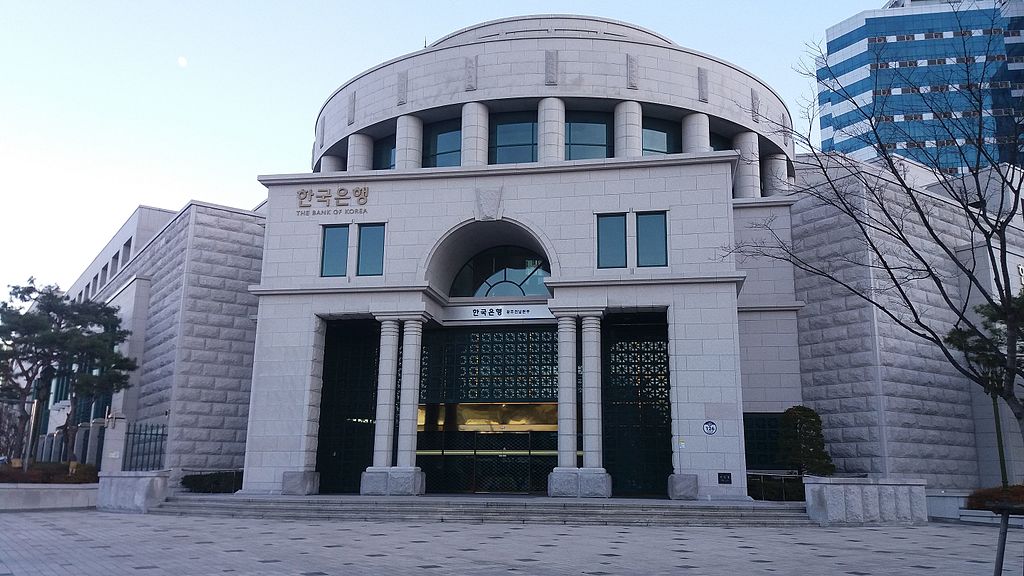 The Bank of Korea’s offices in Gwangju. (Source: Neoalpha)
The media outlet noted that this new CBDC initiative originated from the Ministry of Strategy and Finance.
The ministry believes that CBDC-based subsidies will aid in preventing fraudulent activities and enhancing the efficiency of fiscal policies. Rhee elaborated:
“This is part of the second Han River Project pilot. Utilizing digital fiat for subsidy payments will enable principal contractors to manage subsidies more effectively when entering agreements with subcontractors.”
The BOK and the ministry plan to provide contractors with CBDC tokens rather than traditional bank transfers or vouchers.
The involved parties believe that blockchain technology will facilitate the tracking of funds and ensure they are not misappropriated. Rhee added:
“During his recent visit to the BOK, Koo Yun-cheol, the Deputy Prime Minister and Minister of Strategy and Finance, expressed his belief that this will enhance the efficiency and transparency of subsidy payments.”
On August 22, Deputy Prime Minister Koo Yun Cheol participated in a joint ministerial briefing regarding the new government’s economic growth strategy and made a statement at the Government Complex Seoul. pic.twitter.com/RfSVzp8o0n
— MOEF – Korea (@moefkorea_eng) August 22, 2025
BOK Prefers Collaboration with Banks Supporting CBDC Initiatives
The BOK emphasized that this new project would be distinct from the “first” pilot, which concluded in the first half of this year.
Related Posts
While the initial pilot primarily involved commercial banks and their clients, the subsidy-focused pilot will be led by the private sector.
Several banks that participated in the first pilot expressed dissatisfaction with the plans for CBDC implementation.
They voiced concerns about the perceived unfairness of bearing the costs associated with infrastructure investments.
However, Rhee indicated a willingness to engage with the banking sector, suggesting that the BOK is open to collaborating with banks that remain interested in CBDC initiatives. The Governor stated:
“Given the scale of the project, at 110 trillion won, I believe this will be appealing to banks. We aim to collaborate with banks that are eager to invest [in the project].”
The South Korean won appreciated after the Bank of Korea Governor defended its foreign exchange interventions as measures to mitigate the decline and noted that it is part of discussions with the US government https://t.co/jUTgYGUiNh
— Bloomberg (@business) August 28, 2025
‘Accelerated’ Initiatives
Rhee also indicated that Seoul’s shift towards stablecoins does not signify the end of the BOK’s CBDC ambitions.
In fact, the Governor clarified that once lawmakers finalize the establishment of new legislation regarding crypto and stablecoins, the BOK intends to “accelerate” the Han River Project. Rhee remarked:
“We have discussed forthcoming [crypto and stablecoin] legislation with the ministry. The BOK has also shared practical insights with the [regulatory] Financial Services Commission. We hope that the BOK’s perspectives will be adequately represented in these discussions.”
The BOK has previously stated its desire for a gradual adaptation process for CBDC and stablecoins, starting with traditional financial institutions like banks.
These institutions are subject to stringent BOK oversight, as noted by Hankook Ilbo.
However, South Korean financial and crypto leaders are becoming increasingly impatient. They have expressed concerns that progress on stablecoin legislation has “slowed to a standstill.”
This stagnation is attributed to lawmakers’ inability to reach a consensus on whether technology companies should be permitted to issue KRW-pegged stablecoins.
Conservative factions have urged Seoul to limit issuance to the commercial banking sector, while progressive opponents argue that such restrictions would hinder innovation.
The post South Korean Central Bank Wants to Use CBDC to Pay $79.3B Worth of Gov’t Subsidies appeared first on Cryptonews.
