Disclaimer: Information found on CryptoreNews is those of writers quoted. It does not represent the opinions of CryptoreNews on whether to sell, buy or hold any investments. You are advised to conduct your own research before making any investment decisions. Use provided information at your own risk.
CryptoreNews covers fintech, blockchain and Bitcoin bringing you the latest crypto news and analyses on the future of money.


Distributors at South Korea’s Dongdaemun Market assert that there is no truth to reports suggesting they are widely transitioning to USDT funds.
At the beginning of the month, reports and posts on crypto forums indicated that numerous merchants at Seoul’s most renowned fashion market were utilizing the USD-pegged stablecoin as a payment method.
However, a journalist from the South Korean media outlet Viewers stated that the assertions of widespread USDT adoption at the market were “far from the truth.”
Dongdaemun Market Unenthusiastic About Tether?
In early December, users on popular South Korean crypto forums claimed that “mass crypto adoption” was imminent as retailers at Dongdaemun began using USDT for “international transactions.”
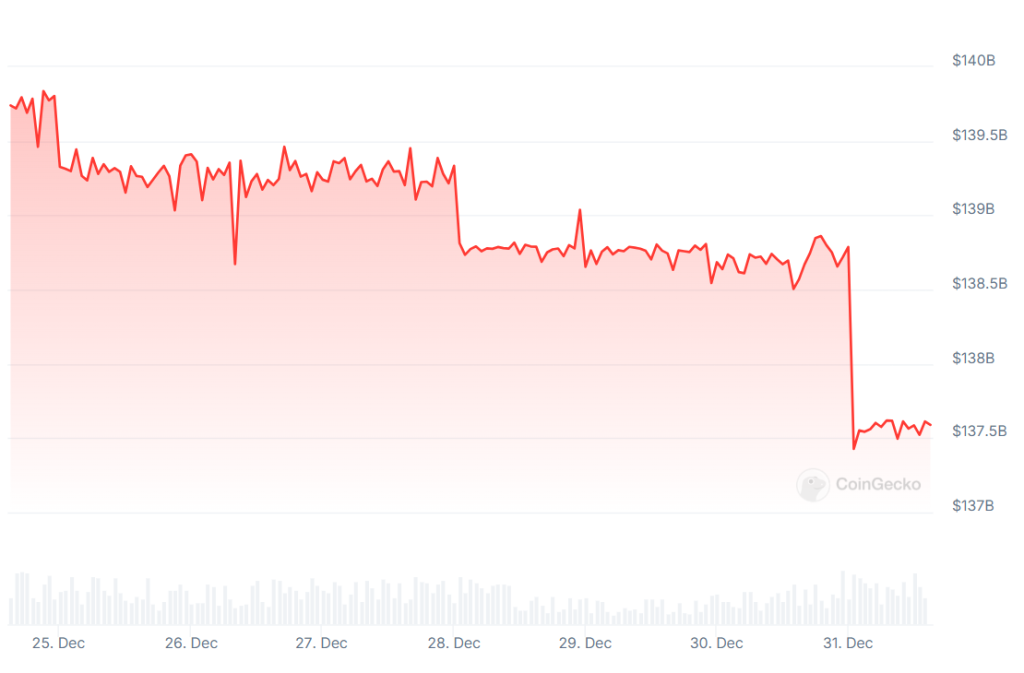 USDT’s market cap over the past week. (Source: CoinGecko)
Several users reported witnessing vendors accepting USDT payments and even purchasing items with Tether at the market.
The market, a collection of multi-story buildings in East-central Seoul, serves as a hub for fashion and textiles in the capital.
Comprising 30 shopping malls and several outdoor markets, along with wholesale markets, the area is particularly popular among Chinese buyers.
This includes wholesale purchasers who acquire items in South Korea for resale in Mainland China.
The reports from earlier this month suggested that it was this demographic specifically that was propelling USDT adoption, compensating South Korean market vendors in Tether for their wholesale transactions.
On one prominent thread, South Koreans noted that “friends who do business with Chinese clients ‘use USDT a lot.’”
Another user claimed they had “purchased items” for USDT at the market, while others asserted that “about 10%” of wholesale trade at the market was now conducted using USD-pegged stablecoins.
Nonetheless, Viewers reporter Hwang Bo-ram mentioned that several vendors and merchants at Dongdaemun Market indicated that cash, rather than crypto, remains their preferred currency.
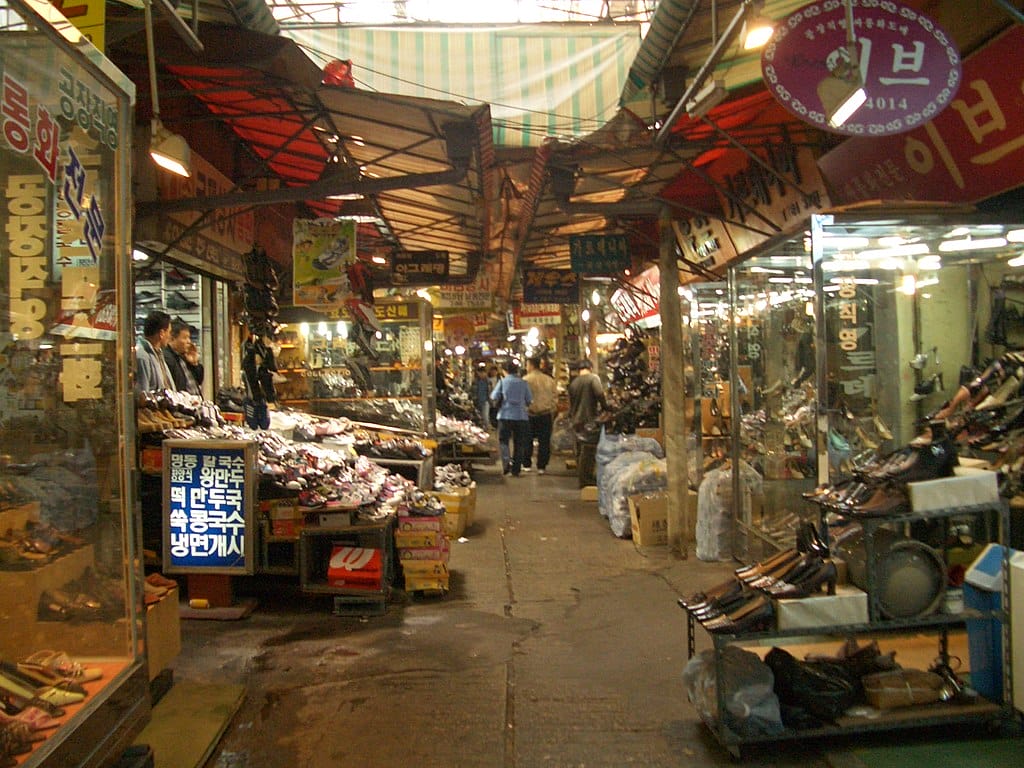 Dongdaemun Market in Seoul, South Korea. (Source: Neaners [CC BY 2.0])
‘Still Too Early for Stablecoins’
Hwang noted that while the general public is becoming more acquainted with stablecoins, “most of the interviewees” the media outlet consulted stated it “is still too early to use them in real transactions.”
However, these same interviewees “agreed” that it is “possible that stablecoins” could “connect the traditional economy with the world of blockchain in the future.”
The vendors suggested that cash transactions, unlike those on blockchain networks, are nearly untraceable.
Presumably for tax reasons, many merchants appear eager to leave as little trace as possible of their transaction records.
Related Posts
Lee (name withheld), a Dongdaemun-based men’s clothing dealer with 20 years of experience, told the media outlet:
“There have been stories about crypto adoption here before. But the reality is, [stablecoins] are not used much in the market, contrary to the reports. Merchants are quite change-averse. They dislike leaving evidence of their transactions. That’s why most transactions are conducted in cash here.”
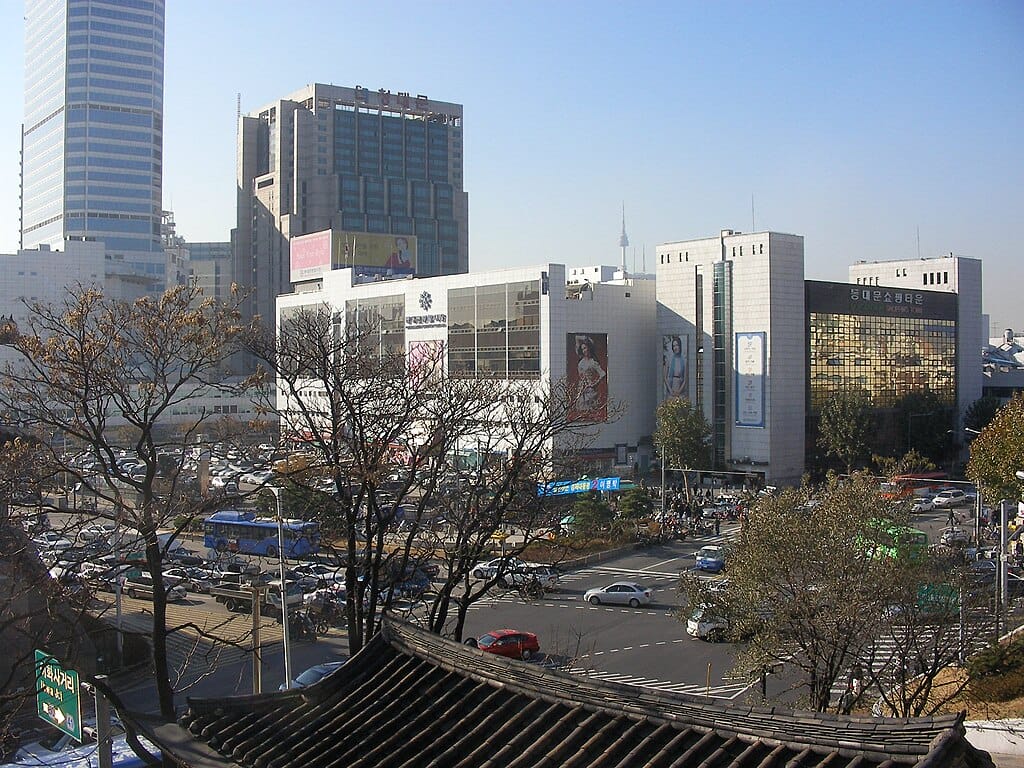 Shopping malls at Dongdaemun Market in Seoul, South Korea. (Source: Martin Röll/Großmarkthallen [CC BY-SA 2.0])
Age a Factor?
Lee mentioned another reason vendors remain hesitant about adopting stablecoins and Bitcoin (BTC). The vendor explained:
“Dongdaemun retailers are unlikely to use crypto in peer-to-peer transactions as they tend to rely on brokers to process payments on their behalf. I don’t know what will happen in the future. But I think that most won’t use stablecoins at the moment due to tax-related issues.”
Park (name also withheld), another Dongdaemun-based vendor at “a medium-sized trading company that targets Chinese clients,” stated:
“Most fashion merchants were born in the 1950s and 1960s, so I think it’s [difficult for them] to use cryptocurrency.”
Regardless, it seems there is some truth to the rumors. In a December 24 article published in Weekly Dong-a, a prominent mainstream media magazine, a tech journalist wrote:
“While cryptocurrencies have primarily been used for illegal transactions in the past, they have recently been actively utilized in the import and export of general goods such as clothing, textiles, and electronics.”
Dongdaemun Design Plaza in Jung-gu, central Seoul, is celebrating the return of the holiday season with its annual media art festival, which attracted up to 620,000 visitors last winter.https://t.co/1PEEc3PJ0o
— The Korea Herald 코리아헤럴드 (@TheKoreaHerald) December 19, 2024
Smartphone Payments on the Rise
The same article also featured the sub-headline “Payment with cryptocurrency at Dongdaemun Market.” This introduced a section on USDT and other stablecoins.
Myung-hee (surname withheld), a part-time employee at a popular Dongdaemun shopping center, informed Cryptonews.com:
“The stall I work at doesn’t accept USDT or any other token. However, I do see many Chinese clients paying with their smartphones around the area, with local vendors accepting payments on their own devices. I can’t say if these are crypto transactions or not – I really couldn’t say.”
Dongdaemun to expand green belt to help Seoul become future city https://t.co/PD9MOY5uHv
— The Korea Times (@koreatimescokr) October 24, 2023
Another writer claimed on December 23:
“If you look around Dongdaemun, it’s easy to see Chinese merchants or small import/export businesspeople paying with cryptocurrencies stored in their smartphone wallets instead of dollars, yuan, or Korean won.”
USDT is also exceptionally popular in China and other BRICS nations, despite Beijing’s extensive crypto crackdown.
In 2019, Chainalysis reported that Tether “dominates in China.” It referred to the stablecoin as “the de facto fiat in Chinese trading.”
The post South Korea: Dongdaemun Market Vendors Deny ‘USDT Pay Adoption’ Reports appeared first on Cryptonews.
