Disclaimer: Information found on CryptoreNews is those of writers quoted. It does not represent the opinions of CryptoreNews on whether to sell, buy or hold any investments. You are advised to conduct your own research before making any investment decisions. Use provided information at your own risk.
CryptoreNews covers fintech, blockchain and Bitcoin bringing you the latest crypto news and analyses on the future of money.


The government of South Korea is poised to expedite pro-business cryptocurrency reforms, which will include regulations for stablecoins.
The South Korean publication Metro Seoul reported that the Presidential Committee on State Affairs revealed its intentions during a public briefing on August 13.
Progress in South Korea’s Crypto Reform
The committee outlined a five-year strategy for state governance, identifying 123 tasks related to state affairs.
Included among these tasks were “the establishment of a digital asset ecosystem” and “advancing the domestic cryptoasset market.”
Both initiatives were recognized as “essential national tasks” for the administration, which commenced its term in early June this year following the election of President Lee Jae-myung.
On Wednesday, President Lee Jae Myung presented an extensive five-year policy framework, detailing 123 national tasks that encompass everything from constitutional reform to industrial development and market equity. https://t.co/52cb7gzOvi
— The Korea JoongAng Daily (@JoongAngDaily) August 13, 2025
Lee has consistently expressed his desire to enhance the domestic crypto industry, with a focus on deregulation and stablecoin oversight.
The President seems eager to permit local companies to issue stablecoins pegged to the won. Major banks and IT firms have responded by registering numerous trademarks related to stablecoins.
Others are rapidly implementing crypto-related business strategies, recognizing that this could enable non-financial companies to create sophisticated payment systems.
However, one of President Lee’s significant campaign promises, the dissolution of the Financial Services Commission (FSC), was omitted from the five-year plan.
The FSC serves as the country’s primary financial regulator. Its Financial Intelligence Unit (FIU) oversees the nation’s cryptocurrency exchanges, granting operating licenses and conducting regular on-site evaluations.
It also enforces anti-money laundering and counter-terrorism financing regulations at the trading platforms.
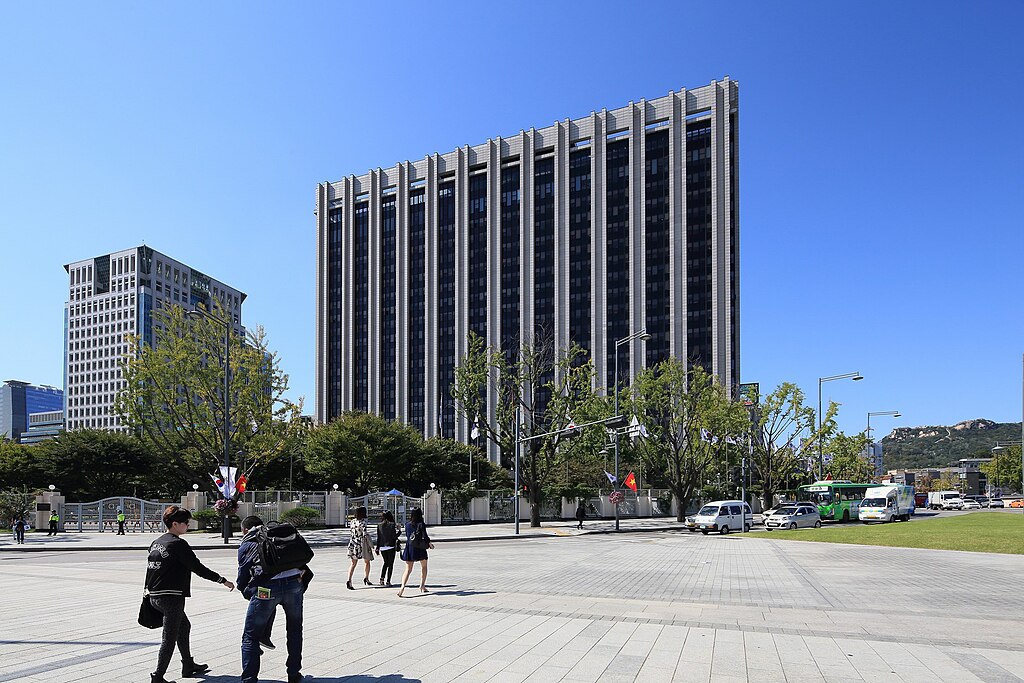 The Government Complex Building in Seoul, South Korea. (Source: Seoul Institute [CC BY 4.0])
FSC: A Less Vocal Critic?
In prior years, the FSC has been a vocal critic of the cryptocurrency sector. However, in recent times, as governments have softened their stringent positions towards the industry, it has advocated for reform.
Related Posts
According to the proposal, the supervisory responsibilities of the FSC were set to be transferred to the Financial Supervisory Service.
The policy-related functions of the FSC were expected to shift to the Ministry of Strategy and Finance.
Nonetheless, Lee’s initiative to eliminate the FSC has sparked controversy, even among high-ranking ministers. While his office has yet to confirm whether the President has abandoned the policy, the five-year plan seems to indicate that the proposal may have been deprioritized.
The regulatory reorganization was not mentioned in the plan, and seven of the 123 tasks were allocated to the FSC.
The publication noted that cryptocurrency reforms are a “primary focus” for both the government and the National Assembly this year.
Consequently, reforms are “anticipated to gain traction” in the upcoming weeks, according to Metro Seoul.
‘Time to Catch Up’
Political leaders are worried that South Korea is falling behind. They point out that over the last two years, the global cryptocurrency market has grown by approximately 262%.
While cryptocurrency investment has surged in the US, the European Union, and Japan, driven by institutional initiatives, the same cannot be said for Seoul. The outlet stated:
“Prolonged institutional reforms and a lack of legislation in South Korea have resulted in the domestic cryptoasset market lagging significantly in terms of competitiveness.”
South Korea says President Lee Jae Myung to visit Japan this month https://t.co/PmtmRcPibF
— Nikkei Asia (@NikkeiAsia) August 13, 2025
The FSC has prioritized its strategy to enable corporations to trade cryptocurrencies. It also aims to adopt a “more lenient approach” to regulations.
The regulator has previously indicated its intention to implement crypto-related regulations before the end of this year.
However, skeptics argue that a final determination regarding the future of the FSC has yet to be made. Discussions about abolishing the regulator “may resume in the future,” the publication explained.
Unnamed officials in the financial sector suggested that the conversation surrounding the reorganization of financial regulators would “persist until the end of the year.”
Earlier this month, the Gangnam district of Seoul reported it had recovered $144,057 in unpaid taxes during the first half of this year by seizing cryptocurrencies from tax evaders.
The post South Korea Takes Another Step Toward Crypto Reform Amid Talk of Regulatory Shake-up appeared first on Cryptonews.
