Disclaimer: Information found on CryptoreNews is those of writers quoted. It does not represent the opinions of CryptoreNews on whether to sell, buy or hold any investments. You are advised to conduct your own research before making any investment decisions. Use provided information at your own risk.
CryptoreNews covers fintech, blockchain and Bitcoin bringing you the latest crypto news and analyses on the future of money.


On April 5, Solana co-founder Anatoly Yakovenko announced that the issue affecting the blockchain ecosystem, which resulted in transaction failures and delays in block finalization, had been “identified and patched.”
Yakovenko noted that although the Solana network issue has been resolved, the implementation of other significant updates may not be simple.
Solana Network Issue Arises from Version 1.14 Upgrade
In a post on X, Yakovenko explained that addressing bugs is more challenging than merely maintaining a network for users.
“Handling congestion bugs is far more difficult than a complete liveness failure. The latter is a one-time issue; the bug is identified, patched, and the chain continues,” the post stated. “The former requires going through the entire release and testing process. Rapid deployment is not feasible.”
Yakovenko’s statement follows a post by co-founder Raj Gokal on X earlier this month, which discussed the overall issues facing the Solana chain and the engagement of top-tier personnel to resolve these challenges.
World-class engineering teams are working tirelessly to implement fixes that enhance the transaction submission experience on @solana.
I am in contact with them multiple times daily to check on progress, and they indicate that this is a very constructive way to assist in the solution.
— raj
(@rajgokal) April 4, 2024
Since early March, the Solana network has had to respond to increasing complaints about ongoing transaction problems, which include an estimated 77.4% failure rate.
This network issue has impacted users, developers, and other services operating on Solana.
Currently, 77.4 percent of transactions on the Solana network fail and are not processed – all due to the excitement surrounding meme tokens. pic.twitter.com/GdL2B2GsSc
— Sjuul | AltCryptoGems (@AltCryptoGems) April 5, 2024
Data from Dune Analytics also indicated that over 70% of non-voting transactions have failed since the beginning of April, a significant rise from the 54% failure rate observed in March.
In response to the widespread network congestion, the Solana Foundation has announced various measures and recommendations. These include optimizing Computing Unit (CU) usage, where developers are encouraged to define a compute unit budget for their transactions to prevent unnecessary resource use and enhance efficiency.
The Solana team also stated that a major update (v1.18) is planned for April to address congestion challenges and enhance network performance and reliability.
Solana Blockchain Network Outages Increase
Solana recovered from the fallout of FTX’s collapse in 2022, which caused its native token, SOL, to fall below $10. This decline was attributed to FTX ex-CEO Sam Bankman’s strong backing of Solana, which sparked controversy.
Related Posts
Notably, the asset exceeded the $200 mark on March 18, 2024, and is anticipated to reach its all-time high of $260 from November 2021 by the end of 2024.
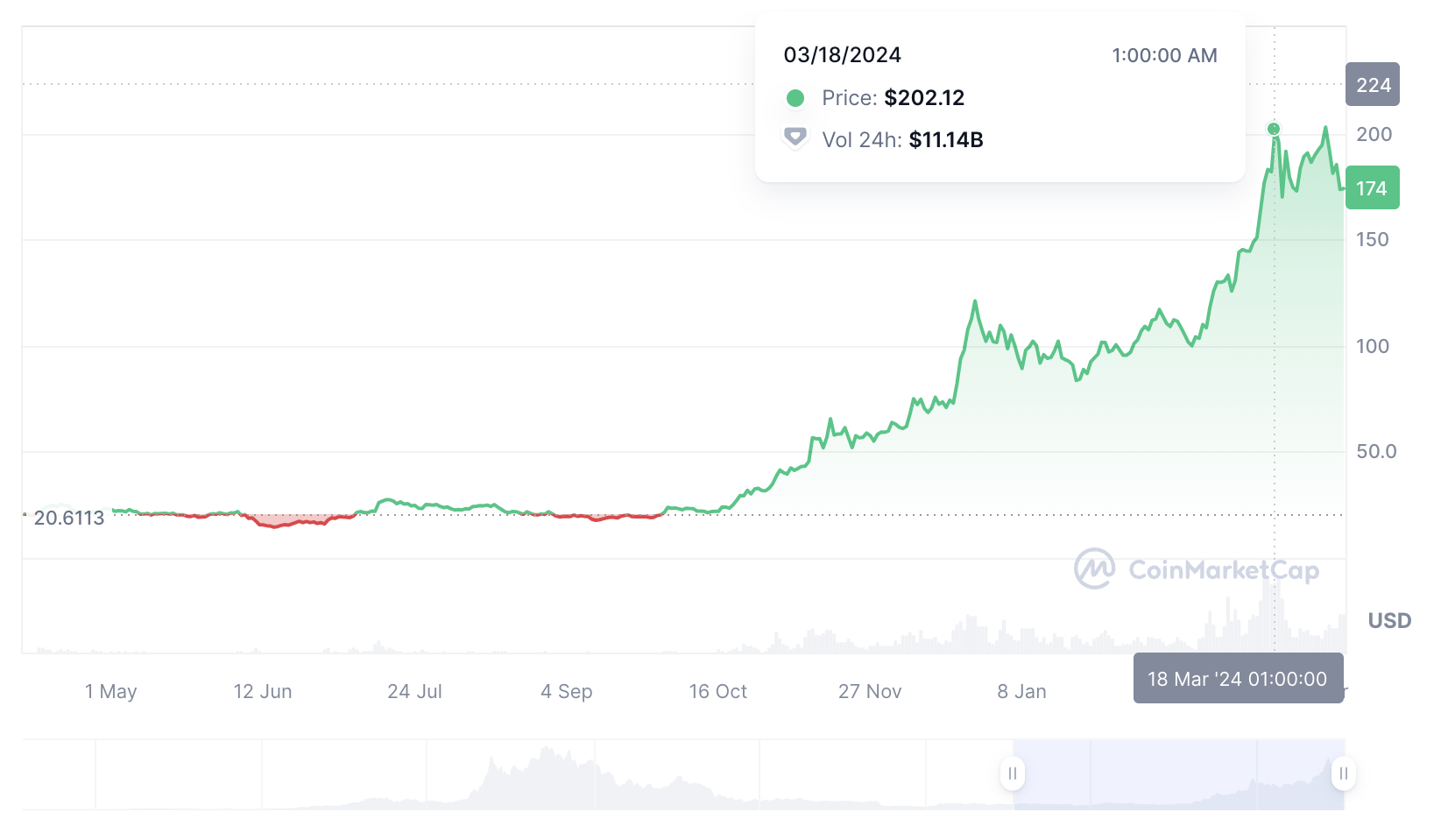 CoinMarketCap data on SOL 1-year Market Trend
This resurgence has been largely fueled by its role as a smart contracts platform that enables rapid and cost-effective cryptocurrency transactions – a compelling alternative to the congested Ethereum ecosystem and its high gas fees.
Additional factors include projects launched on the platform, such as popular memecoins like Bonk (BONK) and dogwifhat (WIF), which have entered the top 50 tokens by market capitalization and created numerous crypto millionaires.
These elements have led to significant congestion on the Solana network, adversely affecting transaction processing, causing delays in node communication, and impacting the overall performance of the platform.
According to data from blockchain analyst Dagnum-PI, Solana is currently experiencing congestion with an average ping time (APT) of 20-40 seconds, indicating delays in node communication.
#Solana is currently congested with an Average Ping Time of 20-40s, 30-50% Ping loss, up to 50-80% failed transactions. $SOL
Solana’s TPS isn’t 50k due to vote transactions; it’s merely marketing. In reality, under full network conditions with 30-50s wait times, Solana maxes out… pic.twitter.com/NJJfZGDBgo
— Dagnum P.I. (@Dagnum_PI) March 17, 2024
The analyst reported a ping loss ranging from 30% to 50%, which has contributed to transaction failures and delays, with up to 50% to 80% of transactions failing, highlighting serious issues with transaction processing and network stability.
Dagnum-PI data further suggested that high levels of spam from memecoin activities and Miner Extractable Value (MEV) have overwhelmed Solana’s capacity, resulting in blockchain network outages.
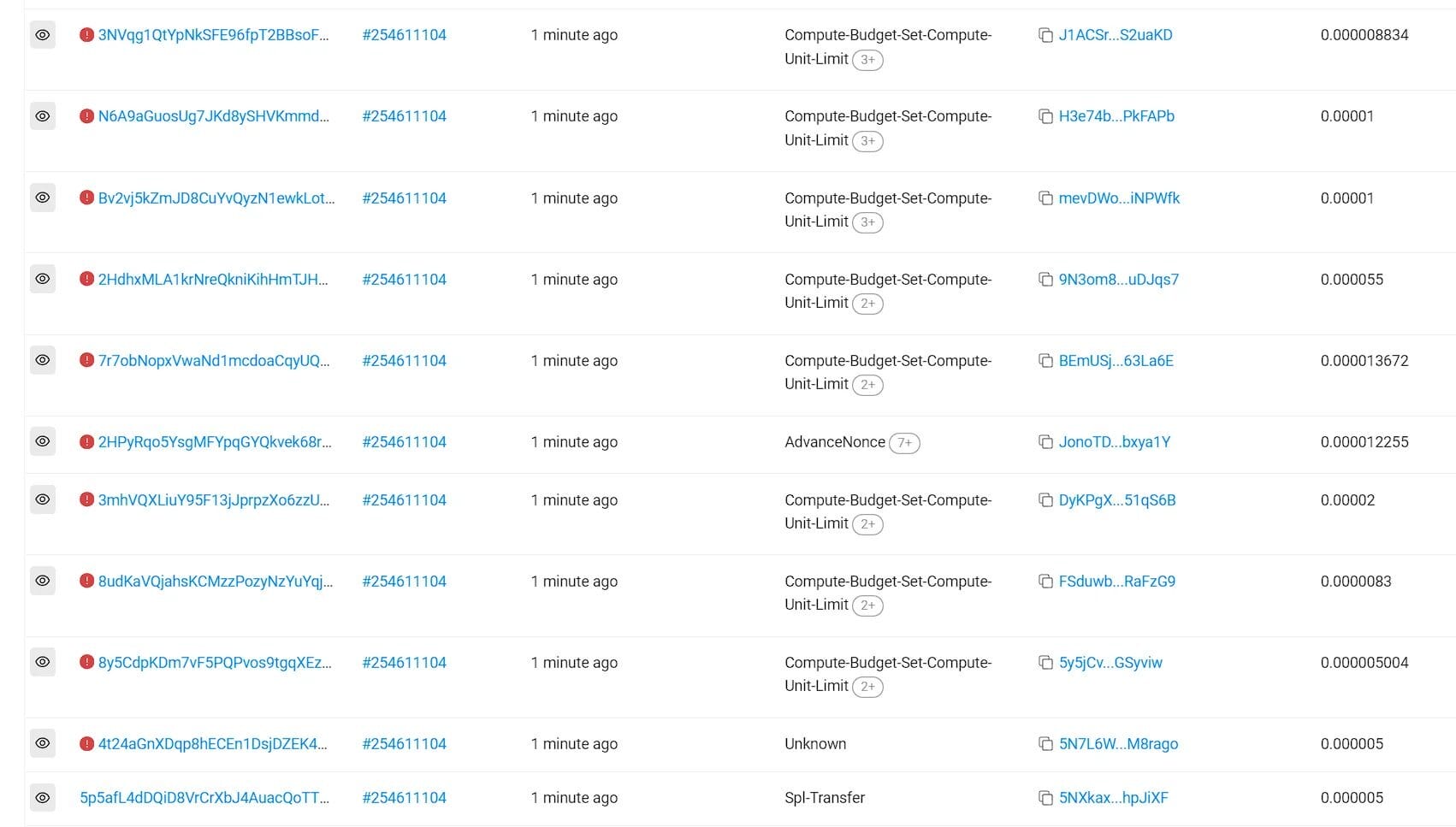 Solscan March 17 data on meme coin activity
As Solana’s value increases, the network’s history of outages has raised concerns due to the effects of congestion, which could complicate blockchain issues further.
Solana users demand improvements: network congestion and transaction failures are intolerable. $SOL must enhance its capabilities to meet the demands of a bullish market with its current 76.8% transaction failure rate. pic.twitter.com/F0vVpUtyMj
— Kyledoops (@kyledoops) April 5, 2024
Data from CryptoManiaks indicates that Solana has experienced nine blockchain network outages since 2021, totaling over 150 hours of downtime.
It is worth noting that network congestion in October 2023 led to liquidations and drove users away from the platform. The network also faced downtime in February, resulting in five hours of service interruption.
The post Solana Founder Explains Reason For Network Glitch appeared first on Cryptonews.
