Disclaimer: Information found on CryptoreNews is those of writers quoted. It does not represent the opinions of CryptoreNews on whether to sell, buy or hold any investments. You are advised to conduct your own research before making any investment decisions. Use provided information at your own risk.
CryptoreNews covers fintech, blockchain and Bitcoin bringing you the latest crypto news and analyses on the future of money.

Solana Approves Alpenglow Upgrade to Reduce Block Finality from 12.8 Seconds to 150 Milliseconds

Solana validators are currently casting their votes on SIMD-0326, a significant protocol transformation that aims to replace the existing TowerBFT consensus mechanism with Alpenglow, a new system that promises to decrease block finality from 12.8 seconds to as little as 100-150 milliseconds.
This proposal introduces direct voting, signature aggregation, and a Validator Admission Ticket fee of 1.6 SOL per epoch to uphold economic barriers while removing on-chain vote transactions.
BREAKING: @Anza_xyz has initiated the Solana community governance process for SIMD 326, Alpenglow, the most significant consensus upgrade proposal in the network’s history. Alpenglow is a new consensus algorithm designed to achieve 150ms block finality.
The timeline includes a… pic.twitter.com/rgJ8anu1b0— SolanaFloor (@SolanaFloor) August 14, 2025
The Alpenglow upgrade focuses on Votor, a lightweight voting protocol that finalizes blocks through either single or dual-round voting processes, depending on the network’s conditions.
Validators would directly exchange votes using cryptographic aggregates to demonstrate consensus, significantly lowering bandwidth overhead caused by extensive gossip traffic.
The system introduces strong certification mechanisms with various certificate types for notarizing, skipping, or finalizing blocks based on validator votes.
Revolutionary Consensus Overhaul Targets Web2-Level Performance
The implementation of Alpenglow will mark a significant shift from Solana’s Proof-of-History and TowerBFT mechanisms.
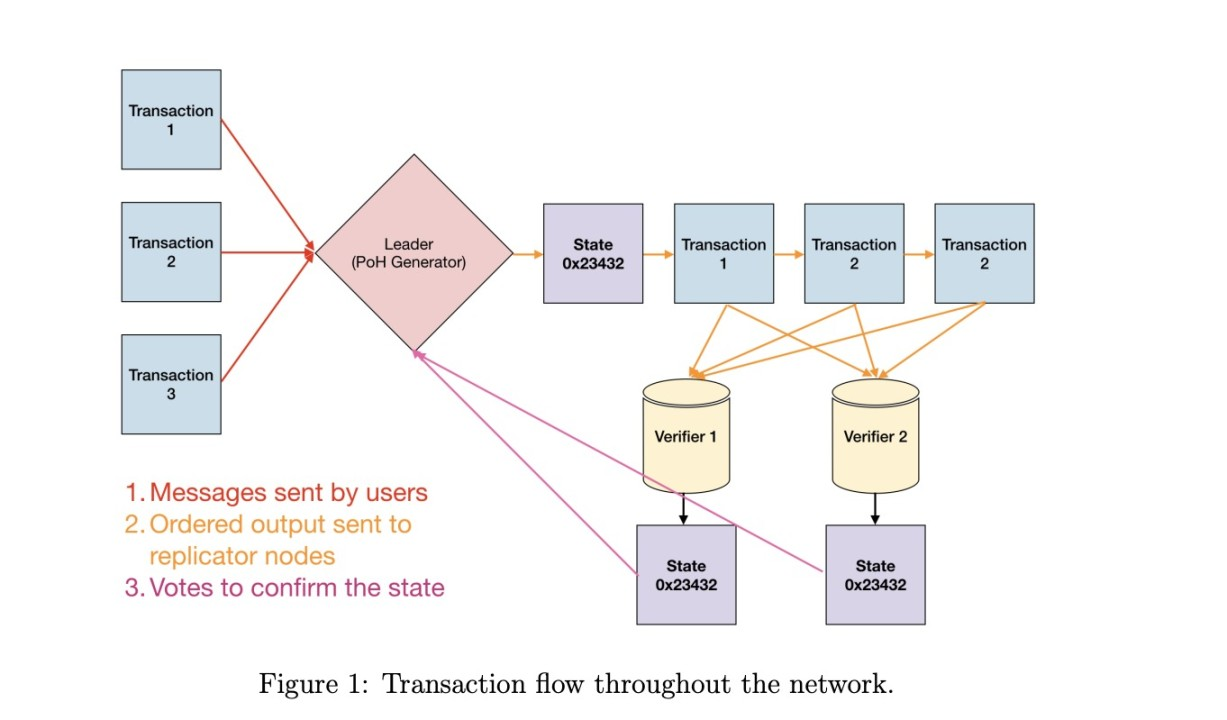 Source: Solana White Paper
This upgrade will tackle performance and security constraints that lead to prolonged finality delays without formal safety assurances.
The new architecture operates on a “20+20” resilience model, enabling the protocol to remain operational even if 20% of validators are adversarial and another 20% are unresponsive.
The protocol segments time into discrete slots with designated leaders selected through a randomized, verifiable process.
Each leader oversees consecutive slots during their designated period, gathering transactions to form blocks that are divided into intermediate slices and smaller shreds.
These shreds are initially disseminated across the network using Turbine, with plans to transition to the more efficient Rotor system in a future update, which will necessitate separate SIMD approval.
Off-chain voting replaces the current method where validators submit on-chain vote transactions for each slot, thereby eliminating considerable bandwidth, transaction fees, and processing overhead.
 Source: B2BInPay
Related Posts
Validators cast precisely one vote per slot, with conflicting votes being identifiable and participation failures leading to exclusion from rewards and potential removal from the active validator set.
The Validator Admission Ticket mechanism mandates that each validator pays 1.6 SOL per epoch prior to participation, with the fee burned to mitigate inflation while maintaining existing economic dynamics.
This upfront expense replaces direct transaction fees for voting, sustaining an equivalent economic barrier during the transition phase.
Community Debate Centers on Economic Impact and Implementation Risks
Validator feedback indicates a range of opinions regarding the upgrade’s economic effects and implementation approach.
One validator, Firedancer, expressed strong endorsement, highlighting that the simplifications would save considerable time addressing TowerBFT edge cases.
Conversely, other community members voiced concerns that the 1.6 SOL fee could create significant entry barriers for new validators while safeguarding the current active set.
Alternative VAT models were proposed in discussions, including pro-rata distribution based on active stake or segmentation by stake size with tiered fees ranging from 0.5 to 5 SOL per epoch.
Proponents argue that the current 1.6 SOL fee represents only 80% of existing on-chain voting costs, making participation marginally more accessible while ensuring network security.
Technical issues focus on transaction expiration policies without Proof-of-History, validator performance monitoring with off-chain voting, and the lack of comprehensive testing and deployment strategies.
Community members raised questions about how blockhash replacement would prevent double-spend attacks and whether timeout mechanisms would impact block building time and Jito auction processes.
The voting process will span epochs 833-842, featuring discussion periods followed by stake weight collection, token distribution through the adapted Jito Merkle Distributor tool, and final voting across Yes, No, and Abstain addresses.
The proposal requires a two-thirds majority of Yes votes against No votes to pass, with a 33% quorum threshold that includes abstentions.
This upgrade occurs as Solana continues its governance evolution following previous contentious votes, including the rejected SIMD-0228 dynamic inflation proposal that did not achieve supermajority approval despite initial institutional backing.
Looking ahead, the Alpenglow upgrade seeks to attain consensus latency at Web2-level performance while also enhancing security measures and economic fairness.
However, critics are calling for thorough testing plans and clearer implementation strategies before endorsing such fundamental protocol modifications during the current bull market cycle.
The post Solana Votes on Alpenglow Upgrade to Cut Block Finality from 12.8s to 150ms appeared first on Cryptonews.
