Disclaimer: Information found on CryptoreNews is those of writers quoted. It does not represent the opinions of CryptoreNews on whether to sell, buy or hold any investments. You are advised to conduct your own research before making any investment decisions. Use provided information at your own risk.
CryptoreNews covers fintech, blockchain and Bitcoin bringing you the latest crypto news and analyses on the future of money.

Regulatory Framework for Cryptocurrency Banking Set for Revision as International Authorities Raise Concerns Over Stablecoins

Global banking regulators are gearing up to revise regulations regarding how banks manage crypto assets, especially stablecoins, as pressure increases from significant economies and industry organizations to amend strict capital requirements set to be implemented next year.
Global regulators are assessing banking regulations concerning crypto holdings, particularly stablecoins, which are scheduled to take effect next year. The initial Basel standards from 2022 imposed substantial capital requirements, leading many banks to steer clear of crypto. The review seeks to refresh these regulations in response…
— Wu Blockchain (@WuBlockchain) October 31, 2025
The Basel Committee on Banking Supervision (BCBS), the leading global banking standard-setting body, is currently deliberating potential changes to its 2022 framework, which established some of the most stringent capital rules ever proposed for crypto holdings.
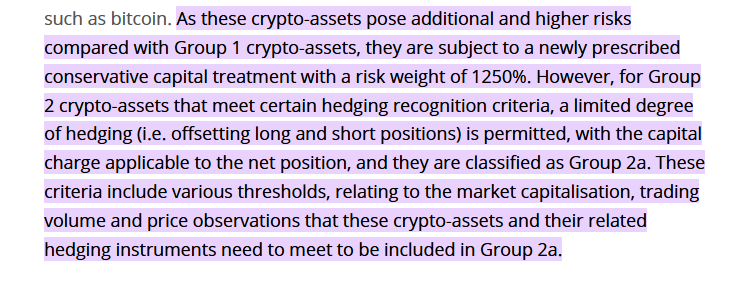
The standards, formulated after years of fluctuations in digital markets, mandated that banks assign a 1,250% risk weight to unbacked crypto assets like Bitcoin, meaning they must maintain capital equivalent to the total value of their crypto exposure.
These regulations, intended to safeguard banks from possible losses, effectively deterred most institutions from providing crypto-related services.
However, the swift growth of stablecoins and a broader transformation in how regulators and governments perceive digital assets have sparked renewed discussions.
Are Basel’s Rules Set to Adapt to the Crypto Market?
As reported by Bloomberg, the United States is spearheading calls for modifications, contending that the original standards have become outdated and misaligned with the current landscape of the crypto market.
Stablecoins, digital tokens linked to assets such as the U.S. dollar, have experienced rapid growth, with new regulatory frameworks like the U.S. GENIUS Act promoting their use for transactions.
Nevertheless, under the existing Basel regulations, permissionless stablecoins such as Tether (USDT) and Circle’s USDC, which function on open blockchain networks, are subjected to the same heavy capital requirements as highly volatile cryptocurrencies like Bitcoin.
Senior finance leaders indicated that this strategy has left banks sidelined, unable to meet the increasing institutional demand for digital asset services.
A recent report from The Banker highlighted that the high-risk classification has rendered it “economically unviable” for banks to hold crypto on their balance sheets, pushing trading activities toward unregulated platforms.
 Source: ECB
The BCBS framework, initially finalized in late 2022 and revised in 2024, categorizes crypto assets into two primary groups: Group 1, which encompasses tokenized traditional assets and stablecoins with dependable backing mechanisms, and Group 2, which includes all other crypto assets subject to punitive capital treatment.
The global rollout of these standards has been postponed by one year to January 2026.
Global Regulators Diverge on Basel Crypto Standards as Implementation Approaches
While the Basel Committee’s guidelines are not mandatory, its 45 members, including regulators from 28 jurisdictions, generally adopt them domestically.
However, not all major regions are aligned on the same timeline. The European Central Bank advocates for the implementation of the existing rules first, while the U.S., U.K., and several Asian jurisdictions are pursuing revisions before the standards take effect.
Related Posts
Singapore recently delayed its rollout by a year to ensure global consistency, and Hong Kong intends to follow in 2026 with more lenient requirements for licensed stablecoins.
In the European Union, the Basel standards are being integrated through the Capital Requirements Regulation (CRR 3) and the Markets in Crypto-Assets (MiCA) framework.
Draft regulations from the European Banking Authority (EBA) released in August detail methods for calculating crypto exposure across credit, market, and liquidity risks.
Unbacked crypto assets will maintain a 1,250% risk weight, while stablecoins backed by traditional assets may receive a reduced 250% charge.
The EBA’s approach aligns with Basel principles but introduces transitional rules, permitting banks limited engagement with digital assets while more permanent frameworks are established.
The EU is also preparing for the introduction of a euro-backed stablecoin in 2026, led by a consortium of nine European banks, including ING and UniCredit, under MiCA oversight.
European banks are looking at euro-backed stablecoins as a pivotal moment — but can the EU keep pace with the U.S. & Asia?#Euro #Stablecoinhttps://t.co/buLmb8VG5H
— Cryptonews.com (@cryptonews) September 26, 2025
 European banks are looking at euro-backed stablecoins as a pivotal moment — but can the EU keep pace with the U.S. & Asia?#Euro #Stablecoinhttps://t.co/buLmb8VG5H
The United Kingdom is adopting a similarly cautious approach. The Bank of England has indicated that forthcoming regulations will likely lean towards the “restrictive end,” encouraging banks to maintain minimal crypto exposure.
The Prudential Regulation Authority is formulating a new prudential framework, CRYPTOPRU, anticipated to be finalized in 2026.
GENIUS Act Ignites Policy Debate Over Stablecoin Treatment in Banking Sector
Meanwhile, U.S. regulators are reassessing their prudential treatment of stablecoins following the enactment of the GENIUS Act earlier this year.
The legislation establishes a framework for stablecoin issuance and payments but leaves unresolved questions regarding how banking regulations will evolve.
The Federal Reserve, OCC, and FDIC are collaborating on how to implement Basel standards while addressing domestic regulatory overlaps.
Industry groups have amplified their calls on the Basel Committee to alleviate the capital burden. In August, associations including the Global Financial Markets Association and the Institute of International Finance urged regulators to eliminate what they termed “cliff-effect” penalties.
Wall Street organizations are urging the Basel Committee to suspend the 1,250% crypto capital requirements, labeling the framework outdated for digital assets.#WallStreet #Cryptohttps://t.co/34UBliWsi0
— Cryptonews.com (@cryptonews) August 20, 2025
Their joint letter contended that categorizing tokenized U.S. Treasury securities as high-risk solely because they exist on public blockchains contradicts technology-neutral policy principles.
This discussion arises amid broader concerns regarding how stablecoins could transform global finance.
A recent report by Standard Chartered cautioned that over $1 trillion could migrate from emerging-market banks into stablecoins by 2028, as users in developing nations seek dollar-pegged digital assets as a more secure store of value.
The post Crypto Banking Rules Face Overhaul as Global Regulators Sound the Alarm on Stablecoins appeared first on Cryptonews.
