Disclaimer: Information found on CryptoreNews is those of writers quoted. It does not represent the opinions of CryptoreNews on whether to sell, buy or hold any investments. You are advised to conduct your own research before making any investment decisions. Use provided information at your own risk.
CryptoreNews covers fintech, blockchain and Bitcoin bringing you the latest crypto news and analyses on the future of money.


The head of the German Bundesbank is now publicly supporting euro-denominated crypto stablecoins and even a retail central bank digital currency (CBDC). This marks a significant change.
Joachim Nagel is not presenting this as a choice. He asserts that Europe requires these instruments to safeguard itself against the supremacy of the US dollar.
The sentiment has shifted from cautiousness to urgency. With the EU advancing on MiCA regulations, Europe clearly aims to keep pace with the US in influencing the future of digital currency.
Key Takeaways
- Strategic Shift: Bundesbank President Nagel supports private stablecoins to decrease cross-border payment expenses and enhance EU financial autonomy.
- Monetary Independence: This initiative seeks to challenge the prevalence of USD-pegged assets, which currently dominate the stablecoin sector.
- Wholesale Innovation: Nagel specifically emphasized wholesale CBDCs for facilitating programmable payments among financial institutions.
Why Is the German Bundesbank Advocating for Crypto Adoption Now?
This is more than mere policy discussion. It concerns the control of digital payment systems. Speaking in Frankfurt, Nagel underscored that Europe must establish its own settlement framework before it falls further behind.
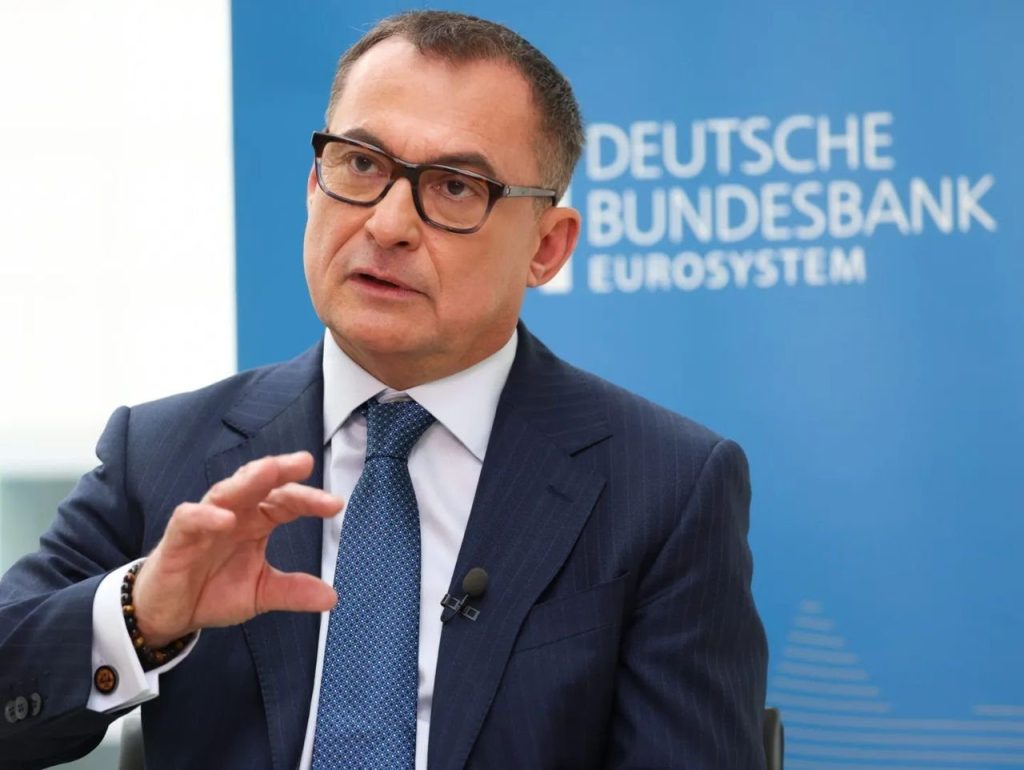 Source: Joachim Nagel
Dollar-backed stablecoins currently hold over $310 billion in market capitalization. In contrast, euro-based liquidity is minimal. This disparity raises concerns among regulators. Without a viable alternative, Europe risks succumbing to what some refer to as digital dollarization.
Time is of the essence. The US is rapidly advancing stablecoin legislation, which could further entrench dollar dominance. Nagel’s position reflects a drive to safeguard monetary sovereignty before the balance shifts too significantly.
The Framework: Programmable Money and Wholesale CBDCs
Related Posts
Nagel clearly differentiated between retail instruments and banking infrastructure. For financial institutions, he advocates for a wholesale CBDC that would enable banks to settle programmable payments directly in central bank currency. This capability is something traditional systems cannot currently provide.
For the private sector, he is more receptive to stablecoins. He recognized that euro-denominated stablecoins could facilitate inexpensive and efficient cross-border payments for both individuals and enterprises.

The tone has noticeably shifted from previous cautions regarding the risks of foreign stablecoins dominating the ecosystem. The current emphasis is on developing competitive euro-based alternatives rather than merely raising alarms. This indicates how swiftly the global dialogue surrounding digital payments is progressing.
Can the Euro Compete with the Dollar?
The potential is substantial if Europe follows through. S&P Global Ratings projects that euro-pegged stablecoins could reach €570 billion by 2030 under typical adoption patterns. This is not a niche market; it represents systemic scale.
LATEST:
Euro-pegged stablecoins could surge 1,600x to €1.1 trillion by 2030 as 11 European banks prepare to introduce a joint euro stablecoin in late 2026, according to S&P Global Ratings. pic.twitter.com/aO5faRR287
— CoinMarketCap (@CoinMarketCap) February 4, 2026
However, regulation has dual implications. MiCA provides Europe with clearer guidelines than the US at present, yet stringent capital requirements could hinder innovation if enforced too rigorously.
Simultaneously, political scrutiny regarding foreign digital assets is increasing globally. The competition for stablecoin dominance will not only occur on-chain but will also unfold in legislative arenas.
The critical factor is timing. Both the US and Europe are progressing on final regulations. A digital Euro is no longer a theoretical concept. The only remaining question is how swiftly it will be implemented.
The post Germany Central Bank President Endorses Crypto Stablecoins Under EU MiCA Framework appeared first on Cryptonews.
