Disclaimer: Information found on CryptoreNews is those of writers quoted. It does not represent the opinions of CryptoreNews on whether to sell, buy or hold any investments. You are advised to conduct your own research before making any investment decisions. Use provided information at your own risk.
CryptoreNews covers fintech, blockchain and Bitcoin bringing you the latest crypto news and analyses on the future of money.


The Polish government approved an unchanged version of its contentious crypto-asset market legislation on Tuesday, intensifying a contentious standoff with President Karol Nawrocki after lawmakers were unable to override his veto last week.
As reported locally, Prime Minister Donald Tusk characterized the legislation as a national security issue, referencing over 100 entities in Poland’s crypto registry associated with Russia, Belarus, and other former Soviet nations.
The reintroduced bill has no alterations from the version that Nawrocki rejected, as confirmed by government spokesperson Adam Szłapka.
This measure will be presented to parliament again later this year, despite the president’s apprehensions regarding excessive restrictions that surpass European Union standards and jeopardize property rights.
Szłapka stated that “not even a comma” had been modified in the new bill.
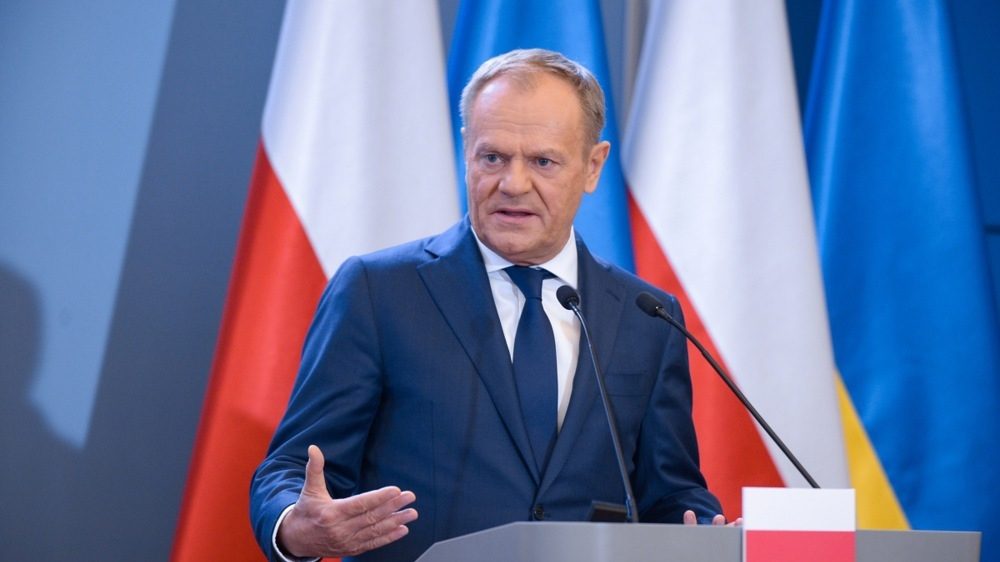 Prime Minister Donald Tusk. | Source: Euractiv
Security Concerns Drive Government’s Push
Tusk underscored the necessity for regulation before Tuesday’s cabinet meeting, contending that the state cannot remain inactive while cryptocurrencies are utilized as instruments of sabotage by Polish adversaries.
He pointed out that Polish authorities had identified several hundred foreign entities operating within the domestic crypto market, and investigations indicated that Russian intelligence and organized crime groups were using digital assets for covert financing.
“We’re confronting very dangerous phenomena involving Russian money and the mafia,” Tusk informed journalists following last week’s unsuccessful veto override.
He implied that funds from these circles supported political promotion under a “political umbrella,” suggesting connections between veto supporters and dubious interests.
Warsaw had previously accused Russia of an explosion on a railway route supplying Ukraine, while security services reported instances of underground groups allegedly compensated in cryptocurrencies for sabotage operations.
National Prosecutor Dariusz Korneluk established a team last week to review files and monitor crimes related to cryptocurrency.
Finance Minister Andrzej Domański criticized the impact of the veto, stating that 20% of clients suffer financial losses due to abuses in the unregulated market while the president “chose chaos.”
Kolejna zawetowana ustawa. Tym razem wbrew klientom i inwestorom rynku kryptoaktywów oraz
podmiotom. Już teraz 20% klientów traci swoje pieniądze w wyniku nadużyć na tym rynku. Chcieliśmy ich chronić, Prezydent wybrał chaos i bierze pełną odpowiedzialność za swoje działania.…
— Andrzej Domański (@Domanski_Andrz) December 1, 2025
 podmiotom. Już teraz 20% klientów traci swoje pieniądze w wyniku nadużyć na tym rynku. Chcieliśmy ich chronić, Prezydent wybrał chaos i bierze pełną odpowiedzialność za swoje działania.…
The government asserts that fundamental control is crucial, given the security threats posed by hostile actors exploiting the unregulated crypto environment.
Presidential Opposition Remains Firm
Related Posts
Nawrocki’s rejection was based on assertions that the legislation surpassed MiCA requirements and endangered civil liberties.
His chief of staff expressed a willingness to consider regulation as long as future proposals do not impose excessive restrictions.
However, the president has not indicated any readiness to approve the current bill despite Tusk’s hope that further security briefings might alter his stance.
The Presidential Palace previously contended that Nawrocki lacked complete information regarding security risks, although government officials now claim he possesses full knowledge.
The blocked legislation would implement MiCA-style regulations through licensing requirements for crypto-asset service providers, investor protection standards, stablecoin reserve mandates, and anti-money laundering measures.
The Polish Financial Supervision Authority would acquire extensive oversight powers, including the authority to block crypto-related websites via administrative orders and to impose fines of up to 10 million zloty or prison sentences of up to five years for serious infractions.
The legislation would also empower the KNF to order account blocking for up to six months in cases of justified suspicion of market abuse.
Critics, including opposition lawmakers and industry representatives, warned that the bill could severely hinder Poland’s crypto sector, which serves an estimated three million users.
Tomasz Mentzen of the Confederation party pointed out the KNF’s average licensing process of 30 months, the longest in the EU, while noting that neighboring countries have implemented MiCA with significantly shorter legislation.
Economist Krzysztof Piech argued that the law was unnecessary since MiCA regulations will safeguard all EU residents starting July 1, 2026.
Nie Panie Ministrze. To że tyle osób traci pieniądze, to nie wina Prezydenta, tylko tego, że oszuści nie są ścigani, a do tego ta ustawa nie była potrzebna.
Od 1 lipca 2026 wszyscy w UE będą chronieni rozporządzeniem MiCA – Polacy też.— Krzysztof Piech (@krzysztof_piech) December 1, 2025
Market Uncertainty Deepens
The failure to override the veto leaves Poland as the only EU member without national MiCA-style regulation ahead of the bloc’s compliance deadline of July 1, 2026.
Industry advocates warned that the stringent framework could drive businesses abroad, resulting in a loss of tax revenue and talent as companies move to more favorable jurisdictions.
Foreign Minister Radosław Sikorski suggested that the crypto industry’s support for right-wing political figures explained the resistance to tighter regulation.
The conflict reflects broader European tensions regarding centralized crypto oversight, with the European Commission proposing that ESMA take direct control of all EU crypto firms instead of maintaining MiCA’s national regulator model.
The post Polish Government Defies President, Reintroduces Identical Crypto Law appeared first on Cryptonews.
