Disclaimer: Information found on CryptoreNews is those of writers quoted. It does not represent the opinions of CryptoreNews on whether to sell, buy or hold any investments. You are advised to conduct your own research before making any investment decisions. Use provided information at your own risk.
CryptoreNews covers fintech, blockchain and Bitcoin bringing you the latest crypto news and analyses on the future of money.


On February 19, Missouri legislators moved House Bill 2080 forward to the House Commerce Committee, marking a crucial advancement toward the creation of a state-operated Bitcoin Strategic Reserve Fund.
Introduced by Representative Ben Keathley, this legislation stipulates a five-year holding duration for digital assets and positions Missouri alongside other Republican-led states that are actively incorporating cryptocurrency into public finance.
Key Takeaways
- HB 2080 empowers the State Treasurer to hold Bitcoin for a minimum of five years.
- The fund will be financed solely through private donations and grants, explicitly banning taxpayer money for acquisitions.
- Missouri joins Arizona and Texas in the race to establish state-level digital asset reserves.
Missouri Legislation Revives Crypto Treasury Initiative
HB 2080 aims to modify Chapter 30 of Missouri law to permit the State Treasurer to accept and retain Bitcoin. This marks Representative Ben Keathley’s second attempt after a similar proposal was unsuccessful in March 2025. The bill has now been refined and forwarded to the House Commerce Committee, indicating that the topic is back on the legislative agenda.
The timing is noteworthy. While Missouri is advocating for a long-term Bitcoin reserve, recent statistics indicate that spot Bitcoin ETFs have experienced several weeks of outflows, suggesting a decline in short-term institutional interest.
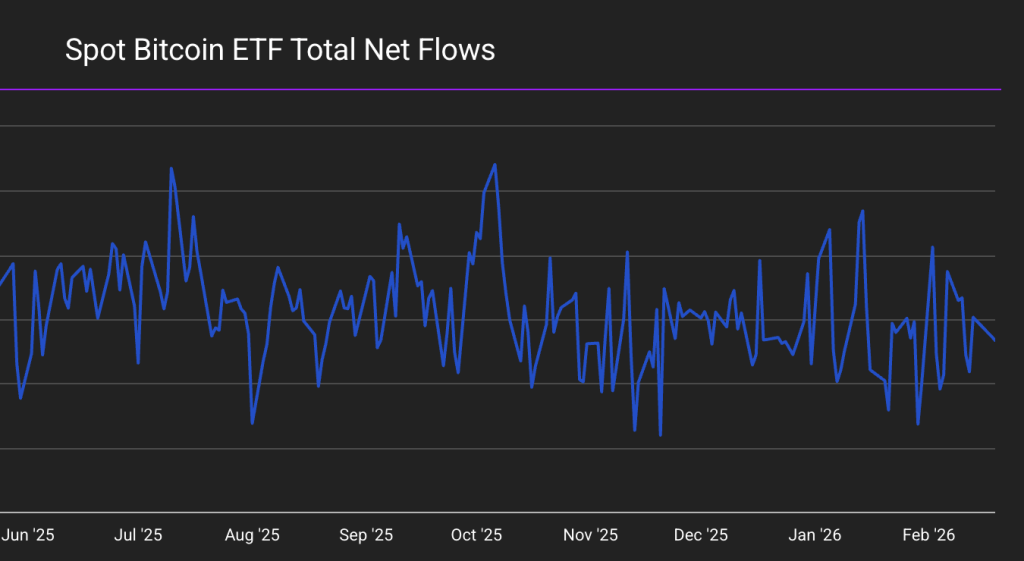 Source: Theblock
If the bill is enacted, the reserve is expected to be operational by August 28, 2026. Proponents view it as a safeguard against federal inflation, emphasizing a long-term approach rather than daily market fluctuations.
Strict Holding Periods and Funding Mechanisms
The legislation is explicit regarding one aspect: any Bitcoin received as a donation must be retained for a minimum of five years before it can be sold or transferred.
Related Posts
 Source: Legiscan
The Treasurer will be required to utilize cold storage, keeping private keys offline to mitigate security vulnerabilities.
Additionally, there is a transparency requirement. The state is obligated to publish reports biennially detailing fund activities, security assessments, and transactions.
State Policy Aligns with Federal Trends
Missouri is not acting in isolation. Numerous states are competing to establish themselves as crypto-friendly centers. By creating a legal framework for holding Bitcoin, lawmakers aim to draw in talent and investment.
NEW:
Arizona’s Digital Assets Strategic Reserve Fund bill (SB1649) has successfully passed the Senate Finance Committee with a 4-2 vote.
Eligible assets specifically include #Bitcoin, $XRP, Digibyte, and stablecoins.The bill now moves to the Rules Committee. pic.twitter.com/kpN6ds0dBv
— Bitcoin.com News (@BitcoinNews) February 17, 2026

 Arizona’s Digital Assets Strategic Reserve Fund bill (SB1649) has successfully passed the Senate Finance Committee with a 4-2 vote.
 The overall regulatory landscape is also evolving. Federal discussions regarding clearer cryptocurrency regulations are gaining traction, which could facilitate the expansion of state-level reserves in the future.
Currently, the bill permits only donation-based accumulation. However, it establishes a precedent. Should federal clarity improve, that framework could be broadened.
If HB 2080 is approved, Missouri will serve as an early example of integrating decentralized assets into a state treasury system.
Discover: Here are the cryptocurrencies likely to surge!
The post Missouri Advances Bitcoin Reserve Bill to House Committee in Policy Push appeared first on Cryptonews.
