Disclaimer: Information found on CryptoreNews is those of writers quoted. It does not represent the opinions of CryptoreNews on whether to sell, buy or hold any investments. You are advised to conduct your own research before making any investment decisions. Use provided information at your own risk.
CryptoreNews covers fintech, blockchain and Bitcoin bringing you the latest crypto news and analyses on the future of money.

Liquidity Disparity in a Multi-Chain Environment: How 2023 Transformed Capital Movement in Cryptocurrency

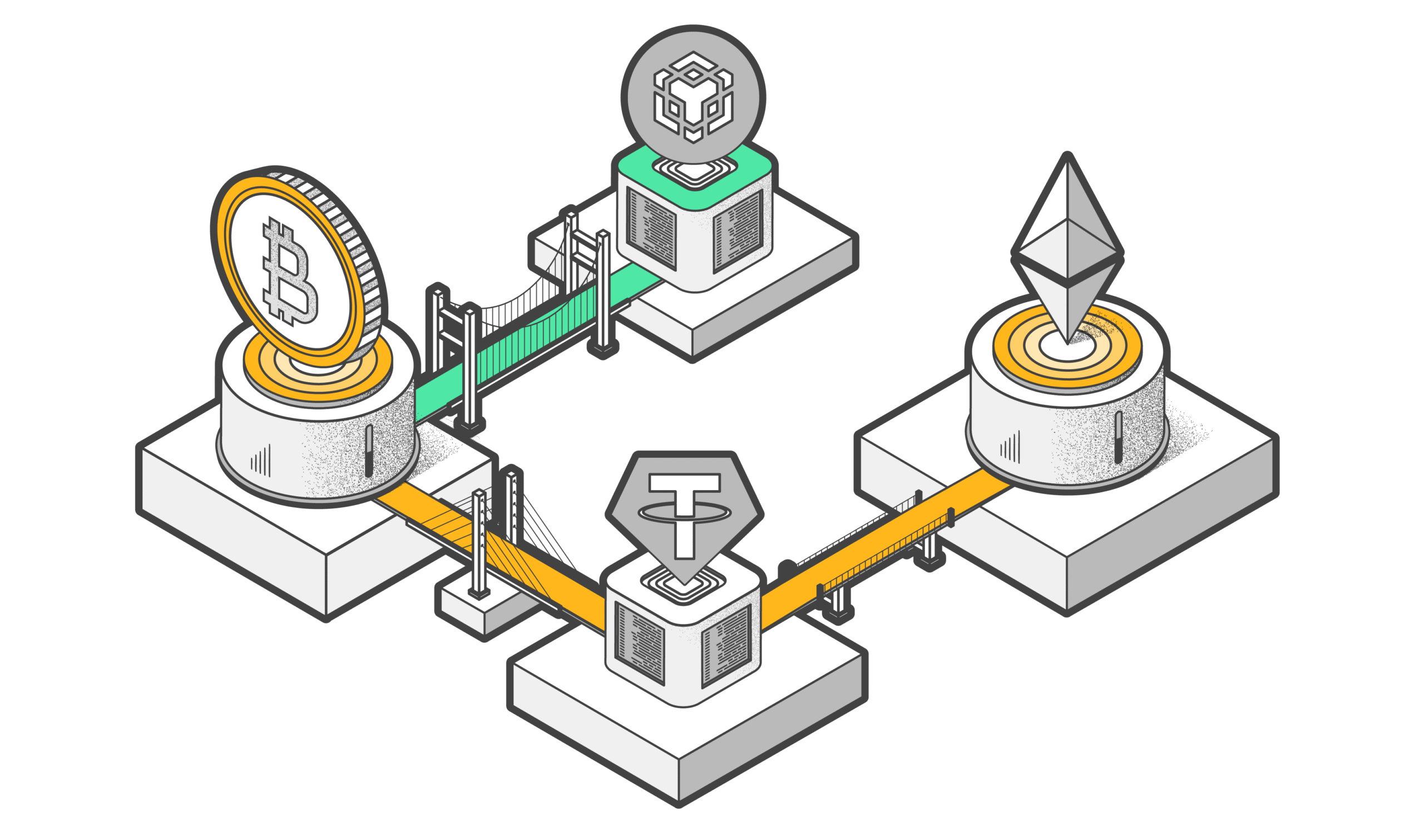
By 2023, cryptocurrency markets have transitioned into a new phase characterized by increased structural complexity. The evolution from a single-chain model to a multi-chain ecosystem has altered not only the direction of capital flows but also their behavior. Analysts who previously focused on liquidity within a single network are now required to monitor capital movements across numerous chains, bridges, rollups, and specialized application environments. This shift has introduced a new analytical challenge: liquidity is no longer a singular layer — it is now fragmented, dynamic, and heavily reliant on cross-chain infrastructure.
In the bullish market cycles of earlier years, liquidity was relatively centralized. A significant portion resided on Ethereum or major exchanges, creating predictable patterns of accumulation and distribution. However, by 2023, the situation changed significantly. Rollups evolved into fully operational ecosystems, alternative Layer 1s continued to draw niche communities, and new bridging technologies expanded the potential routes for capital movement. Consequently, liquidity no longer mirrored a single coherent sentiment. Instead, it transformed into a mosaic of micro-sentiments developed within distinct environments.
A notable characteristic of this era is the emergence of cross-chain liquidity gradients — variations in yield, fees, or execution efficiency that prompt capital to shift from one chain to another. These gradients often arise well before market participants observe any apparent price fluctuations. For analysts, the crucial insight is that the initial indicators of trend formation now manifest not in trading actions but in cross-chain capital positioning. A pool on one chain may exhibit outflows, while the same asset on another chain may see early accumulation. Without multi-chain visibility, these trends may appear random; with it, they disclose coordinated shifts in capital preferences.
Related Posts
Another significant element is the structural function of bridges. By 2023, they became the lifelines of the multi-chain economy — yet they also introduced new layers of latency and risk. Liquidity caught in bridging queues, delayed confirmations, and fragmented execution environments all influence how traders respond to volatility. This indicates that cross-chain friction itself has become a quantifiable market variable. A sudden rise in bridge usage can indicate capital seeking safety or pursuing yield elsewhere. Conversely, a decline may suggest increasing uncertainty or a transition toward more isolated ecosystem behavior.
On-chain analytics in 2023 necessitates an understanding of not just how liquidity moves, but why it opts for a specific route. Network fees, blockspace demand, application incentives, arbitrage conditions, and user trust in particular bridges all affect capital pathways. The outcome is a highly adaptable system where liquidity behaves more like a migratory organism than a static pool.
This environment requires new analytical approaches. Traditional chain-specific metrics lose their explanatory power when considered in isolation. Multi-chain synchronized indicators — such as relative liquidity density, risk-adjusted yield deltas across chains, and capital velocity between ecosystems — provide significantly more accurate signals. Analysts who integrate these cross-network dynamics can identify macro-momentum shifts much earlier than those relying solely on single-chain data.
Ultimately, 2023 signifies the year when liquidity transitioned from being a localized market characteristic to a network-level phenomenon. Capital now continuously assesses not only assets but entire ecosystems, moving with greater fluidity between environments that present the most favorable structural conditions. Grasping this behavior is crucial for risk assessment, market forecasting, and evaluating the sustainability of emerging protocols. The multi-chain landscape is not a fleeting phase — it represents the architectural trajectory of the industry. Furthermore, liquidity fragmentation is no longer merely a challenge to address, but a foundational reality that analysts must accept to comprehend the market’s true operations.
Denys Yakushev, cryptanalyst, expert in virtual asset risk management
