Disclaimer: Information found on CryptoreNews is those of writers quoted. It does not represent the opinions of CryptoreNews on whether to sell, buy or hold any investments. You are advised to conduct your own research before making any investment decisions. Use provided information at your own risk.
CryptoreNews covers fintech, blockchain and Bitcoin bringing you the latest crypto news and analyses on the future of money.


Key takeaways:
- El Salvador is commemorating three years since it embraced Bitcoin as legal currency
- The government is persistently adding 1 BTC daily to its reserves
- A lack of anonymity seems to deter consumers
- Samson Mow informs Cryptonews that adoption ‘is a marathon, not a sprint’
September 7, 2021, marked a significant milestone in Bitcoin’s narrative.
El Salvador became the inaugural nation globally to accept BTC as legal tender — challenging warnings from the International Monetary Fund.
The swift implementation of this bold new strategy was notable, especially considering it was announced by President Nayib Bukele just three months prior.
Every Salvadoran citizen could receive $30 in complimentary Bitcoin by downloading the government’s Chivo application.
Simultaneously, Bukele invigorated the crypto markets by frequently declaring that the nation was acquiring thousands of BTC to retain in its reserves.
This was a groundbreaking moment for the small Central American country — not to mention the Bitcoin enthusiasts striving diligently to integrate this digital currency into the mainstream.
However, both have encountered significant obstacles over the past three years.
Bukele initiated an unprecedented and severe security crackdown in his “war on gangs” — detaining tens of thousands of individuals and raising humanitarian concerns. Bitcoin-related tweets became infrequent as he faced the harsh realities confronting his nation, and a contentious constitutional amendment allowed him to secure a second term.
Even though Bitcoin reached new heights of $69,000 in November 2021, a harsh bear market soon ensued. It lost 75% of its value over the subsequent year, and the sector was shaken by a series of notable bankruptcies. Only recently has BTC managed to regain its footing, with the introduction of ETFs attracting a new influx of institutional interest.
Fast forward to the present, and a pertinent question arises: has El Salvador’s significant gamble yielded results? What role does Bitcoin play in daily life? And what strategies does Bukele plan to undertake as he seeks to revitalize the nation’s economy?
Salvadorans Skeptical
Research conducted by the Yale School of Management has shed light on the reality on the ground — and while there was “impressive” awareness regarding the government’s custom-built Chivo app, most consumers ceased using it after redeeming their bonus.
While one might think that volatility would be the primary reason for Salvadorans’ hesitation to trust Bitcoin, it turns out that the absence of anonymity was their foremost concern.
Although Bukele has consistently expressed optimism about BTC’s potential, he provided a rather candid interview to Time at the end of August.
<p“bitcoin hasn’t achieved the widespread adoption we anticipated,” president conceded. “i believe it could have performed better, and there is still an opportunity for enhancements, but led to any negative outcomes. quite opposite, has provided us with branding, attracted investments, boosted tourism.”
Related Posts
Nonetheless, Bukele subtly suggested that he had been correct all along, stating: “Those who invested in Bitcoin when we first launched it must have generated substantial profits.”
He also noted the IMF’s assertion that the anticipated risks surrounding Bitcoin have yet to materialize — likely reflecting the fact that the cryptocurrency isn’t widely utilized.
Samson Mow has been closely involved in El Salvador’s Bitcoin initiatives and is currently the CEO of JAN3, a firm dedicated to nation-state adoption. When asked to assess the country’s efforts thus far, Mow informed Cryptonews he would assign a grade of B+.
“There’s still a gap in educating and understanding Bitcoin’s advantages, but we’re making consistent progress. The momentum is present, and the long-term effects will continue to evolve in the coming years,” he stated via email.
Mow elaborated that ensuring Salvadorans are acquainted with BTC can be challenging as “there’s a natural reluctance to adopt something perceived as complicated or risky.”
That said, the entrepreneur emphasized the importance of patience, adding: “Bitcoin and its adoption are marathons, not a sprint. As people grow more accustomed to Bitcoin’s long-term benefits, we anticipate adoption to increase, just as has occurred organically among grassroots users globally.”
What’s Next for El Salvador?
While Bitcoin enthusiasts may be directing their focus elsewhere, Bukele’s administration is quietly accumulating sats — adding 1 BTC daily to its balance sheet.
The nation currently possesses 5,865 BTC valued at $320 million at the time of this writing, with a chart depicting its daily balance resembling a staircase.
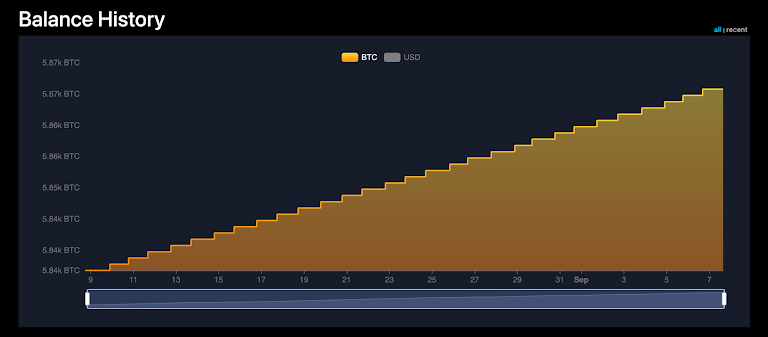
Mow believes that El Salvador must now concentrate on clarifying Bitcoin’s practical applications and how it can benefit curious consumers who have yet to engage.
“It’s not merely about making Bitcoin accessible; it’s about demonstrating to people how it can enhance their lives, particularly in areas such as remittances, savings, and small business transactions.”
This is a significant point. Remittances refer to funds sent home by workers overseas, and according to the World Bank, El Salvador ranks among the largest recipients of these payments globally, constituting 26% of GDP as of last year. Steep transaction fees from traditional money transfer services drastically reduce the income families receive, and transactions can take days to process. In contrast, Bitcoin can facilitate these transfers more economically and swiftly — resulting in more funds circulating within local economies.
Despite the limited progress made thus far, Mow believes that other nations may adopt Bitcoin in the future — and interest in this digital asset’s potential continues to grow.
“El Salvador has been a pioneer, and other countries are closely monitoring its development,” he told Cryptonews. “The challenges encountered here are typical for any revolutionary initiative, and they offer valuable insights for others contemplating similar actions. Numerous nations will recognize Bitcoin’s ability to provide financial independence and economic empowerment, and El Salvador’s initiatives will help shape their strategies.”
With Bukele now in office until 2029, El Salvador will have a Bitcoin advocate in leadership for some time. While he currently enjoys impressive approval ratings, it appears the populace remains unconvinced of his vision for cryptocurrency.
The post Has El Salvador’s Bitcoin Bet Been a Success? appeared first on Cryptonews.
