Disclaimer: Information found on CryptoreNews is those of writers quoted. It does not represent the opinions of CryptoreNews on whether to sell, buy or hold any investments. You are advised to conduct your own research before making any investment decisions. Use provided information at your own risk.
CryptoreNews covers fintech, blockchain and Bitcoin bringing you the latest crypto news and analyses on the future of money.

Insights from the 2018 and 2022 Cryptocurrency Downturns and a Guide for Navigating the Upcoming Bear Market

Bear markets are an inherent aspect of the financial cycle, with even the most optimistic growth phases ultimately concluding in contractions.
However, each bear market possesses distinct causes and circumstances, as the cryptocurrency sector has already experienced during the two significant crypto winters since Bitcoin’s inception in 2019.
The first of these winters occurred in 2018, followed by the second in 2022.
Each of these downturns had its specific triggers, with the variations between them—pertaining to market dynamics, utility, and regulation—illustrating the evolution of crypto since its inception over a decade ago.
The 2018 Crypto Winter: Internal Factors Burst Bubble
Unlike the downturn in 2022 (which will be discussed further below), the crypto winter of 2018 was primarily influenced by internal factors.
The market was still in a nascent and immature phase, having undergone its first significant bull rally in December 2017 and January 2018, marked by excessive hype and enthusiasm.
Related Posts
However, since cryptocurrencies and blockchains provided minimal real-world utility at that time, prices were bound to plummet, with Bitcoin dropping from a then-record high of $19,783 on December 17 to below $7,000 by early February.
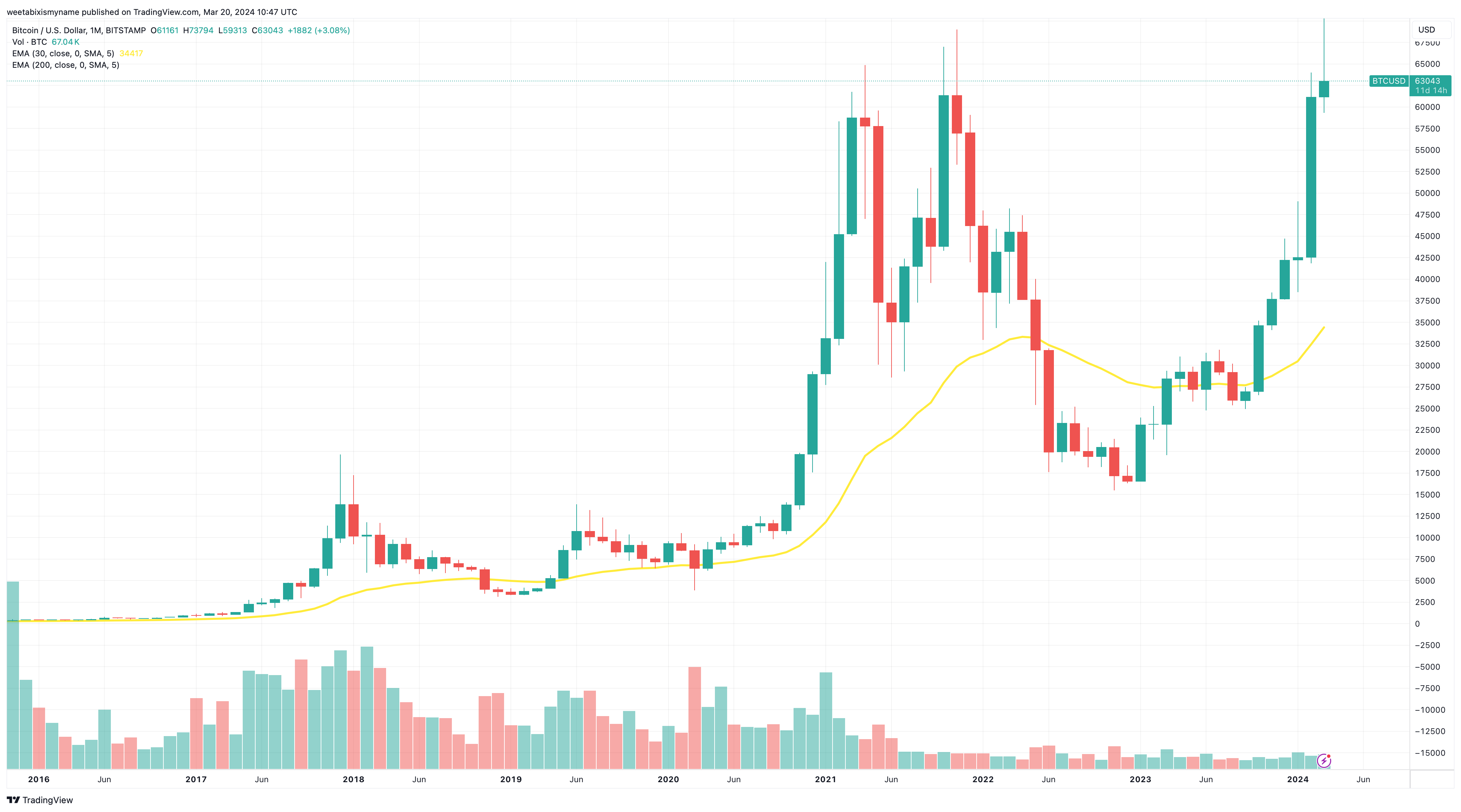 Bitcoin’s price since 2016. Source: TradingView
“The market wasn’t prepared for mainstream adoption yet, due to the early-stage limitations of blockchain technology,” states Fuel Labs CEO and co-founder Nick Dodson. “Moreover, an initial phase of intense hype surrounding certain cryptocurrencies may have resulted in an unsustainable bubble that ultimately burst.”
Contributing to the bubble’s collapse were several other significant factors, with regulatory backlash being the most prominent. This was particularly true in China, which prohibited initial coin offerings in September 2017 and subsequently banned all crypto trading in February 2018.
As Castle Funds President Peter Eberle observes, “There were growing regulatory concerns globally, with numerous governments and regulatory agencies intensifying their scrutiny of cryptocurrencies and ICOs. This uncertainty regarding the regulatory landscape contributed to the negative sentiment in the market.”
The Role of Retail Investors
The negative sentiment was especially detrimental in 2018, considering that inexperienced (and often capricious) retail investors had been driving the bull market, with institutional players not significantly involved until 2021/22.
This meant that regulatory threats and a loss of momentum had an outsized impact on the prevailing sentiment, causing the market to decline rapidly.
Garcia also points out that hacks and other security breaches significantly dampened the market, with a CipherTrace report indicating that scams and hacks resulted in $1.7 billion in losses in 2018. “There were also fundamental security issues with high-profile hacks and breaches of exchanges and wallets, which undermined trust in the ecosystem by exposing vulnerabilities in the infrastructure supporting the projects and deterring new investors,” he adds.
Collectively, these factors—largely internal to crypto—helped swiftly transform the euphoria of late 2017 into the extended crypto winter of 2018.
The 2022 Crypto Winter: Macroeconomics Plays Bigger Role
While the 2022 crypto winter was also influenced by internal factors to some degree, it found the crypto market more susceptible to macroeconomic conditions than ever before.
This is not surprising, given that the 2020/21 bull market largely benefited from the implementation of extremely low interest rates and quantitative easing.
Thus, when this scenario reversed, with rising inflation, interest rate hikes, and quantitative tightening, it was logical for investors to begin withdrawing their funds from crypto.
By this time, research indicated that cryptocurrency markets had become increasingly correlated with the stock market.
The latter also experienced a prolonged decline in 2022, as the global economy faced a recession, suggesting that the cryptocurrency market was largely reflecting more traditional markets.
A key reason for this correlation was that institutional investors had started to play an increasingly crucial role in crypto by 2022.
“Institutional investors began adopting long-term investment strategies, favoring the buy-and-hold approach and reinforcing crypto’s status as a legitimate asset class for portfolio diversification,” explains Siddharth Lalwani, the co-founder and CEO of Range Protocol.
However, internal factors were again at play, most notably the sudden and dramatic failures of Terra Luna, FTX, and other major entities.
These collapses not only triggered a series of interconnected bankruptcies but also severely eroded confidence in crypto.
Building
Regulation also played a role, with the SEC’s high-profile case against Ripple casting a long shadow over prices.
Yet, while these are all negative factors, it is important to recognize that some positive developments had emerged by 2022.
The significance of this difference lies in the fact that such infrastructure and utility provided crypto with a more robust foundation to endure another winter.
It can be argued that the underlying growth in meaningful platforms has allowed the market to transition into another bullish phase of expansion more swiftly than it might have otherwise.
This imparts an important lesson from the crypto winters of 2018 and 2022, as well as any future downturns that may occur. Specifically, it remains crucial to continue building during challenging periods, regardless of price movements.
As Siddharth Lalwani summarizes, “Emphasizing fundamentals will be a key differentiator moving forward.
This encompasses clear use cases, strong technology, and a capable team. During crypto winters, projects with weak fundamentals often faltered as market sentiment shifted and speculative bubbles burst.”
The post Lessons From the 2018 & 2022 Crypto Winters and a Survival Guide for the Next Bear Market appeared first on Cryptonews.
