Disclaimer: Information found on CryptoreNews is those of writers quoted. It does not represent the opinions of CryptoreNews on whether to sell, buy or hold any investments. You are advised to conduct your own research before making any investment decisions. Use provided information at your own risk.
CryptoreNews covers fintech, blockchain and Bitcoin bringing you the latest crypto news and analyses on the future of money.


Lee Kwang-jae, the former Secretary-General of the South Korean National Assembly, asserts that Seoul needs to ensure that KRW-pegged stablecoins are available on international crypto exchanges such as Binance and Coinbase.
In a discussion with Seoul Kyungjae, Lee, who is currently a distinguished professor at Myongji University, emphasized that for these coins to thrive, overseas traders must have access to them.
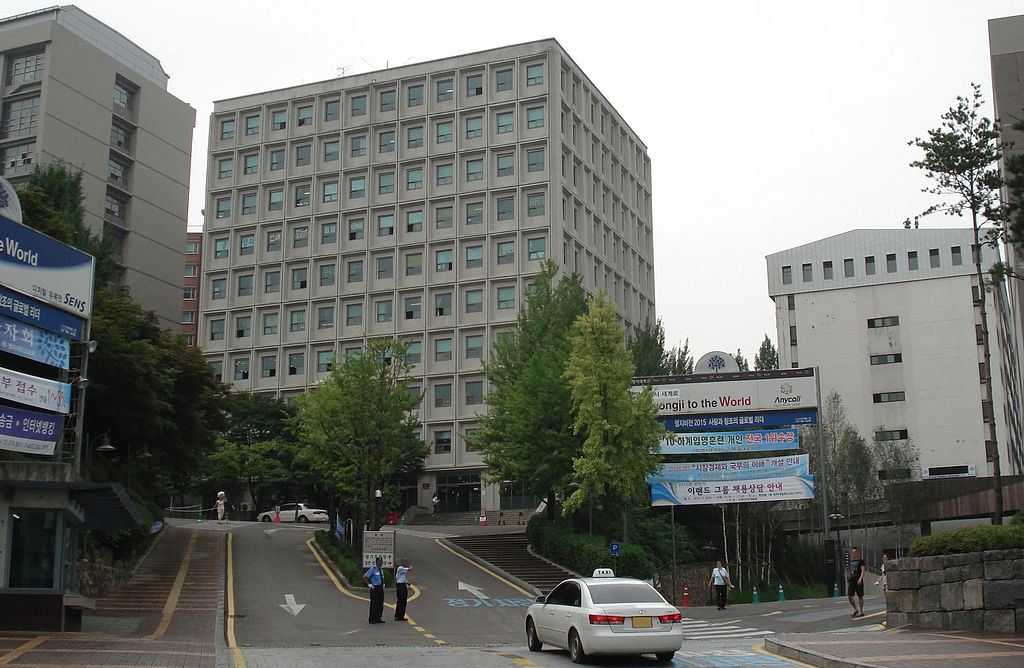 South Korea’s Myongji University. (Source: Chu [CC BY-SA 3.0])
KRW Stablecoins: Korea Legislation Incoming?
The new South Korean administration has promoted the introduction of KRW-pegged coins. However, political disagreements have caused progress on related legislation to come to a “standstill.” Lee stated:
“To boost demand for won-denominated stablecoins, we must enable them to be traded on global cryptocurrency exchanges [like Binance and Coinbase, allowing non-Koreans to trade them].”
According to Lee, this approach will assist South Korean coins in achieving “international acceptance.”
The former lawmaker also mentioned that Seoul should “open up domestic crypto exchanges” such as Upbit and Bithumb to international traders.
Currently, only South Korean residents are permitted to create fiat-compatible accounts on local trading platforms.
South Korean regulations require that crypto exchanges offering crypto-to-fiat pairings ensure their clients possess dedicated, linked real name-verified bank accounts.
Without a valid South Korean address and social security number, acquiring such an account is virtually impossible. Lee lamented this situation, stating:
“We will only be able to generate global demand when foreigners can enter the South Korean market. We need to allow them to trade won-denominated coins freely.”
Lee also suggested that Samsung, the nation’s largest conglomerate, would eventually join Apple in launching stablecoins. He elaborated:
“Samsung and Apple lead the smartphone sector. They will both ultimately compete in the stablecoin arena as well. Given Samsung’s dominance in the hardware market, incorporating a won-denominated coin into its payment system would have a considerable impact.”
Some analysts believe that Samsung could implement a won-denominated stablecoin within its Samsung Pay platform. They argue that such a coin could have applications beyond South Korea.
Related Posts
Other domestic companies might utilize these coins to enhance their positions in international markets, they suggest.
Lee indicated that Seoul should ensure that cross-border culture, education, and healthcare sectors utilize KRW stablecoins. He added:
“Only by broadening the use of coins at the national level will they genuinely gain value.”
 Lee Kwang-jae, a distinguished professor at Myongji University. (Image: OBS Radio/Screenshot)
Let Overseas Traders Use Korean Stablecoins, Says Professor
The professor noted that consumers of South Korean webtoons (web-based comic strips) and drama series could be motivated to use KRW-pegged coins as a form of currency.
Likewise, KRW stablecoins could serve as a payment method for online education services and remote healthcare clients.
AI tools will become the primary users of stablecoins as the two technologies become increasingly interconnected, according to Michael Novogratz, founder and chief executive officer of Galaxy Digital https://t.co/bidoG9b8nK
— Bloomberg (@business) September 3, 2025
Impasse Continues
Lee also addressed the conflict at the center of the political deadlock that has hindered the advancement of stablecoin regulation.
Conservative thinkers argue that Seoul should restrict the issuance of KRW-pegged stablecoins to major commercial banks.
Conversely, more progressive lawmakers advocate for allowing large tech companies to issue their own coins.
Lee contended that the conservative stance represents a “backward step.” The former National Assembly Secretary-General pointed out that in other countries, private firms, rather than banks, are responsible for issuing stablecoins.
He cited companies like Tether, the issuer of the USD-pegged USDT token, and Circle, the issuer of USD Coin (USDC).
Lee remarked that the notion that banks should be the primary issuers of coins is “out of sync with the times.”
The post Ex-National Assembly Chief: South Korean KRW Stablecoins Must Trade on Binance appeared first on Cryptonews.
