Disclaimer: Information found on CryptoreNews is those of writers quoted. It does not represent the opinions of CryptoreNews on whether to sell, buy or hold any investments. You are advised to conduct your own research before making any investment decisions. Use provided information at your own risk.
CryptoreNews covers fintech, blockchain and Bitcoin bringing you the latest crypto news and analyses on the future of money.


Experts in South Korea assert that the country’s shift towards stablecoins may hinder the growth of card providers while benefiting local technology giants.
On June 23, media sources reported that lawmakers from the Democratic Party on the National Assembly’s Political Affairs Committee are set to introduce a bill called the Digital Asset Innovation Act next month.
This legislation characterizes stablecoins as “value-stable digital assets.” It will also require potential issuers to demonstrate they possess equity capital assets amounting to at least 1 billion won ($720,258).
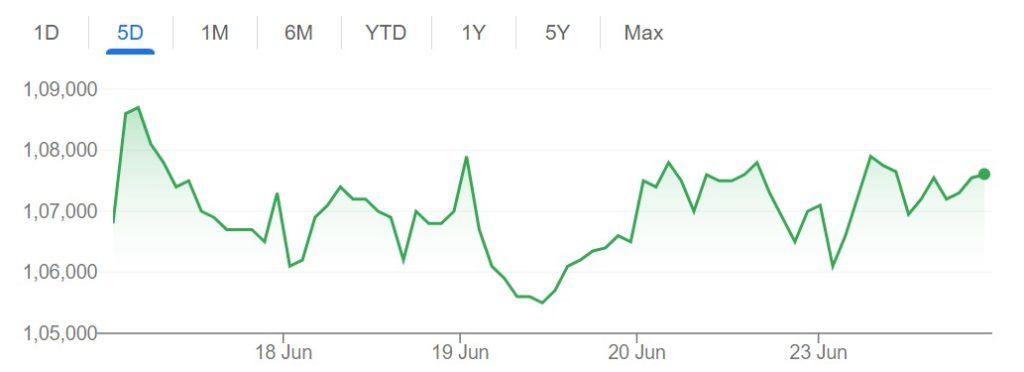 KB Financial Group (Kookmin) share prices over the past five days. (Source: Google Finance)
Stablecoin Shift: Which Companies Might Be Affected?
The Bank of Korea has voiced skepticism, urging caution and warning of a potentially negative impact on the commercial banking sector.
According to New Daily Kyungjae, credit card companies could also face negative consequences from the introduction of stablecoins.
The publication highlighted concerns from experts that the card industry “may encounter a structural crisis in the long run as its payment foundation gradually diminishes.”
Stablecoin implementations could, the outlet cautioned, “create challenges for the industry to ensure even short-term profitability.”
Nonetheless, a representative from an unnamed card provider offered a glimmer of optimism, stating:
“It is challenging to foresee the impact stablecoins will have on profitability. However, it will be difficult for them to replace our capacity to provide credit spending. That remains the exclusive domain of card issuing companies.”
However, credit seems to be a double-edged sword for card issuers. The outlet reported that local card companies have been attempting to “protect their profitability by increasing their high-interest loan offerings.”
This strategy, the outlet noted, is leading to a rise in loan defaults as “borrowers’ repayment capabilities are diminishing.”
The Bank of Korea, South Korea’s central bank, remains cautious about proposals to launch a won stablecoin despite a recent meeting with the USD Coin (USDC) issuer Circle.#SouthKorea #Stablecoins #USDChttps://t.co/qPwbqgvtFg
— Cryptonews.com (@cryptonews) June 19, 2025
 The Bank of Korea, South Korea’s central bank, remains cautious about proposals to launch a won stablecoin despite a recent meeting with the USD Coin (USDC) issuer Circle.#SouthKorea #Stablecoins #USDChttps://t.co/qPwbqgvtFg
The average monthly default rates for South Korean card companies in the first quarter of the financial year reached 1.93%.
This figure is alarmingly close to the 2% threshold that the industry considers “dangerously high.” Even more concerning, three of the nation’s largest card firms (KB Kookmin, Hana, and BC Card) have already surpassed the 2% mark this year.
Related Posts
Stablecoin Shift: Which Companies May Thrive?
While banks and card providers are evidently apprehensive about the potential impact of stablecoin-driven businesses on their sector, technology firms seem eager to adapt to the change.
Pinpoint News reported that years of regulatory ambiguity have restricted business growth, but IT leaders are “acting swiftly as governments worldwide begin to show signs of establishing clear regulations.”
The outlet noted companies like the search engine operator Naver and the chat application developer Kakao, both of which have been engaged in blockchain-related innovations for several years.
 Naver share prices over the past month. (Source: Google Finance)
Other companies reportedly interested in developments within the stablecoin sector include Hyundai subsidiaries Hyundai HT (smart homes) and Hyundai Mobis (auto parts).
Additionally, another smart home company, Kocom, along with software developer MediaZen, connectivity provider Kaon Media, and IT services firm Bridgetec, have also been mentioned.
The media outlet indicated that expectations are “growing” for a potential Naver stablecoin launch and a connection to web3 services utilizing this coin.
#Hanwha Ocean intensifies efforts in U.S. Navy ship repair, seeks technology transfer via #Philly Shipyard. The Korean shipbuilder expands capacity domestically with a 1 trillion won investment and aims for 2025 #MRO contracts. https://t.co/RI1nArBuuX
— The Korea JoongAng Daily (@JoongAngDaily) June 23, 2025
Naver serves as South Korea’s counterpart to Google, having developed a comprehensive ecosystem of web, IT, and payment services. An unnamed industry expert remarked:
“Favorable changes in stablecoin policy will facilitate the acceleration of Naver’s blockchain-related initiatives.”
In Naver’s situation, the expansion of stablecoin-related business could have international implications. The company has a longstanding connection with Line, a chat application popular in Japan and other Asian regions.
A potential collaboration or interoperability solution between Naver and Line regarding stablecoins could provide an additional advantage, the outlet concluded.
The surge in interest surrounding South Korea’s stablecoin developments has triggered a wave of speculative activity in the country’s stock and crypto markets.
Traders have been attempting to anticipate lawmakers’ decisions by acquiring shares in companies that have previously indicated a willingness to engage in stablecoin-related ventures.
The post Analysts: South Korea’s Stablecoin Shift Will Adversely Affect Card Companies, Benefit Major Tech appeared first on Cryptonews.
