Disclaimer: Information found on CryptoreNews is those of writers quoted. It does not represent the opinions of CryptoreNews on whether to sell, buy or hold any investments. You are advised to conduct your own research before making any investment decisions. Use provided information at your own risk.
CryptoreNews covers fintech, blockchain and Bitcoin bringing you the latest crypto news and analyses on the future of money.


Financial analysts have estimated that the implementation of the digital ruble could impose an annual cost of $536 million on the Russian banking industry.
According to Forbes Russia, the country’s retail sector stands to gain significantly if the plans for CBDC adoption proceed as intended.
Experts indicated that the retail market could anticipate an increase in annual profits amounting to $857 million once the CBDC is widely adopted.
Progress on Digital Ruble Rollout
Last week, Central Bank Governor Elvira Nabiullina confirmed that the digital ruble will be introduced “no earlier” than 2025.
This announcement follows the Finance Ministry’s suggestion that “all” Russians would have the opportunity to utilize the CBDC at some point this year.
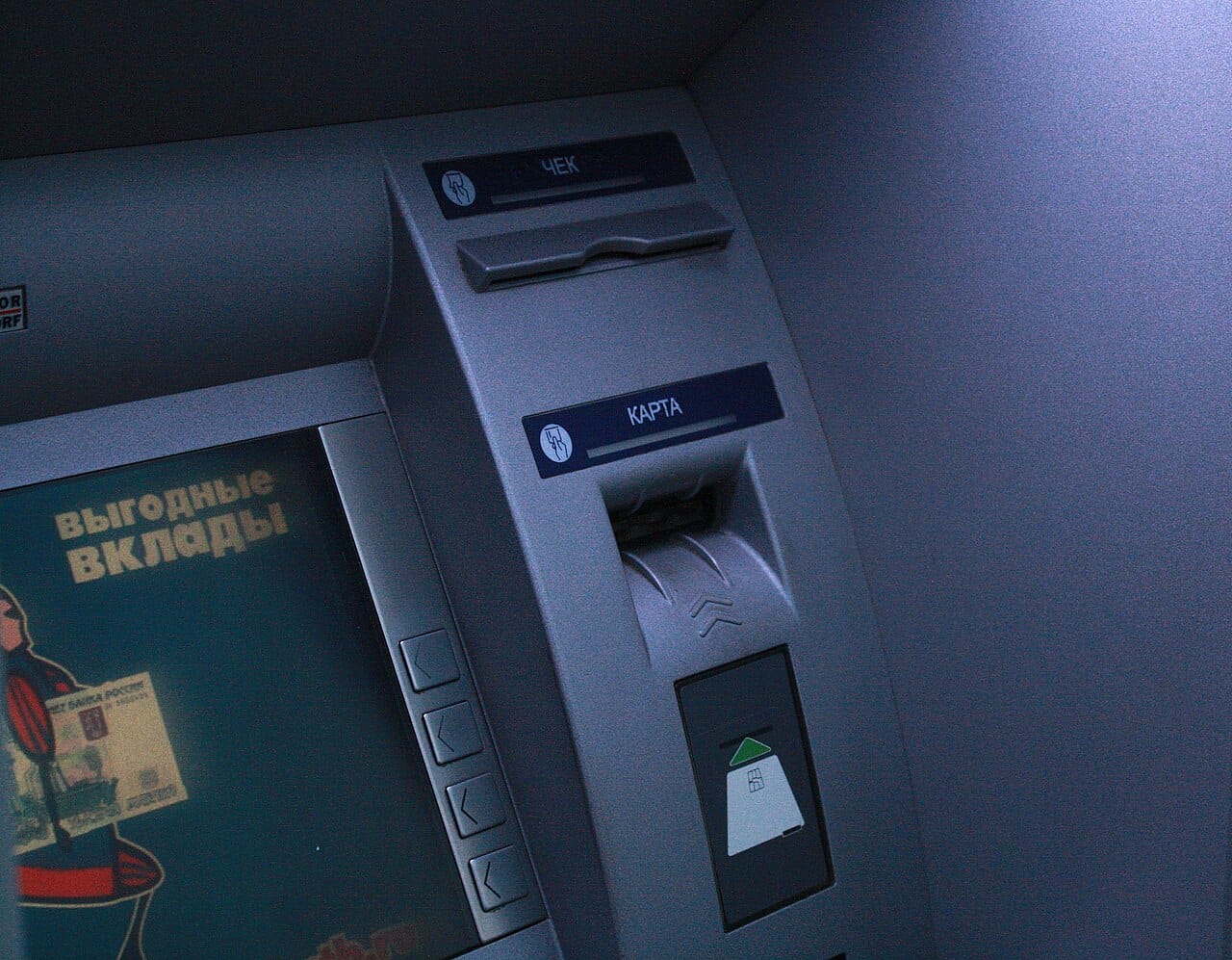 A Russian bank ATM. (Source: Valera N. Trubin [CC BY-SA 3.0])
Analysts from Yakov and Partners (previously associated with McKinsey in Russia) noted that the digital ruble is poised to “fill a niche in the domestic retail payments landscape.”
The analysts stated that the token would “partially take away” market share from bank card transactions.
Within three to five years of “full-scale” adoption initiatives, banks may begin to experience financial losses.
‘Retailers Will Be the Major Beneficiaries of Digital RUB’
Yakov and Partners indicated that Russian retail businesses are likely to adopt the coin, which eliminates interbank commission fees.
Transactions using the CBDC are also immediate, in contrast to bank card payments, which may take several days to complete.
However, Yakov and Partners noted that for consumers, the “advantages” of the CBDC “are less straightforward.”
Many individuals may be reluctant to utilize the coin due to the fact that Russian CBDC wallets will not permit holders to earn interest on their tokens.
Related Posts
A further setback could arise from the potential loss of cashback incentives. The analysts suggested that “banks will cease” offering cashback services “if their revenues decline.”
Yakov and Partners also remarked that “the digital ruble does not present clear benefits regarding everyday usability.”
A rollout is also unlikely to influence pricing and would primarily result in increased “profits for retailers.”
Banks to Adopt Defensive Strategies?
The firm further stated that Russian banks “have two options” for protecting their interests.
Russia and Ukraine are targeting each other’s energy infrastructure. The collateral damage is showing up in global markets https://t.co/IgqUHklEnj
— Bloomberg Politics (@bpolitics) April 13, 2024
The first option would be “defensive,” potentially leading banks to attempt to outmaneuver the digital RUB. They might do this by offering higher interest rates or improved cashback incentives.
The second, more proactive approach could involve banks actively marketing “products that utilize the digital ruble and seek to profit from them.”
However, Yakov and Partners cautioned that if this results in a standoff between the commercial banking sector and the Central Bank, neither side would prevail.
Consequently, “the implementation of the digital ruble will be postponed, and banks will incur losses at a gradual pace.”
Russia’s Aeroflot diverts Tehran-bound flight, postpones others https://t.co/3sdA8TeaPJ
— Reuters Iran (@ReutersIran) April 13, 2024
The Central Bank accelerated its CBDC rollout in 2023 as a response to sanctions imposed by the US and EU.
Moscow aims to persuade international trading partners to abandon USD-based transactions in favor of the digital ruble and other CBDCs.
Nabiullina, in the meantime, indicated that the complete rollout and adoption of the digital ruble would likely span five to seven years.
Russian banks have already shown skepticism regarding the CBDC, although most major institutions are participating in pilot programs.
The post Digital Ruble Rollout Will Cost Russian Banks $536m a Year – Experts appeared first on Cryptonews.
