Disclaimer: Information found on CryptoreNews is those of writers quoted. It does not represent the opinions of CryptoreNews on whether to sell, buy or hold any investments. You are advised to conduct your own research before making any investment decisions. Use provided information at your own risk.
CryptoreNews covers fintech, blockchain and Bitcoin bringing you the latest crypto news and analyses on the future of money.


The European Central Bank (ECB) has reaffirmed its commitment to developing a digital euro, highlighting US President Donald Trump’s recent executive order promoting dollar-backed stablecoins as a significant factor.
According to a Jan. 24 Reuters report, ECB board member Piero Cipollone stated that Trump’s order, which aims to “encourage the development and advancement of legitimate and genuine dollar-backed stablecoins globally,” could further disintermediate banks by attracting customers away.
The executive order signed on Jan. 23 may establish a working group to examine a regulatory framework for stablecoins.
“I believe the key term here [in Trump’s executive order] is global,” Cipollone remarked at a conference in Frankfurt. “This decision, as you all know, further disintermediates banks as they lose fees, they lose clients… That’s why we need a digital euro.”
US President Donald Trump issues an executive order to establish clear regulations for digital assets, emphasizing blockchain development and opposing CBDCs.#CryptoRegulation #Blockchain #DigitalAssetshttps://t.co/rpzizu6sMY
— Cryptonews.com (@cryptonews) January 23, 2025
Digital Euro: Addressing Risks
The ECB embarked on its quest for a digital euro in October 2021. Currently, the central bank is running pilot programs to assess the viability and potential impact of a digital euro. A final decision regarding its launch will depend on the approval of European legislators.
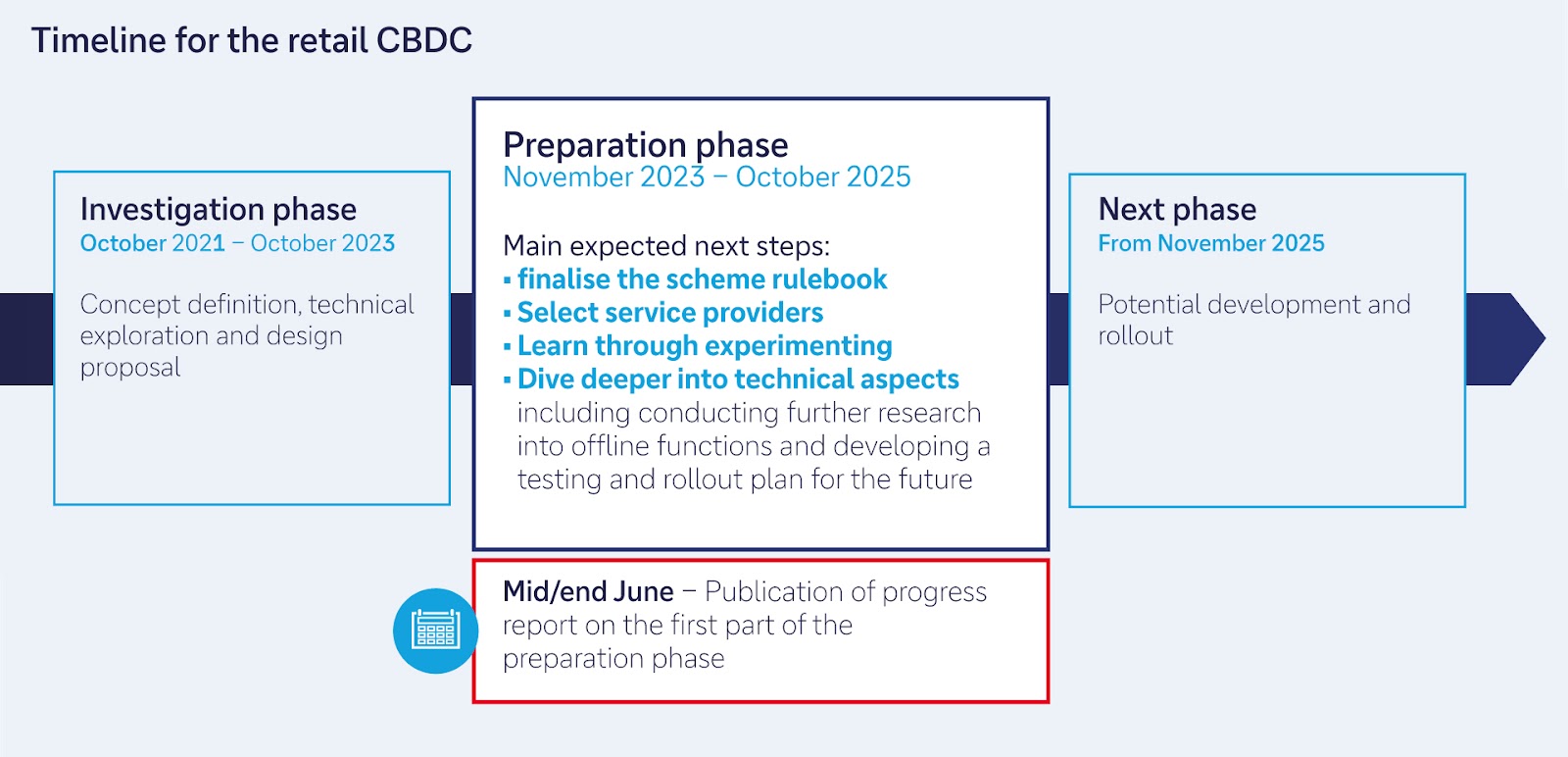 Timeline of the digital euro project. Source: Deutsche Bank
According to the ECB, a digital euro would provide a secure and efficient alternative to private cryptocurrencies, particularly those issued by foreign entities. It would facilitate easier and more inclusive payments, even for individuals without bank accounts.
However, banks remain concerned that a digital euro could lead to significant capital outflows, as customers may transfer funds to the safety of an ECB-backed digital wallet.
To mitigate potential disintermediation from bank accounts and prevent excessive demand for digital euros, the ECB has implemented several safeguards. One such measure includes establishing holding limits for users.
Additionally, a “waterfall mechanism” will be in place. This mechanism ensures that the holding limit is not surpassed. For retailers and businesses, the limit will be set to zero, meaning any digital euros they receive will automatically be returned to their bank accounts.
Related Posts
Finally, the ECB will not pay interest on digital euros to discourage excessive holdings.
Key Motivations for the Digital Euro
Several factors are propelling the ECB’s initiative for a digital euro.
Firstly, as consumers increasingly prefer digital payments, a currency solution is needed that adapts to these changing preferences while still allowing for cash usage. A digital euro would fulfill this requirement by offering a convenient and secure digital alternative.
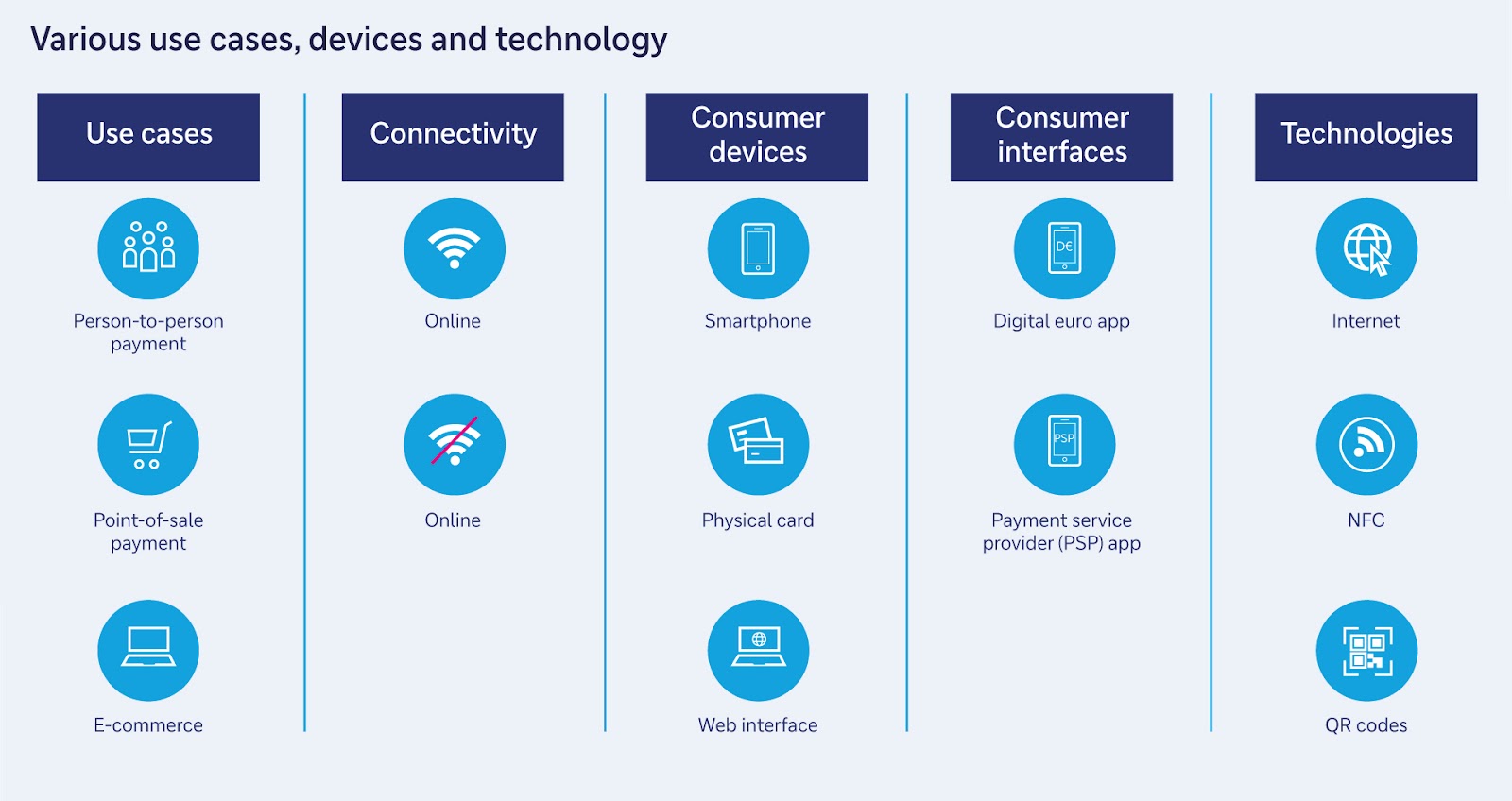 Features of a potential retail CBDC introduced by the ECB. Source: Deutsche Bank
Secondly, it seeks to streamline payments across the Eurozone, providing residents and businesses with a more efficient and cost-effective payment method.
Lastly, by reducing dependence on non-European payment providers, the digital euro would enhance Europe’s strategic autonomy in the global financial landscape.
US vs. EU Strategies
Notably, Trump’s executive order prohibits the Federal Reserve, the US central bank, from issuing its own central bank digital currency (CBDC). This restriction benefits US-based private stablecoins and issuers such as Circle, Tether, Ripple, and even PayPal.
In contrast, the ECB promotes a different approach. While acknowledging the role of private-sector payment solutions, ECB Executive Board member Ulrich Schaaf noted that many of these solutions are limited in scope and fragmented, which impedes pan-European interoperability.
He suggested that a digital euro issued by the central bank could address these issues by creating a more integrated and efficient payment system throughout the Eurozone.
While the digital euro would be issued as a liability of the ECB, its implementation will not be solely managed by the ECB. “Distributors will primarily be payment service providers, including banks,” Schaaf stated. “They will handle the exchange, customer relations, and services associated with the digital euro. They would also be able to offer innovative solutions and services on top of the digital euro.”
The post ECB Pushes for Digital Euro as Trump Advocates for US Dollar-Backed Stablecoins appeared first on Cryptonews.
