Disclaimer: Information found on CryptoreNews is those of writers quoted. It does not represent the opinions of CryptoreNews on whether to sell, buy or hold any investments. You are advised to conduct your own research before making any investment decisions. Use provided information at your own risk.
CryptoreNews covers fintech, blockchain and Bitcoin bringing you the latest crypto news and analyses on the future of money.

Bitcoin Price Remains Resilient as Recent US Inflation Figures Cast Uncertainty on Federal Reserve Rate Cut Prospects – What’s Next for BTC?

In spite of inflation data that was hotter than anticipated, the Bitcoin price exceeded expectations and increased in value on Wednesday, even as the narrative surrounding a potential rate cut by the US Federal Reserve became uncertain.
The US Consumer Price Index (CPI) indicated a 0.4% rise in March, surpassing the expected 0.3% increase. Core CPI figures also exceeded predictions.
This development caused US bond yields and the US dollar to rise sharply, as traders reassessed their positions regarding the Federal Reserve’s rate cut.
The yield on the US 10-year bond reached its highest point since November, rising nearly 20 basis points. Concurrently, the US Dollar Index (DXY) climbed 1% to over 105, also achieving its highest level since November 2023.
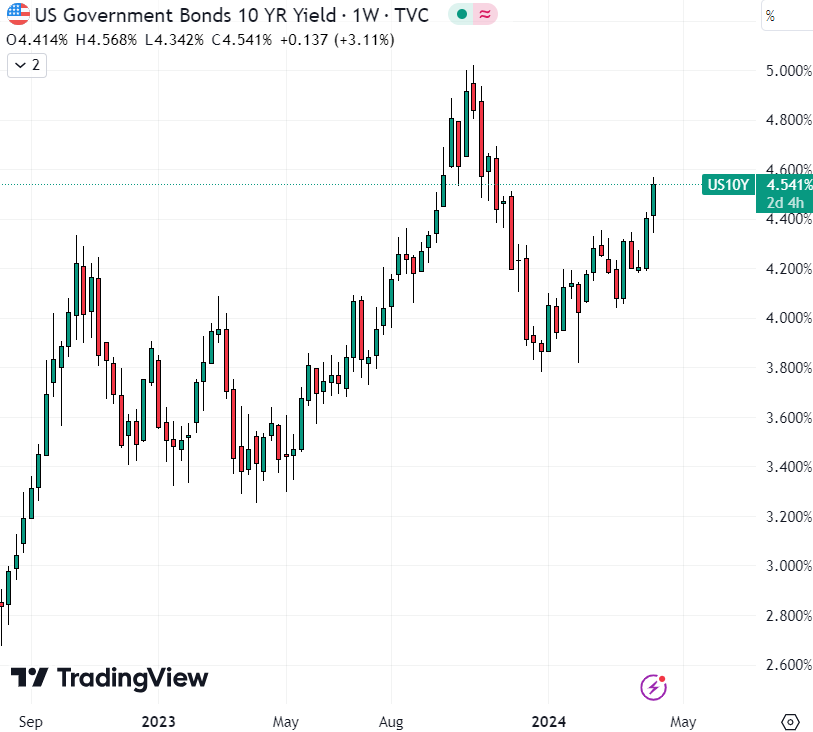 The Bitcoin price was surprisingly strong on Wednesday despite the US 10-year yield vaulting higher on hot US inflation figures. Source: TradingView
These significant movements had a considerable impact on US stock prices, with the S&P 500 down approximately 1% for the day. Earlier in the session, the benchmark US equity index reached its lowest point in nearly four weeks.
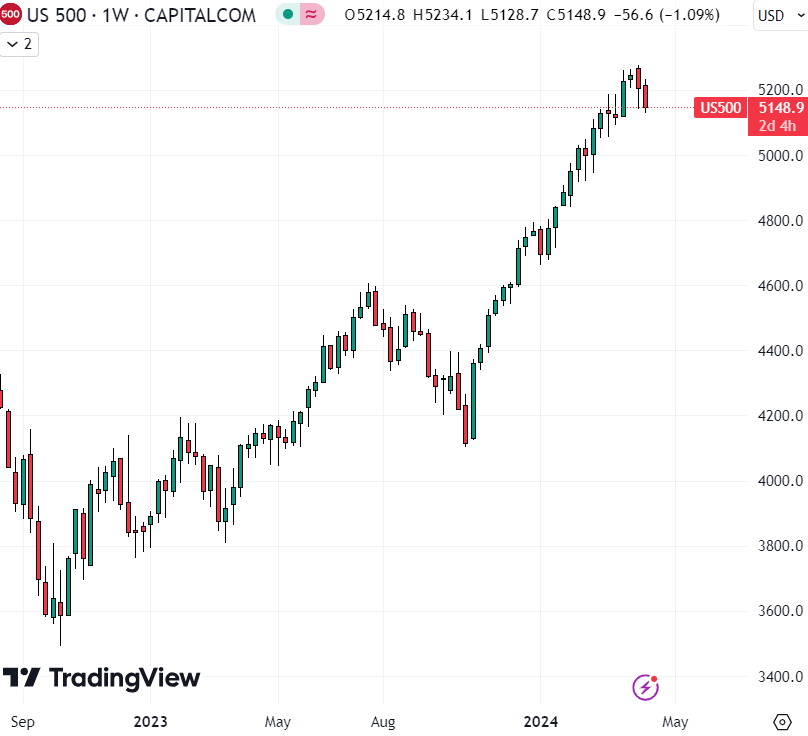 The Bitcoin price was also resilient to a sharp drop in the S&P 500 index. Source: TradingView
Typically, declining stock prices combined with rising yields and a stronger US dollar indicate weakness for cryptocurrency prices. This is due to the strong positive correlation between crypto prices and stocks, alongside a negative correlation with yields and the USD.
Nevertheless, Bitcoin’s rebound to the $69,000s may have surprised some traders, implying that the cryptocurrency market may not be as closely tied to traditional financial markets as previously believed.
Traders Reduce Fed Easing Expectations
Anticipations for easing from the US Federal Reserve have significantly influenced Bitcoin’s price growth this year.
As mentioned, this narrative faced a setback following the latest data. Currently, US interest rate futures markets are pricing in only a 15% likelihood that the Fed will lower interest rates by 25 basis points to 5.0-5.25% in June, according to the CME’s Fed Watch Tool.
A month ago, US money markets had assigned a 57% probability to a rate cut in June.
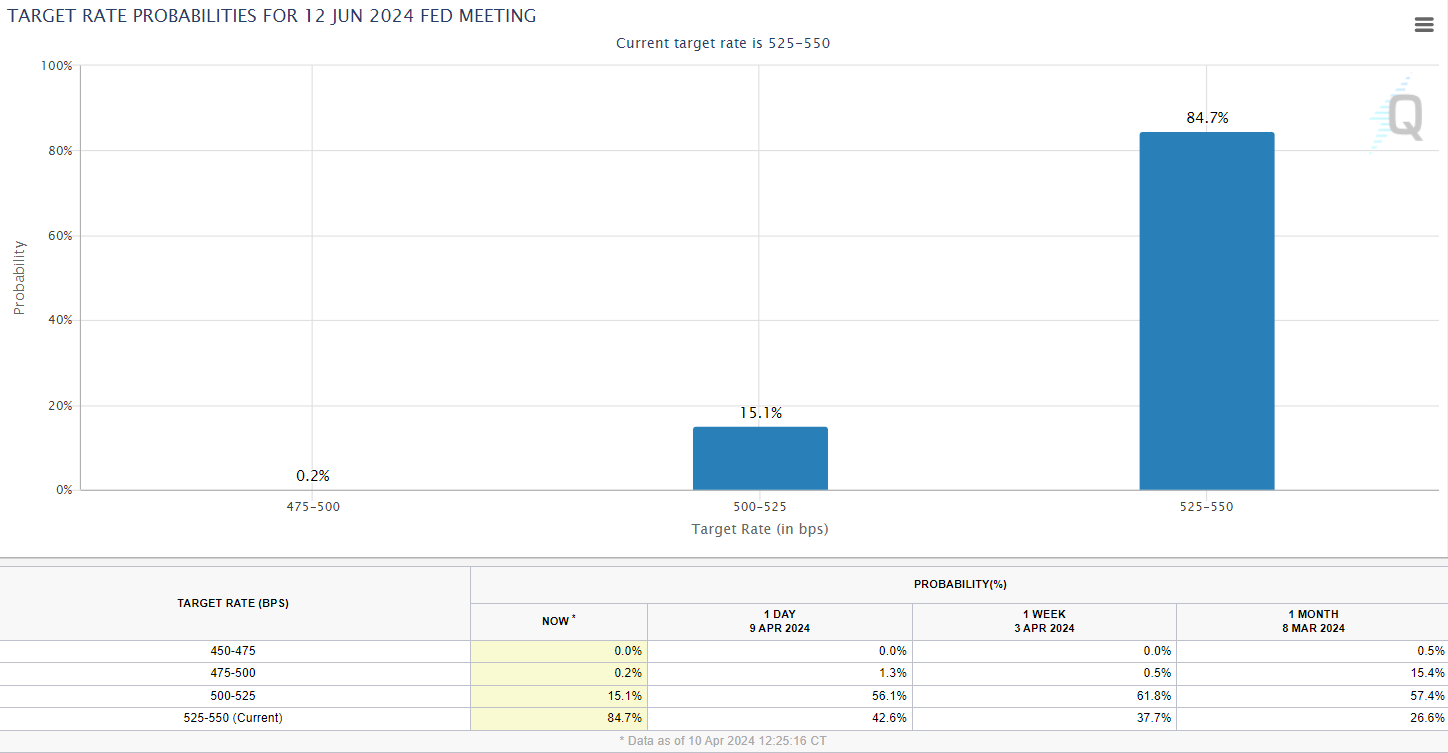 Traders pared back on Fed rate cuts bets in wake of hot US CPI data. Source: CME Fed Watch Tool
Related Posts
This reduction in Fed rate cut expectations follows a series of stronger-than-anticipated US economic data releases. Wednesday’s CPI report follows robust ISM Manufacturing and employment data from the previous week.
With the US economy continuing to perform well and inflation remaining significantly above the Fed’s 2.0% target, policymakers have been hesitant to show support for imminent rate cuts.
What’s Next for the Bitcoin (BTC) Price?
Multiple factors may have played a role in Bitcoin’s strength on Wednesday, despite the hotter-than-expected inflation data and the subsequent downturn in traditional financial markets.
One potential reason is the increasing belief that the large-scale liquidation of Grayscale Bitcoin Trust (GBTC) shares by bankrupt crypto estates is approaching its conclusion.
Grayscale CEO Michael Sonnenshein informed Reuters on Wednesday that outflows from the ETF may be stabilizing, indicating that this headwind for Bitcoin is lessening.
Another possible factor is the forthcoming Bitcoin halving, which is set to occur next Saturday.
The halving will cut the issuance rate of new Bitcoins by 50%, reducing it from 6.25 BTC per block to 3.125 BTC. This is anticipated to lessen long-term selling pressure from miners and could serve as a bullish element for Bitcoin’s price.
However, it is important to note that the short-term market impact of the halving remains uncertain. Historically, the market has sometimes experienced sharp corrections around the time of the halving. Consequently, some traders may be cautious about making significant investments ahead of this event.
Despite the uncertainty surrounding the halving, the long-term outlook for Bitcoin remains optimistic. The increasing US deficit, the upcoming halving, and the possibility of Bitcoin ETF approval are all factors that could bolster Bitcoin’s price in the long run.
I don’t believe this move fading the higher-than-expected CPI. Whether the Fed cut rates 25bps in June or not isn’t the long-term driver of bitcoin prices right now. It’s a marginal factor.
ETF flows + rising deficits matter more, and they are lining up very well for bitcoin.
— Matt Hougan (@Matt_Hougan) April 10, 2024
Furthermore, Bitcoin’s resilience to the market’s reduction in Fed tightening expectations suggests that when Fed rate cuts do eventually occur, the Bitcoin price is well-positioned to rise.
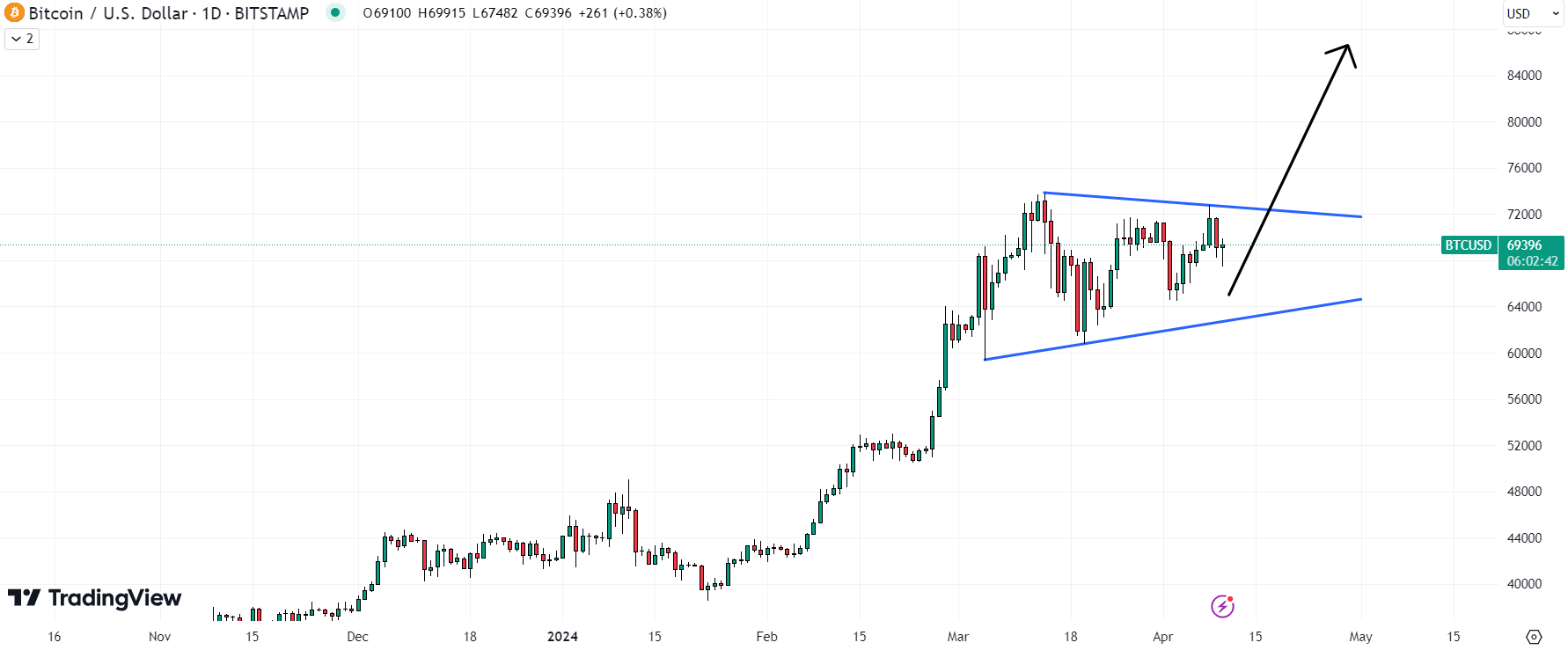 The Bitcoin price could shoot higher once it breaks through its current consolidation zone. Source: TradingView
Overall, while predicting the short-term trajectory of the Bitcoin price is challenging, the long-term outlook remains positive. Bitcoin could still reach $100,000 this year, but it must first break out of its current consolidation phase.
The post Bitcoin Price Surprisingly Strong As Hot US Inflation Data Throws Fed Rate Cut Story Into Doubt – Where Next for BTC? appeared first on Cryptonews.
