Disclaimer: Information found on CryptoreNews is those of writers quoted. It does not represent the opinions of CryptoreNews on whether to sell, buy or hold any investments. You are advised to conduct your own research before making any investment decisions. Use provided information at your own risk.
CryptoreNews covers fintech, blockchain and Bitcoin bringing you the latest crypto news and analyses on the future of money.


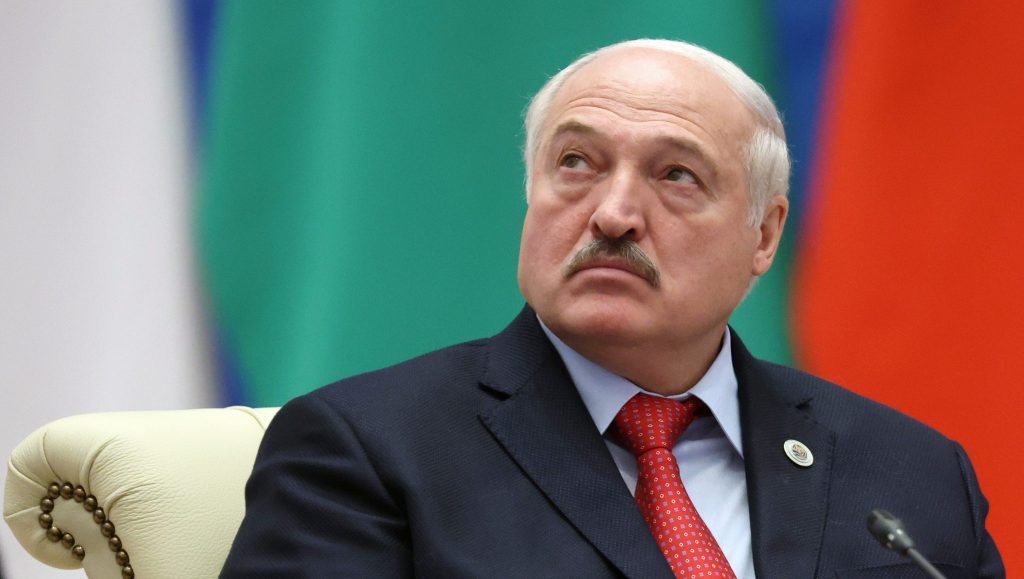
Belarusian President Aleksandr Lukashenko has framed cryptocurrency mining as a crucial strategy for diminishing reliance on the dollar, unveiling ambitious expansion plans during a governmental meeting focused on energy policy.
This directive builds upon earlier pledges to leverage the nation’s surplus nuclear energy capacity as a competitive edge for digital asset production. Concurrently, wider geopolitical dynamics are accelerating de-dollarization across various regions.
A local report indicates that Lukashenko dismissed worries regarding market fluctuations during the November 14 meeting in Minsk, presenting cryptocurrency as an unavoidable element of global initiatives aimed at creating monetary alternatives.
“Our entire world is currently facing a significant challenge, namely the shift away from dependence on a single currency, the dollar,” he stated to officials gathered to deliberate on electricity consumption strategies and the development of nuclear capacity.
“This trend will escalate. Cryptocurrency is likely one of the solutions.”
 Source: The Economist
Belarus Develops Mining Infrastructure Based on Nuclear Energy
The president’s support follows several months of groundwork aimed at establishing Belarus as an appealing location for international mining ventures.
In March, Lukashenko instructed Energy Minister Alexei Kushnarenko to harness the country’s electricity surplus for cryptocurrency production, specifically mentioning developments in Washington, where President Donald Trump revealed plans for a national Bitcoin reserve.
“We can observe the direction in which the world is moving, particularly the largest economy globally,” Lukashenko remarked while suggesting that Belarus might ultimately create its own national cryptocurrency reserve instead of merely attracting foreign investors.
Belarus has anchored its mining aspirations on the Belarusian Nuclear Power Plant, which reached full operational capacity of 2400 megawatts following the activation of its second unit in November 2023.
 Source: Belarusian Nuclear Power Plant
The infrastructure enhancement addressed previous power shortages that had impeded earlier efforts to attract mining companies to Minsk’s Hi-Tech Park.
Investors from Russia and China have reportedly shown interest in projects based in Belarus, enticed by incentivized electricity rates now feasible due to the increased nuclear output.
Related Posts
In addition to mining, Belarus is set to introduce its Central Bank Digital Currency by late 2026.
The National Bank intends to onboard businesses before extending access to government entities and citizens in 2027.
The digital ruble initiative is closely aligned with Russia’s concurrent CBDC development, as both countries confront sanctions pressure and seek alternative settlement methods.
However, Russia has postponed its own launch to mid-2026 due to technical difficulties.
Global De-Dollarization Trends Propel Bitcoin Adoption
Lukashenko’s strategic shift coincides with observed changes in international trade settlement practices that extend well beyond Eastern Europe.
Investment firm VanEck reported in April that China and Russia have started settling certain energy transactions using Bitcoin and other digital currencies, while Bolivia announced intentions to import electricity via cryptocurrencies.
These developments gained traction during the period when the Trump administration heightened trade tensions by imposing a 125% tariff on Chinese imports, which led to immediate market reactions, with Bitcoin surging 5.6% to $81,636 within an hour of the announcement.
At that time, China retaliated by increasing tariffs on U.S. goods from 34% to 84% on April 9. However, a diplomatic breakthrough on May 12 resulted in a tariff détente, with the U.S. reducing duties to 30% and China lowering impositions to 10%.
The U.S. Dollar Index fell over 9% year-to-date to 99, highlighting what VanEck describes as Bitcoin’s emerging role as a safeguard against fiat debasement and geopolitical risks.
Asia’s billionaires have also reacted decisively to these macroeconomic changes, according to UBS executive Amy Lo, who disclosed at a Bloomberg event in Hong Kong that the region’s wealthiest investors are reallocating assets from U.S. dollars into Bitcoin, gold, and Chinese markets.
Asia’s affluent investors now hold over 15% of their wealth in cryptocurrencies and gold, marking a significant shift from traditional dollar-denominated portfolios.
According to the Cryptonews report, 76% of Asia’s family offices and high-net-worth investors possess digital assets, an increase from 58% in 2022, with many raising crypto allocations from less than 5% to over 10% of total holdings.
Singapore is at the forefront of this transformation, with 57% of wealthy investors intending to expand their cryptocurrency holdings over the next two years. The region’s affluent class is expected to see its wealth rise from $2.7 trillion in 2021 to $3.5 trillion by 2026.
The post Belarus Prioritizes Crypto Mining Amid Push to Break Dollar Dominance appeared first on Cryptonews.
