Disclaimer: Information found on CryptoreNews is those of writers quoted. It does not represent the opinions of CryptoreNews on whether to sell, buy or hold any investments. You are advised to conduct your own research before making any investment decisions. Use provided information at your own risk.
CryptoreNews covers fintech, blockchain and Bitcoin bringing you the latest crypto news and analyses on the future of money.


Individuals familiar with trading in conventional finance are likely to recognize the concept of profit and loss (PnL). However, is PnL in the realm of cryptocurrency identical? Understanding terms such as mark-to-market (MTM), realized PnL, and unrealized PnL can enhance one’s grasp of the cryptocurrency assets they possess.
Without a clearly defined method to gain insights into profit or loss, engaging in cryptocurrency trading can be daunting, and traders may find themselves confused about their actions. PnL represents the variation in the value of a trader’s positions over a designated timeframe.
To clarify, let’s explore this within the framework of cryptocurrency trading.
Grasping the fundamentals of PnL
PnL in the cryptocurrency space pertains to the assessment of the profit or loss incurred from a cryptocurrency investment or trading position. It serves as a metric for evaluating the financial performance of a trader or investor in the crypto market.
To start, here are some essential terms related to PnL:
MTM
MTM denotes the process of assessing an asset or financial instrument based on its prevailing market price or fair value. For instance, in the context of crypto trading, if an investor possesses a specific quantity of Bitcoin (BTC), the value of that Bitcoin will vary according to the current market price.
The standard formula for calculating PnL is:
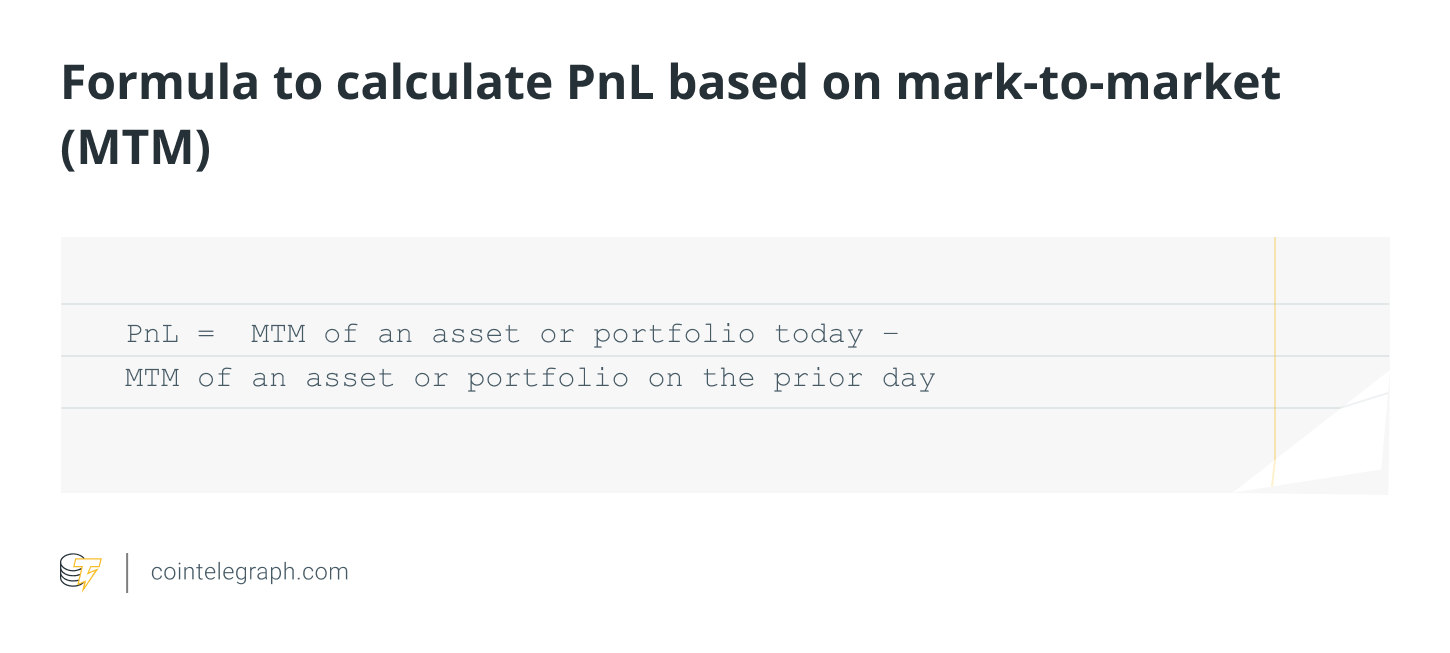
Assuming the MTM price for Ether (ETH) today is $1,970, while the MTM price yesterday was $1,950. In this scenario, the PnL is $20, indicating a profit of $20. Conversely, if the MTM price of ETH was $1,980 yesterday, it would reflect a loss of $10.
Future value
Future value signifies the worth of a digital coin at a subsequent point in time.
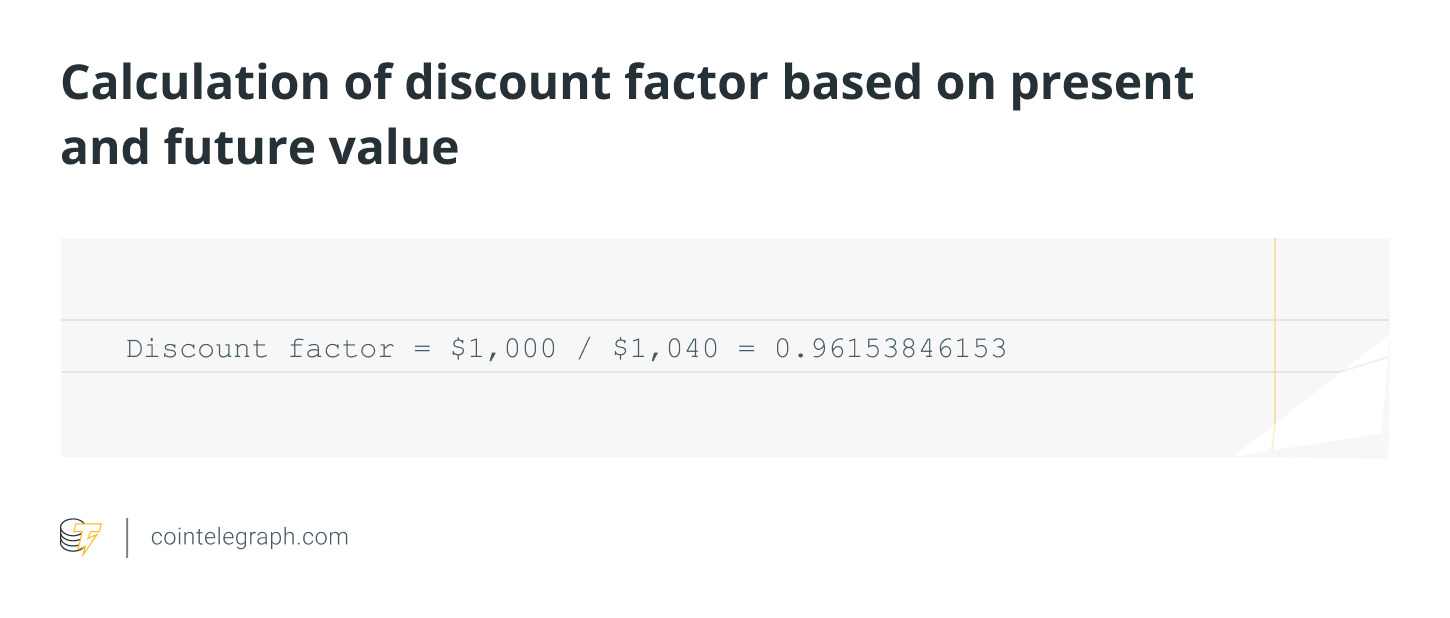
For example, if a trader stakes Tron (TRX) valued at $1,000 with a 4% annual reward, what will the individual receive after a year? The result is $1,040. At the time of staking, the present value is $1,000, while the future value is $1,040.
There will be a present value at the moment the trader stakes, but if the individual considers the future as a whole, there could be numerous future values.
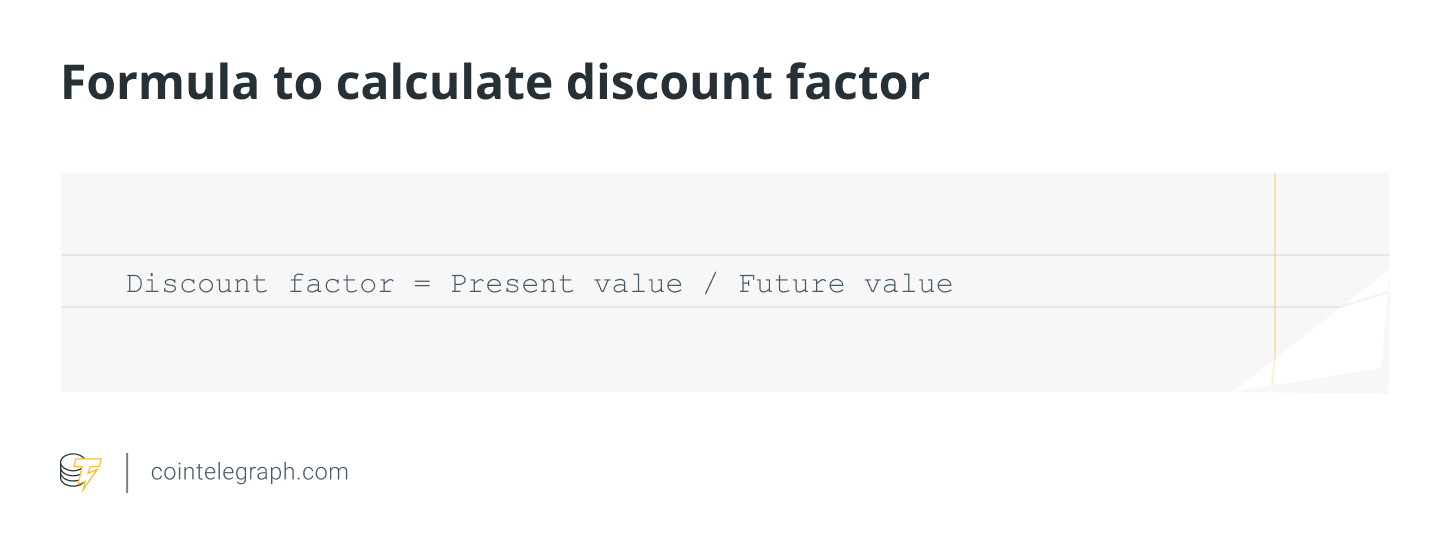
Future value can also be utilized differently. Traders might inquire how much to stake to achieve $1,040 in a year. If they are aware of the present and future values, they can compute the discount factor. The formula for calculating the discount factor is:
For the aforementioned example, the discount factor will be:
Realized PnL
Realized PnL is determined after traders have closed their positions (sold the cryptocurrency they own). Only the executed price of the orders is considered in realized PnL, and it does not have a direct connection to the mark price.
The mark price is the valuation of a derivatives contract based on the current market price of the underlying asset rather than the price at which the contract is being traded.
The formula for realized PnL is:
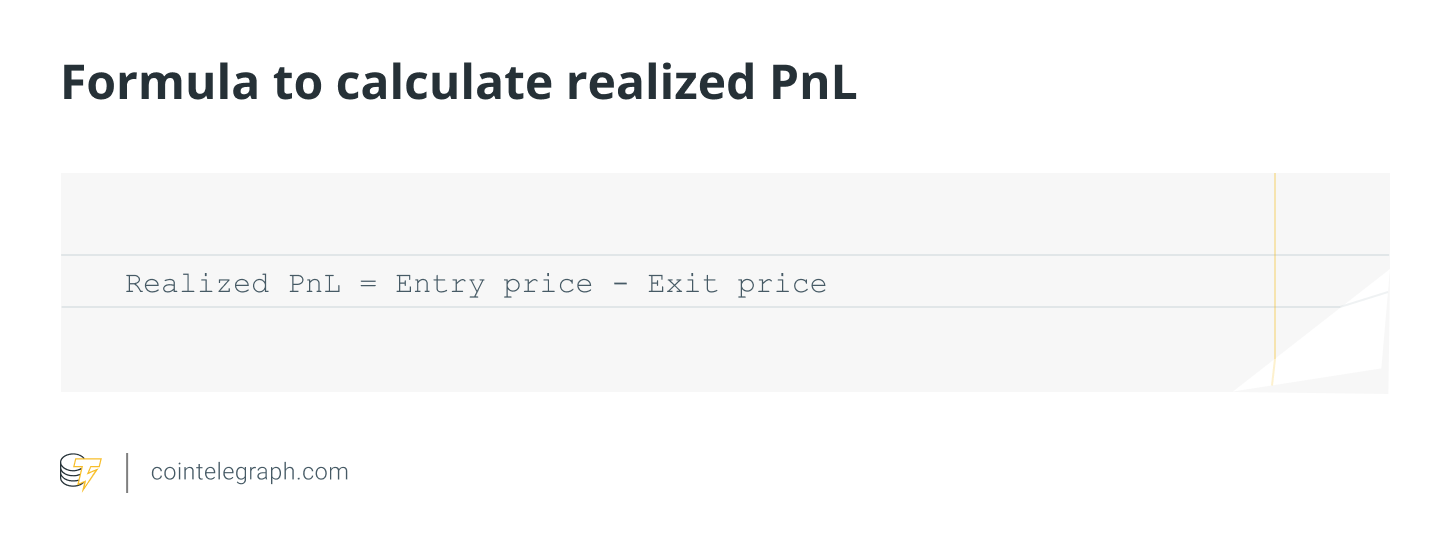
An example will clarify how to compute realized PnL. If the entry price for acquiring X number of Polkadot (DOT) is $70 and the exit price is $105, the PnL for that period is $35, indicating a profit of $35. However, if the closing price of the trade was $55, the PnL would be $15, reflecting a loss.
Unrealized PnL
Unrealized PnL pertains to the profit or loss that is currently present in open positions but has not yet been realized through closing the position. The formula for calculating unrealized PnL is:
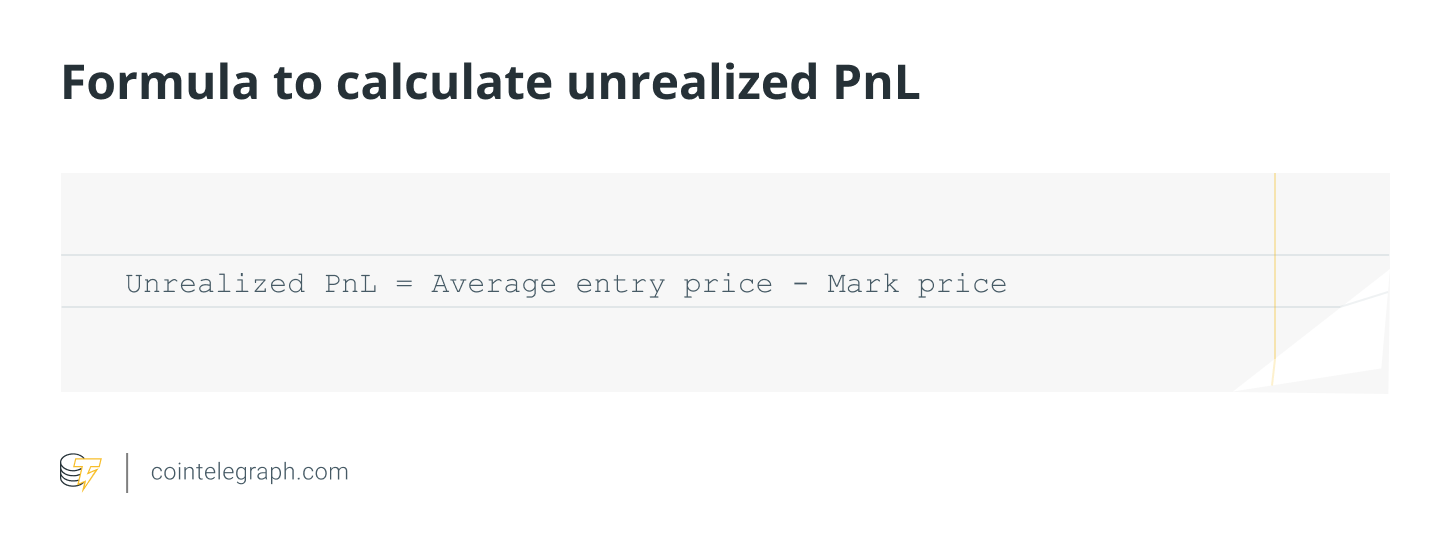
Donald has acquired ETH contracts at an average entry price of $1,900. The current mark price of ETH is $1,600. Donald’s unrealized PnL is the difference between the average entry price and the mark price.
Unrealized PnL = $1,900 – $1,600 = $300
How to perform PnL calculation
To ascertain PnL in cryptocurrency, a trader must identify the difference between the initial cost of acquiring a digital coin and the current market value of that same coin. Various methods for calculating PnL in cryptocurrency include:
First-in, first-out (FIFO) method
The FIFO method necessitates the seller to utilize the price of the asset from when it was initially purchased. Here is the procedure to calculate PnL using the FIFO method:
1) To determine the initial cost of the cryptocurrency, multiply the purchase price per unit by the number of units sold.
2) To ascertain the current market value of the asset sold, multiply the current market price per unit by the number of units sold.
3) To calculate the PnL, subtract the initial cost from the current market value.
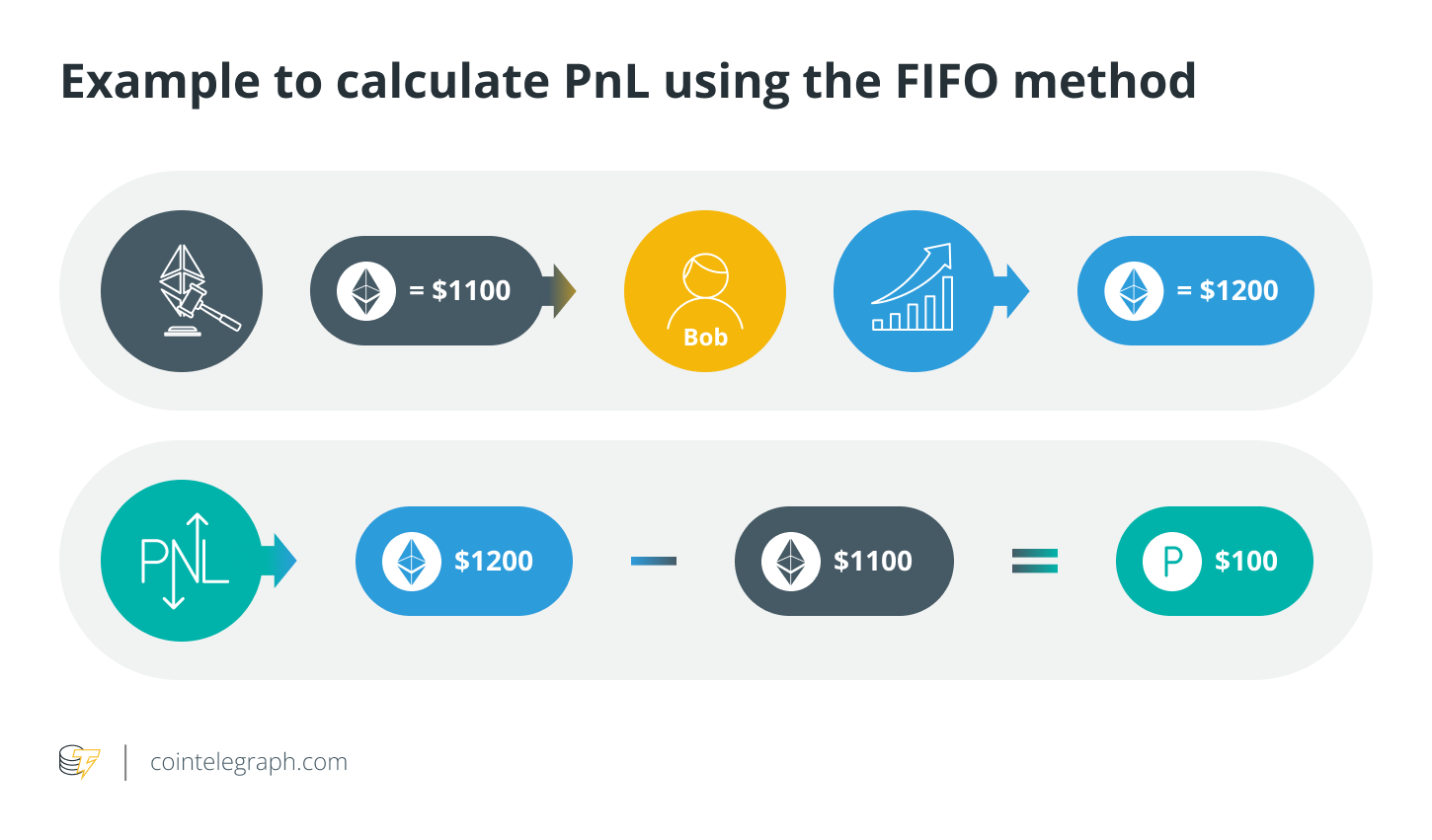
Suppose Bob initially bought 1 ETH at $1,100 and a few days later acquired 1 ETH at $800. A year later, he sold 1 ETH at $1,200. Since he first purchased ETH at $1,100, this price will be regarded as the initial cost. Using the FIFO method, Bob can compute PnL as follows:
Bob’s initial cost = (1 ETH x $1,100) = $1,100
Current market value = (1 ETH x $1,200) = $1,200
PnL = $1,200 – $1,100 = $100 (profit)
Related Posts
Last-in, first-out (LIFO) method
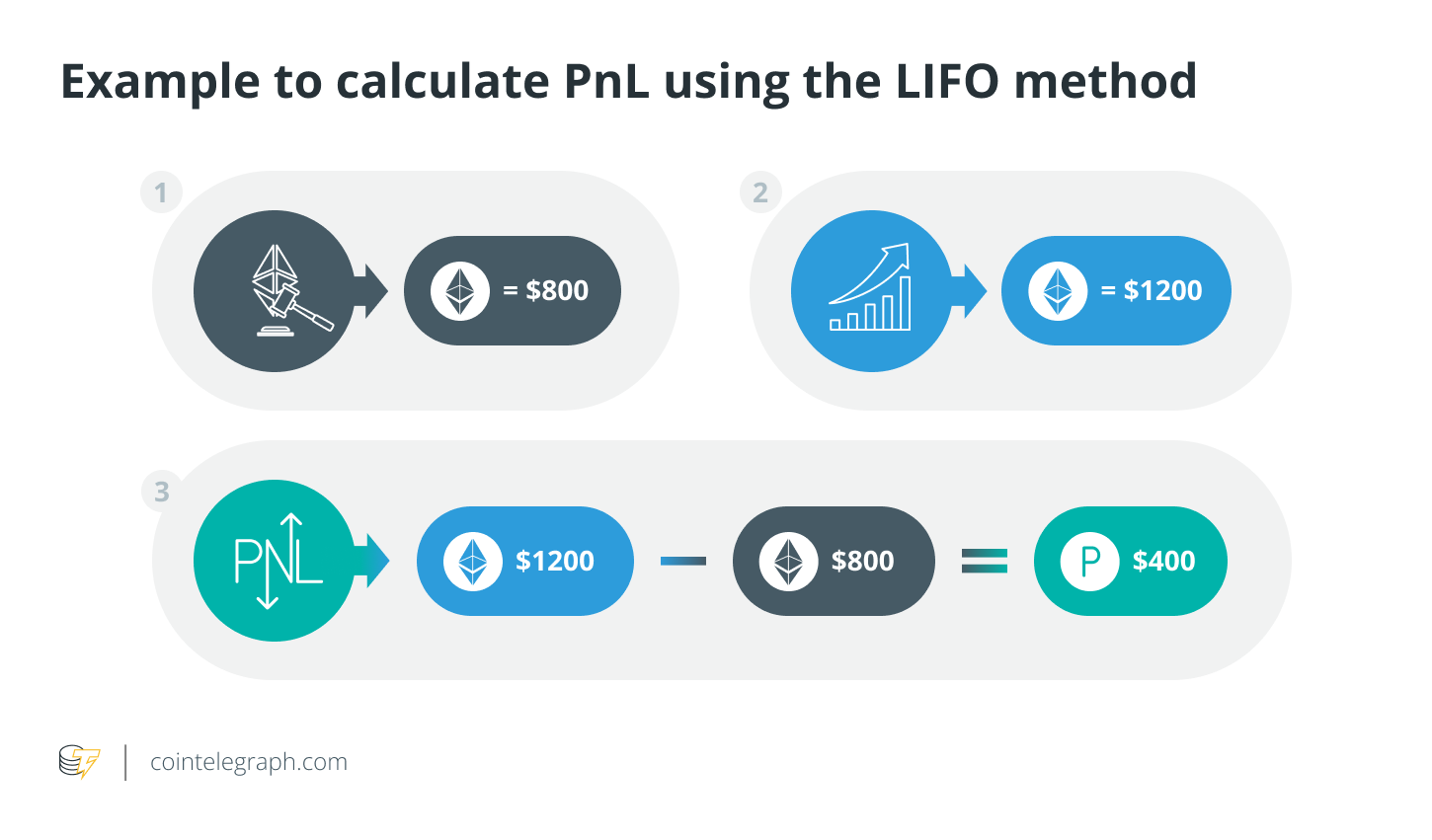
The LIFO method requires the seller to apply the most recent purchase price of an asset in the calculation. The other aspects are similar to the FIFO method. Here is the PnL using the LIFO method based on the same example as above:
Bob’s initial cost = (1 ETH x $800) = $800
Current market value = (1 ETH x $1,200) = $1,200
PnL = $1,200 – $800 = $400 (profit)
Weighted average cost method
The weighted average cost method requires traders to calculate the average cost of all units of a digital currency in their portfolio to determine the initial cost. Here are the steps to compute PnL using this method:
1) Calculate the total cost of all units of the cryptocurrency. Multiply the purchase price per unit for each transaction by the number of units of the asset and sum the results.
2) To find the weighted average cost per unit of the digital coin, divide the total cost of all units by the number of units.
3) Determine the current market value of the cryptocurrency sold. Multiply the current market price per unit by the number of units sold.
4) To ascertain PnL, subtract the average cost per unit from the current market value.
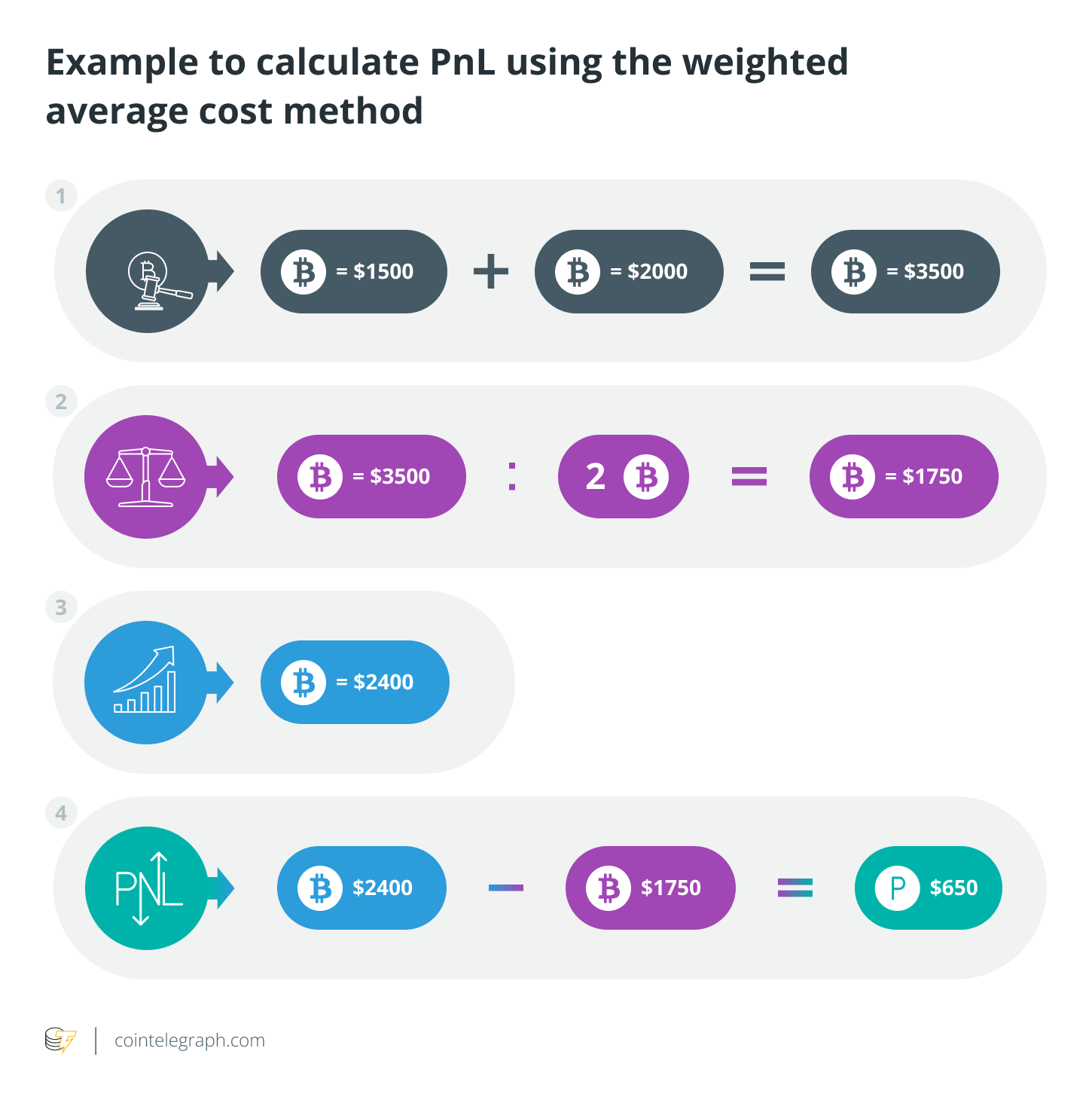
Suppose Alice purchased 1 BTC at $1,500 and a few days later acquired 1 BTC at $2,000. She subsequently sold 1 BTC at $2,400. Here is the PnL using the weighted average cost method:
Total cost = (1 BTC x $1,500) + (1 BTC x $2,000) = $3,500
Weighted average cost = $3,500 / 2 BTC = $1,750
Current market value = (1 BTC x $2,400) = $2,400
PnL = $2,400 – $1,750 = $650 (profit)
Profits/losses from opening and closing positions
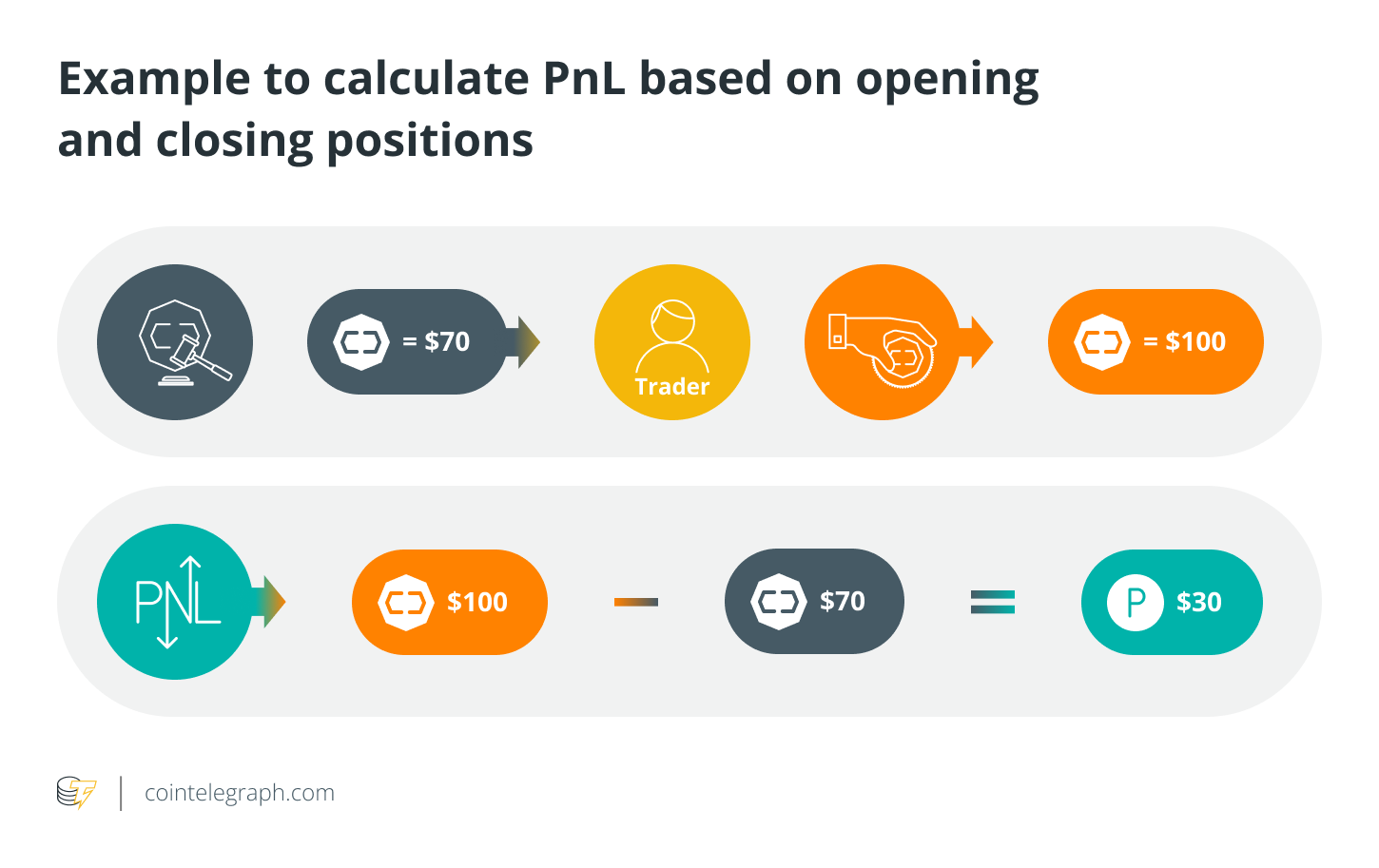
Regularly analyzing open and closed positions is an effective method for tracking performance. An initial purchase made in the market is classified as an open position, while selling the cryptocurrency is referred to as closing the position. If a trader acquires 10 DOT, it constitutes an open position. When the trader sells those DOT, the position is closed.
For instance, if a trader bought 10 DOT for $70 and sold them for $100, the individual’s PnL would be $30 ($100 – $70). Consistent evaluation of trades in relation to open and closed positions aids a trader in maintaining an organized approach.
Year-to-date (YTD) calculation
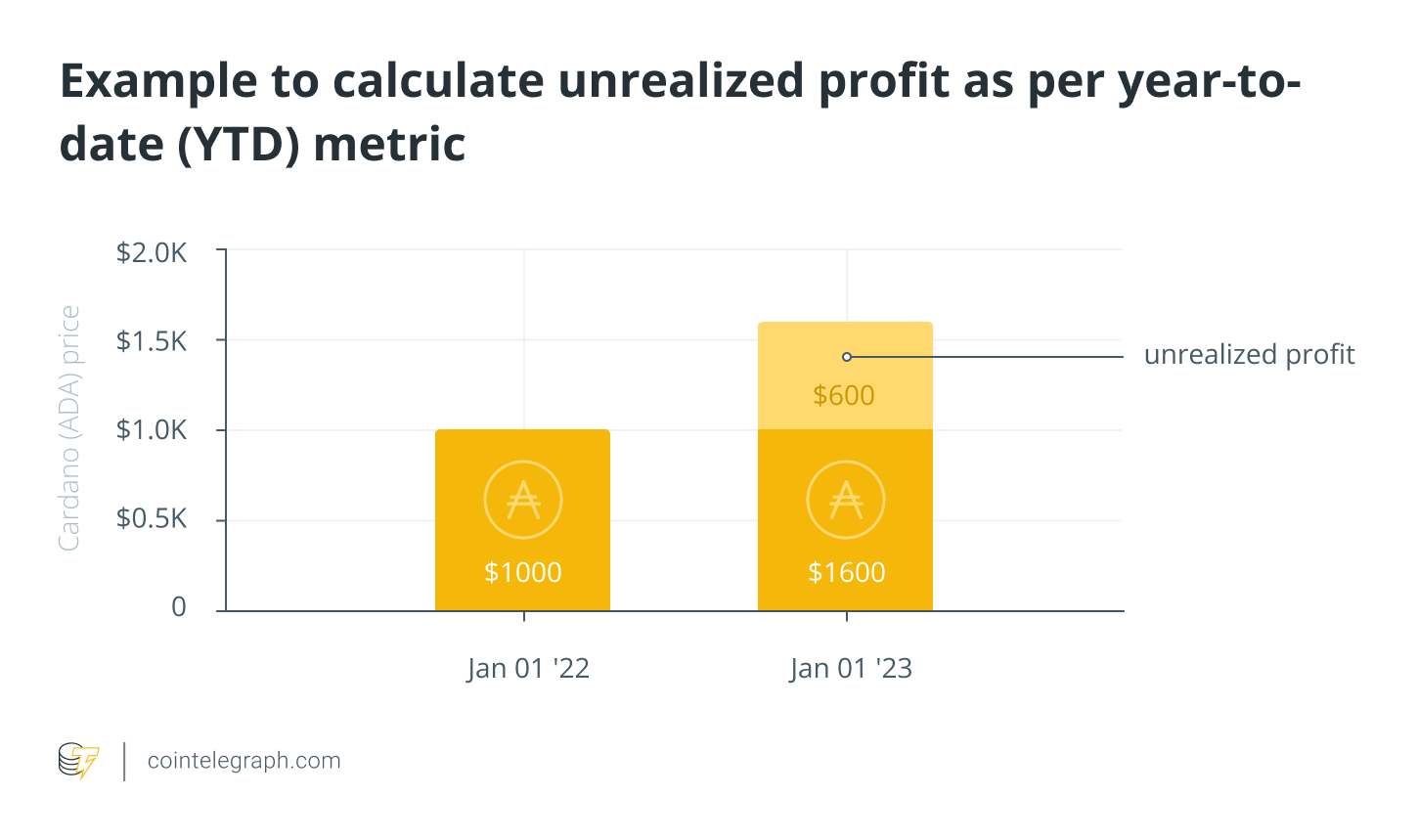
YTD serves as a method to assess the performance of investments made in cryptocurrency from the beginning of the year to the present date. Investors who routinely buy and hold cryptocurrencies over the years can ascertain their unrealized profits through a YTD calculation. The trader simply needs to evaluate the portfolio’s value at the start and end of a year and compare these figures. This could pertain to a calendar year or fiscal year, depending on the individual’s preference or requirements.
For example, if someone holds $1,000 worth of Cardano (ADA) on January 1, 2022, and $1,600 of ADA on January 1, 2023, then $600 represents the unrealized profit. Unrealized profit signifies returns that have not yet been converted into cash or cash equivalents such as term deposits.
Transaction-based calculation
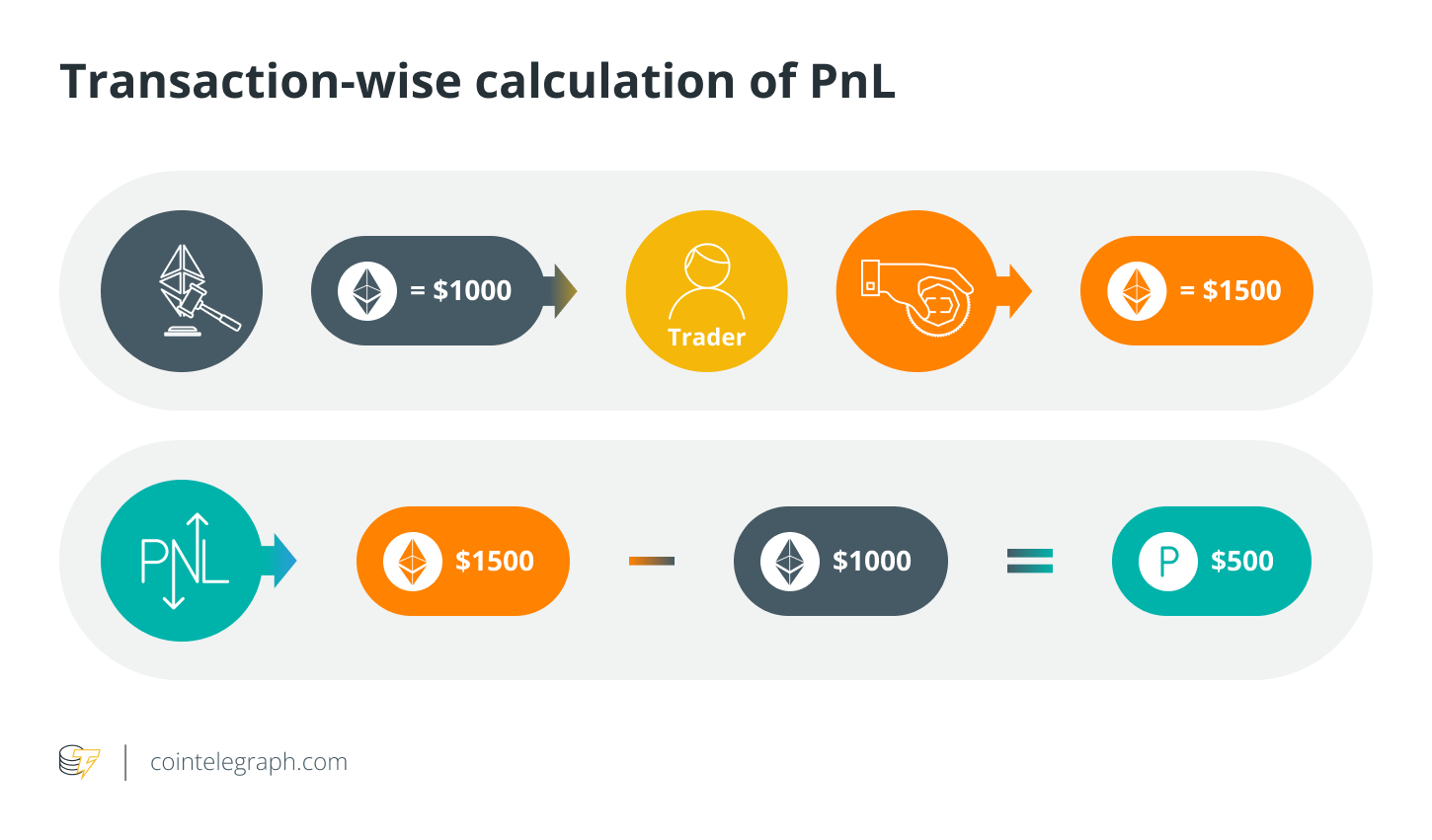
A transaction-based calculation necessitates an individual to compute the PnL for each specific transaction. For instance, if a person bought 1 ETH for $1,000 and sold it for $1,500, the PnL for that transaction would be a $500 profit ($1,500 – $1,000). If the number of transactions is limited and a trader needs to compute PnL for these transactions separately, a transaction-based calculation is an appropriate method.
Percentage profit
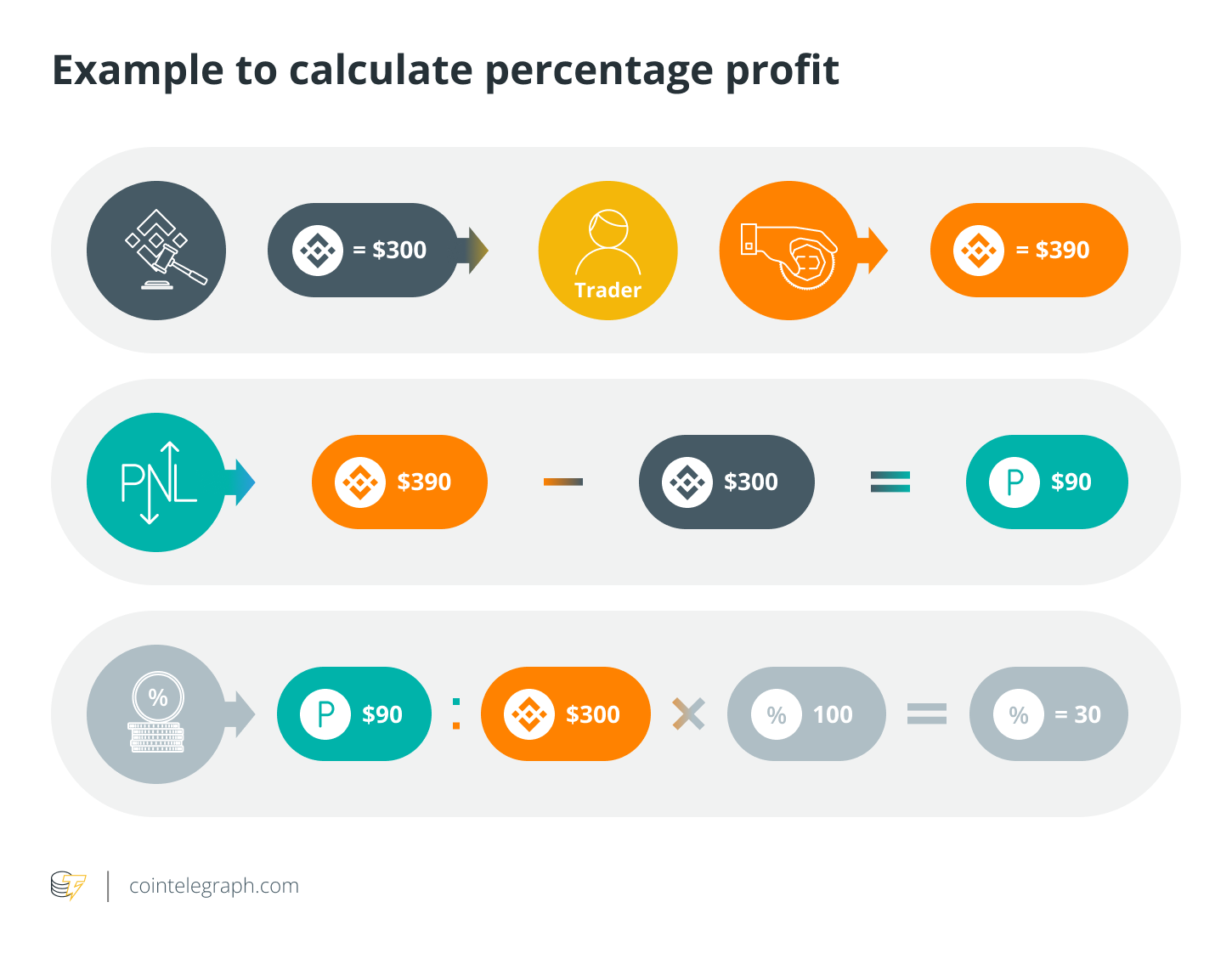
The percentage profit method expresses the PnL as a percentage of the initial cost. An example will clarify this further. Suppose a trader acquires 1 Binance Coin (BNB) for $300 and sells it for $390. In this case, the individual’s PnL would be a $90 profit ($390 – $300). To calculate the percentage profit, the trader must divide the PnL by the purchase price and multiply the result by 100 (($90 / $300) x 100). This results in 30%.
However, it is important to note that these are simplified examples that do not account for variables such as taxes, trading fees incurred on the platform, market volatility, etc. In real-world scenarios, a trader must consider the specific context when calculating PnL.
How to calculate PnL of perpetual contracts
Perpetual contracts are a category of futures contract without a fixed settlement time or expiration date. Traders can maintain their long or short positions indefinitely, provided they have adequate maintenance margin, which is the minimum collateral required to sustain open trading positions.
When traders compute the PnL of perpetual contracts in cryptocurrencies, they must calculate both realized and unrealized PnL and then sum them to determine the total PnL.
Here are the steps to assess PnL of perpetual contracts:

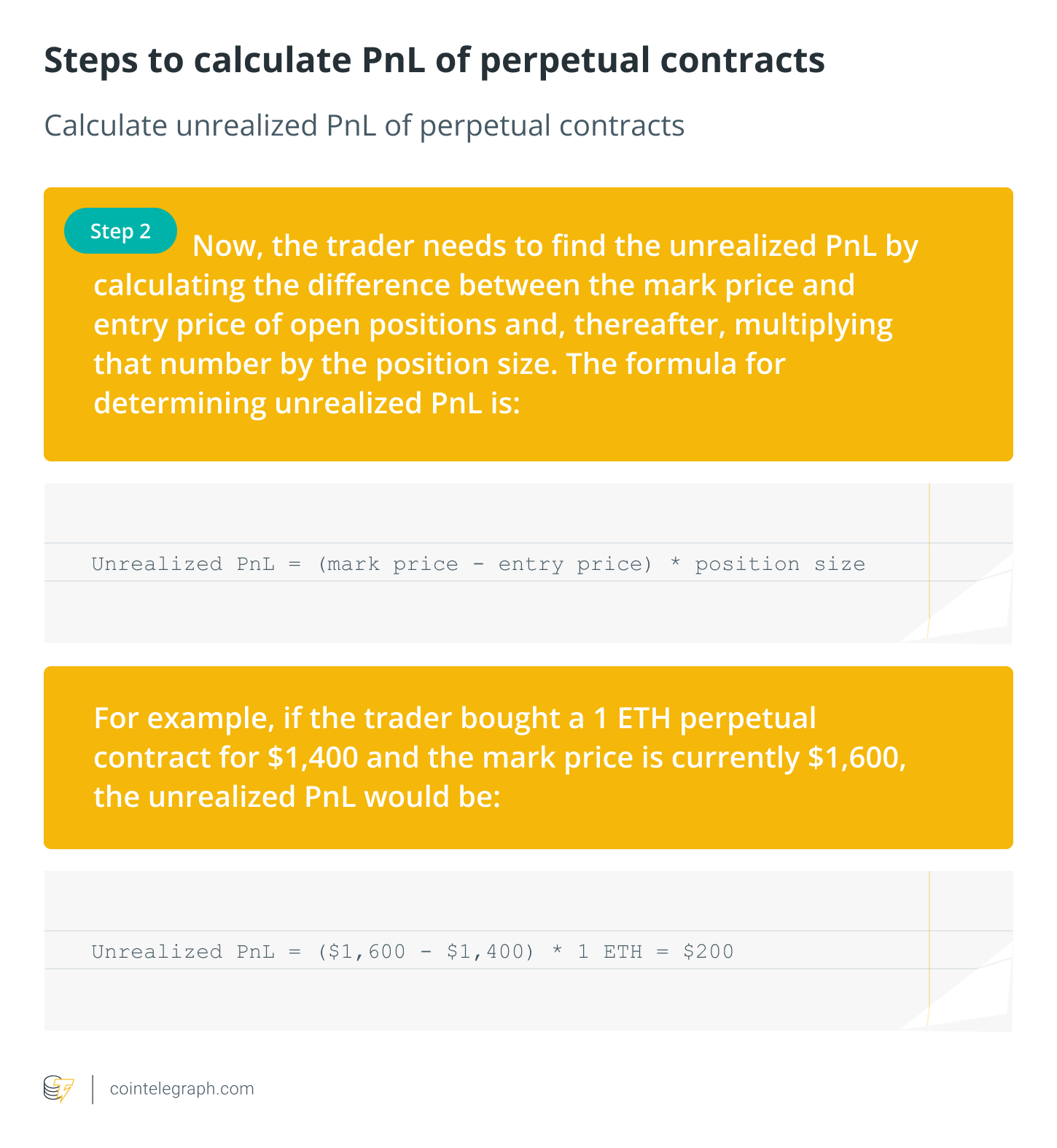
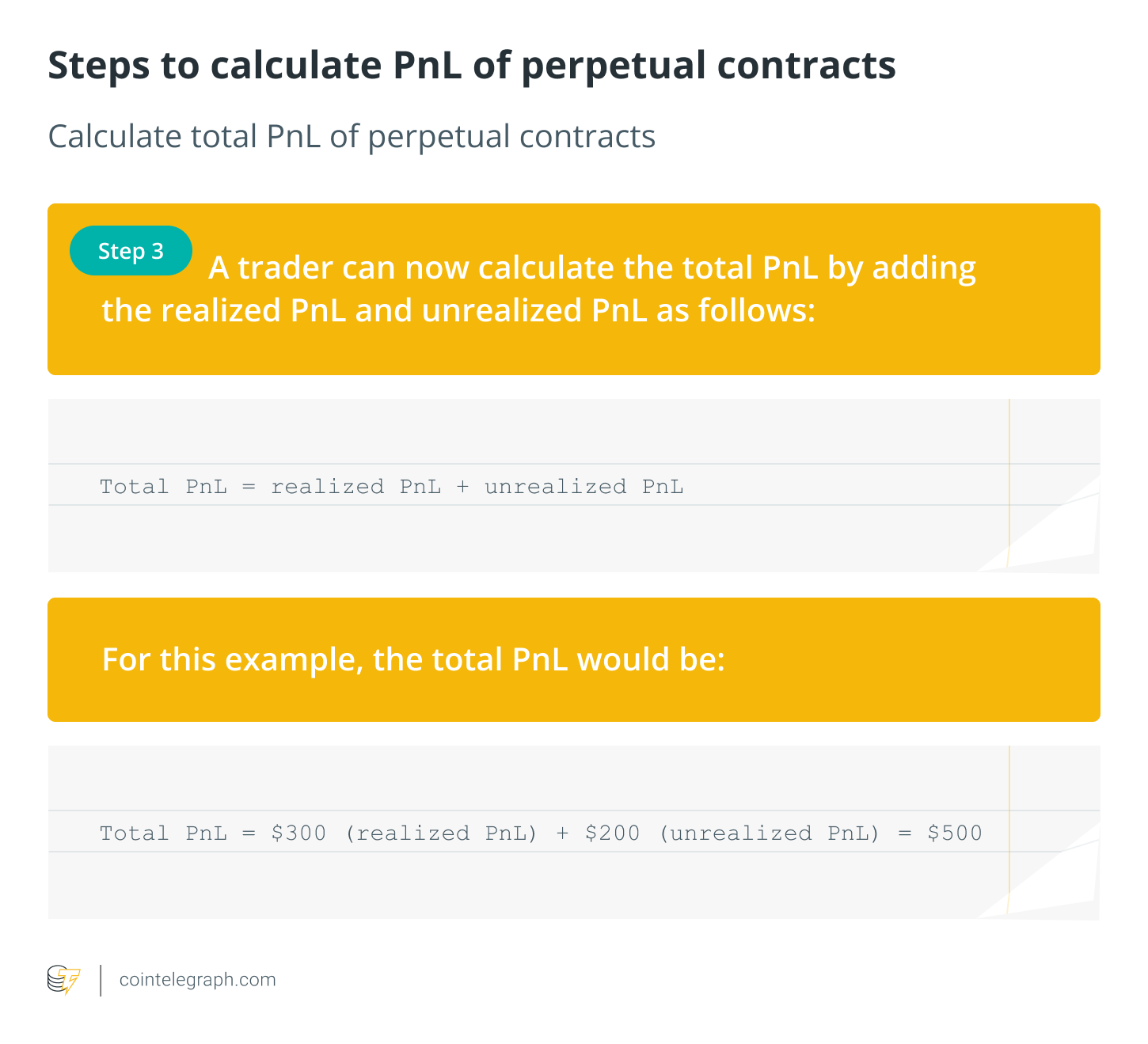
Again, this is a simplified explanation of the concept of calculating PnL for crypto perpetual contracts. When determining total PnL in practice, a trader must consider factors such as trading fees and funding rates.
PnL calculations and associated tools
Understanding crypto PnL enables individuals to ascertain whether their cryptocurrency portfolio is profitable or at a loss. Gaining insight into key parameters such as cost basis, quantity, price of each trade, and portfolio profitability assists traders in evaluating the effectiveness of their strategies and making necessary adjustments. Accurate awareness of the funds they have gained or lost on a specific trade influences their future trading decisions positively.
In addition to PnL calculations, there are tools such as specialized spreadsheets and automated trading bots that can assist traders in analyzing their performance and identifying profitable trading opportunities, regardless of their level of experience.
