Disclaimer: Information found on CryptoreNews is those of writers quoted. It does not represent the opinions of CryptoreNews on whether to sell, buy or hold any investments. You are advised to conduct your own research before making any investment decisions. Use provided information at your own risk.
CryptoreNews covers fintech, blockchain and Bitcoin bringing you the latest crypto news and analyses on the future of money.


As an AI language model, ChatGPT can offer some insights on how to pursue a career in game development, but it cannot provide a detailed or tailored educational pathway. Here are several ways to leverage ChatGPT in your journey to becoming a game developer:
Enhance your programming abilities
Game development necessitates strong programming capabilities, so begin by studying programming languages like C++, Java, or Python. Online courses or tutorials can be utilized to grasp the fundamentals of programming and practice coding.
Below is an example of Python code for a simple “guess the number” game, where the player attempts to guess a random number between 1 and 100:
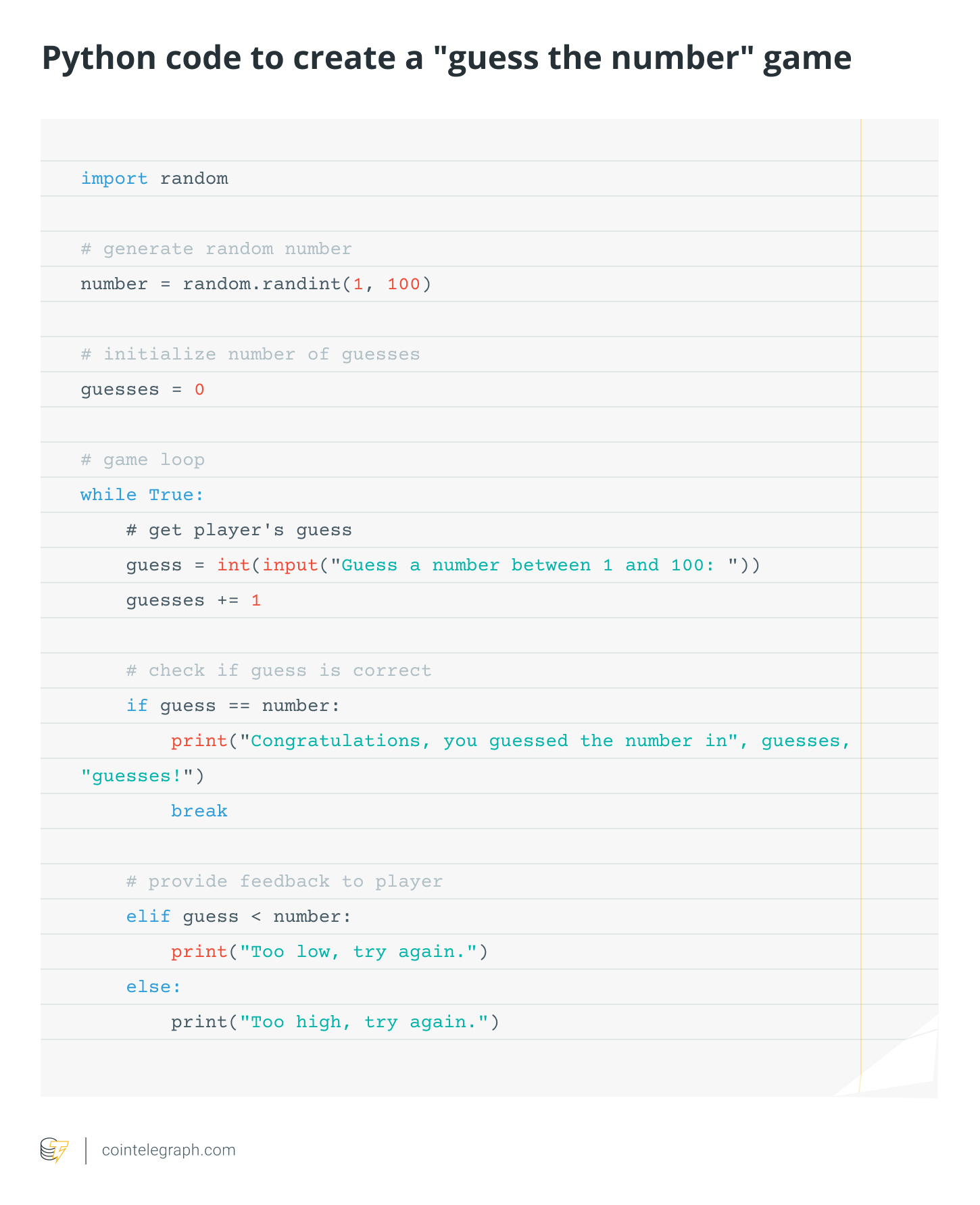
This code employs the built-in random module to generate the number and tracks the number of guesses made by the player. The main game loop persists until the player successfully guesses the correct number, at which point the program displays a congratulatory message that includes the total number of guesses taken to arrive at the correct answer.
If the player’s guess is incorrect, the program offers feedback by indicating whether the guess was too high or too low, then returns to the beginning of the game loop to solicit the player’s next guess.
Related: How to enhance your coding skills using ChatGPT?
Select a game engine
Numerous game engines are accessible for novices to begin their game development education, each with distinct advantages and disadvantages. One can inquire with ChatGPT for recommendations on game engines to kickstart their development journey, and it may suggest a few initial options.
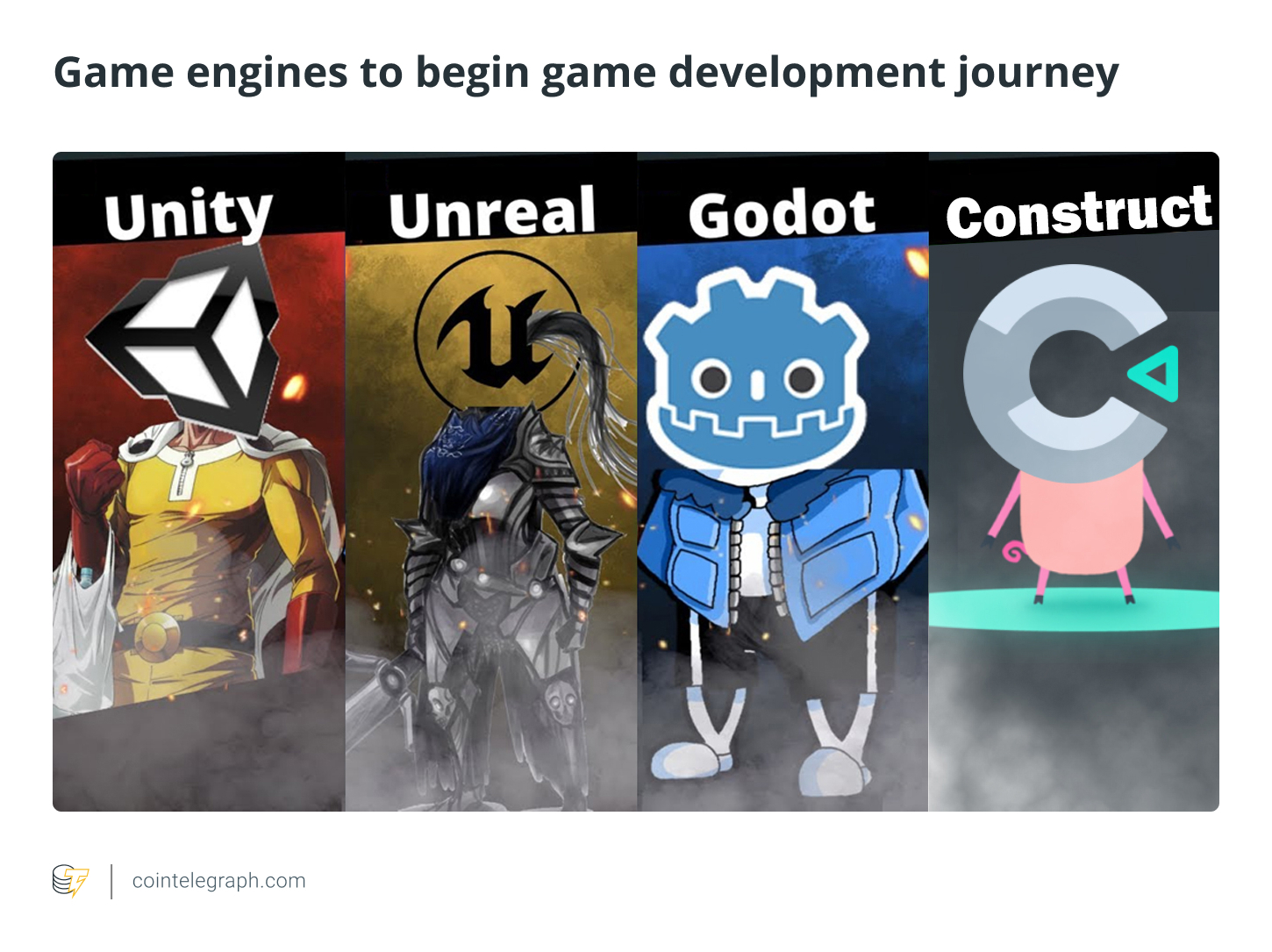
Here are some beginner-friendly game engines:
- Unity: Unity is among the most favored game engines for beginners, owing to its intuitive interface and comprehensive documentation. It supports various platforms, including PC, mobile, and consoles, and boasts a large community of developers who create valuable tutorials and resources.
- Unreal Engine: Unreal Engine is another widely-used game engine by professional developers, yet it also offers numerous resources for newcomers. Its robust graphics capabilities make it suitable for developing 3D games, although it may present a steeper learning curve compared to Unity.
- Godot: Godot is an open-source game engine that is increasingly popular among indie developers. It features a straightforward interface and is easy to learn, making it an excellent choice for beginners. It supports both 2D and 3D game development and has a vibrant community of developers.
- Construct: Construct is a 2D game engine tailored for beginners lacking prior programming knowledge. It features a drag-and-drop interface and a library of pre-built assets, facilitating the rapid creation of simple games.
Ultimately, the selection of a game engine is contingent upon individual preferences and the type of game one aims to create. It is advisable to experiment with several different game engines to determine which one feels the most comfortable and aligns with one’s requirements.
Related Posts
Understand game design principles
Grasping game design principles is essential for developing engaging and enjoyable games. As one embarks on the game development journey, several key design principles should be considered. Here are some important principles to keep in mind:
- Game mechanics: This pertains to the rules and systems that dictate how the game is played. The game mechanics should be clear, easily comprehensible, and balanced to ensure that the game remains enjoyable and challenging for players.
- Player engagement: The game should captivate players and maintain their interest throughout. This can be accomplished through various methods, such as crafting an immersive storyline, featuring compelling characters, and offering rewards or incentives for progression.
- Visual design: The visual aspects of the game are vital to its success. This encompasses the use of color, shapes, and textures to create a visually appealing game world that enhances the player experience.
- User interface (UI): The UI represents how players interact with the game, and it should be intuitive and easy to navigate. This includes elements such as menus, buttons, and controls.
- Playtesting: Playtesting involves having others engage with the game to identify any issues or areas needing improvement. This process can help refine game mechanics, uncover bugs, and enhance the overall player experience.
Engage with game development communities
Becoming a member of online game development communities can offer valuable resources, support, and feedback on one’s projects. Platforms like GameDev.net, IndieDB, and Itch.io provide forums, tutorials, and resources for game developers.
Additionally, the Blockchain Game Alliance is a collective of game developers, publishers, and service providers dedicated to advancing blockchain technology within the gaming sector. They offer networking opportunities, events, and resources for their members.
Find out our top takeaways from #NFTNYC!
It was awesome to see the growing potential of #NFTs and #gaming.
We showcased BGA members at our booth and hosted a matchmaking side event.
Read our thoughts on this year’s leading #NFT event:https://t.co/YZxs6YuxQW— Blockchain Game Alliance (@BGameAlliance) April 19, 2023
Create a portfolio
Developing a portfolio of your game development projects can help demonstrate your skills and attract potential employers. By creating small games or contributing to open-source game initiatives, you can gain experience and build a solid skill foundation that will prepare you for larger projects. This can also facilitate networking with other game developers and potentially uncover job opportunities in the game development field.
Related: How to secure a job in the metaverse and Web3?
Take part in game jams
Game jams are events where developers collaborate to create games within a limited timeframe. Participating in game jams can help one enhance their skills, connect with other developers, and gain visibility for their work.
An example of a Web3 game jam is the ETHOnline Hackathon, an annual online event that unites developers, designers, and entrepreneurs to build decentralized applications (DApps) and games utilizing Ethereum. Another instance is the ETHDenver hackathon, a three-day event focused on developing DApps and games using blockchain technology.
… and that’s a wrap for ETHOnline 2022 !
Congratulations to all finalist teams and solo-hackers!
To ᴇᴠᴇʀʏᴏɴᴇ who participated and submitted a project in this hackathon: You all should be incredibly proud of yourselves!! pic.twitter.com/1sS2plzyRZ— ETHGlobal (@ETHGlobal) September 28, 2022
Keep in mind that becoming a game developer is an ongoing learning journey that demands dedication, creativity, and effort. Continue to learn, practice, and hone your skills, and you can ultimately achieve success as a game developer.
