Disclaimer: Information found on CryptoreNews is those of writers quoted. It does not represent the opinions of CryptoreNews on whether to sell, buy or hold any investments. You are advised to conduct your own research before making any investment decisions. Use provided information at your own risk.
CryptoreNews covers fintech, blockchain and Bitcoin bringing you the latest crypto news and analyses on the future of money.


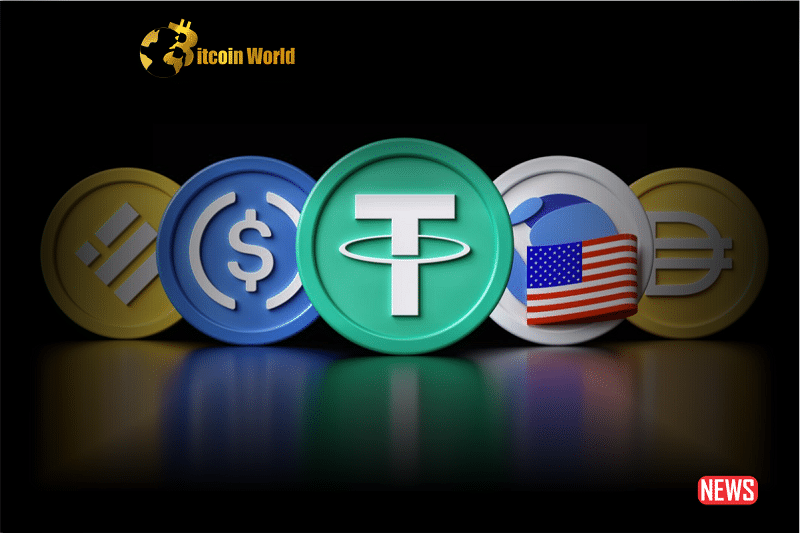
In the continuously changing realm of cryptocurrency, stablecoins have become an essential link between security and innovation, especially in areas where reliable banking services are scarce and political instability is common. These digital currencies provide stability and are gaining increasing significance within the global financial landscape.
In 2022, the volume of stablecoins reached an astonishing record of $7.4 trillion, exceeding the transaction volumes of leading credit card companies. Although stablecoin volumes have experienced a minor decline this year, the ongoing rise in global inflation has led to an increasing demand for stable currencies.
It is important to acknowledge that not all stablecoins are identical, making it vital for regulators and users to comprehend their distinctions. This comprehension is particularly crucial in the United States, where the Biden administration’s Operation Chokepoint 2.0 appears to be focused on consolidating governmental authority to limit the expansion of cryptocurrencies.
A recent Working Paper from the International Monetary Fund highlighted the effectiveness of stablecoins in Latin America in preserving savings and protecting livelihoods, providing the advantages of crypto assets without the extreme fluctuations. Nevertheless, stablecoins have additional characteristics that can propel us toward a contemporary era of transparent, equitable, and functional money.
One such characteristic is programmability, which allows stablecoins to execute specific functions automatically, without intermediaries seeking profit. Entrepreneurs, businesses, and governments can utilize decentralized blockchains to develop stablecoins that offer self-correcting stability, personal privacy, and genuine ownership autonomously.
Moreover, stablecoins should deliver on-chain, verifiable proof of reserves, ensuring transparency regarding the types and quantities of collateral. This transparency allows users to choose assets that correspond with their risk tolerance.
Decentralized community governance is another vital component. In the 21st century, private agreements that benefit a select few are at odds with modern principles. Public accountability serves as a force multiplier against fraud and negligence, enabling citizens to select systems that align with their values.
Related Posts
A diversified collection of assets backing stablecoins in a 1:1 ratio provides a decentralized and secure solution that reduces risk by distributing it across various assets. This strategy guarantees stability and resilience, even during institutional or governmental crises.
Traditional banks and early stablecoin entities have historically retained profits for themselves, but newer decentralized stablecoins are introducing revenue-sharing models on-chain. This regenerative approach to sharing promotes the development of a new financial system that benefits users and stakeholders alike.
Despite their many advantages, stablecoins also present risks and obstacles to adoption that must be addressed. One such risk is the possibility of depegging, as demonstrated by Circle’s USDC during the aftermath of the Silicon Valley Bank run. Implementing a self-correcting stablecoin design, diversifying and overcollateralizing assets, and enabling autonomous recapitalization during unforeseen events can help mitigate depegging risks.
Vulnerabilities in smart contracts also present a challenge. While decentralized stablecoins utilize smart contract automation to ensure system efficiency, transparency, and integrity, they also introduce a learning curve and potential weaknesses. Thorough testing, independent audits, and white-hat hacker bug bounty programs are essential to minimize risks associated with smart contracts.
Regulatory challenges continue to exist. While elected officials and regulators emphasize consumer protection, transparency, and accountability within the crypto sector, regulatory frameworks are developing slowly. However, these initiatives should be seen as opportunities that, when effectively executed, can facilitate broader adoption and access to traditional financial capital markets.
The future of stablecoins is filled with significant potential. Their progression toward decentralized, asset-backed stable money can improve payment and financial services, broaden access for billions of underserved individuals, and transform our financial system with fairness and transparency. As global inflation rates increase, the necessity for stable currency becomes more evident, particularly in underserved areas.
As we approach the next decade, the rise of various stablecoins marks a period of unbundling and reinvention. The motivation to depend on a one-size-fits-all currency diminishes as the creation and transition between currencies become seamless and cost-effective. Programmability introduces new advantages, and stablecoins promise a more accessible financial system for billions, nurturing new networks and community livelihoods.
Stablecoins serve as a catalyst for crypto adoption, providing the developing world with a pathway to access financial opportunities that were previously limited to the West. They symbolize a ripple effect, sparking a broader transformation within the financial system. By shifting from fractional to fully asset-backed systems at a 1:1 ratio, we can ensure banking safety for everyone.
The post Stablecoins Can Make Banking Safe Again: Opinion appeared first on BitcoinWorld.
