Disclaimer: Information found on CryptoreNews is those of writers quoted. It does not represent the opinions of CryptoreNews on whether to sell, buy or hold any investments. You are advised to conduct your own research before making any investment decisions. Use provided information at your own risk.
CryptoreNews covers fintech, blockchain and Bitcoin bringing you the latest crypto news and analyses on the future of money.


PayPal has made significant strides toward establishing its own blockchain ecosystem by filing a patent application for a non-fungible token (NFT) purchase and transfer system. The application, submitted in March and published on September 21, outlines a mechanism for executing NFT transactions both on-chain and off-chain.
The pending patent application describes a system allowing users to buy and sell NFTs through a third-party service provider. While the specific provider is not identified, Ethereum is mentioned within the text.
Related: PayPal enables US users to sell cryptocurrency via MetaMask wallet
PayPal envisions leveraging the full potential of NFTs for tokenization, extending far beyond the exchange of digital collectibles:
“The NFT in this example may represent any unique piece of digital data that can be tracked using a decentralized blockchain ledger. […] Examples of such assets include […] digital images and videos, music, collectibles, and other digital art along with deeds to personal property, event tickets, legal documents and other real-world items.”
The system offers various customization options. For instance, it could support fractionalized purchases through the distribution of governance tokens, which could then be traded independently. Additionally, a decentralized autonomous organization “associated with the service provider may be used to promote NFT liquidity through a dedicated platform.” NFTs could also generate income via royalties.
Related Posts
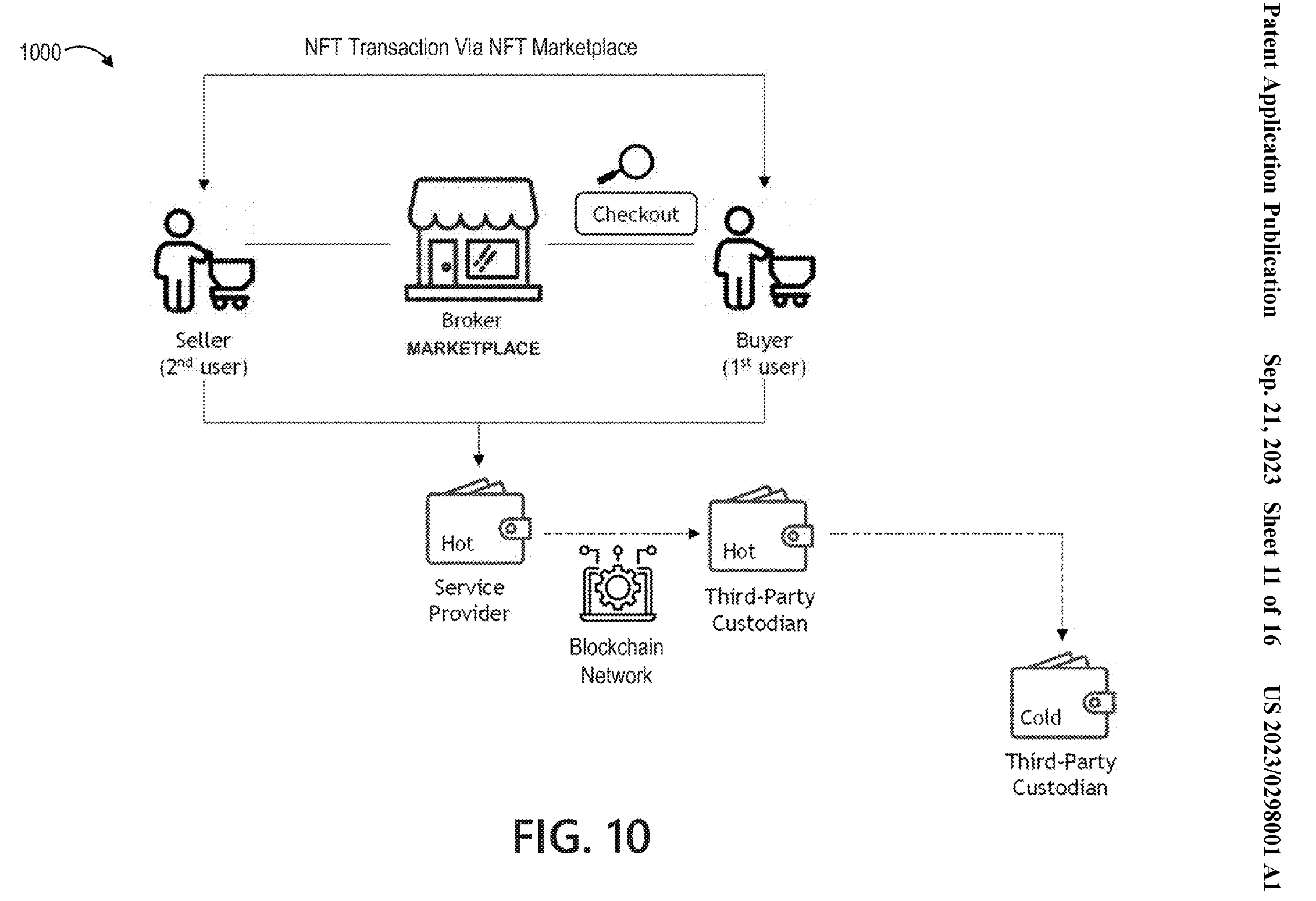
Schematic of an off-chain NFT trade, as proposed by PayPal. Source: USPTO
Processing by the service provider could encompass compliance and risk management. Users may possess their own digital wallets but are not required to do so. A third-party broker could offer various storage and checkout services as an alternative. Off-chain transactions could be managed within an “omnibus wallet” linked to the service provider, which contains both the buyer’s and seller’s wallets:
“Therefore, no transfer is registered on the blockchain and there is no need to broadcast the transaction to the blockchain network or pay the gas fees associated with such an on-chain transaction.”
According to the application, any currency could be utilized within the system. In August, PayPal launched its own stablecoin, PayPal USD (PYUSD), built on the Ethereum network.
It’s day one as @PayPal’s President and CEO. I’m fired up to join this team on a powerful mission and with a remarkable history of revolutionizing how millions around the world take control of their financial lives. PayPal team, let’s go change the world! pic.twitter.com/PIZuY8iKn2
— Alex Chriss (@acce) September 27, 2023
Magazine: Tokenizing music royalties as NFTs could help the next Taylor Swift
