Disclaimer: Information found on CryptoreNews is those of writers quoted. It does not represent the opinions of CryptoreNews on whether to sell, buy or hold any investments. You are advised to conduct your own research before making any investment decisions. Use provided information at your own risk.
CryptoreNews covers fintech, blockchain and Bitcoin bringing you the latest crypto news and analyses on the future of money.

IMF and FSB issue collaborative policy guidelines for cryptocurrency assets at G20’s request.

Update (Sept. 7, 2023, 11AM UTC): This article has been revised to include additional details regarding the policy paper.
The International Monetary Fund (IMF) and the Financial Stability Board (FSB) have released a collaborative document featuring policy suggestions at the behest of the Indian G20 presidency. The entities have developed this paper to unify standards and consolidate collective recommendations aimed at guiding various jurisdictions in managing risks linked to crypto asset activities.
The policy document encompasses suggestions for regulating activities associated with stablecoins and decentralized finance (DeFi). It also outlines how the regulatory frameworks and policies formulated by both the IMF and the FSB can interact and align. However, it does not create or impose new policies, recommendations, or expectations for the relevant authorities.
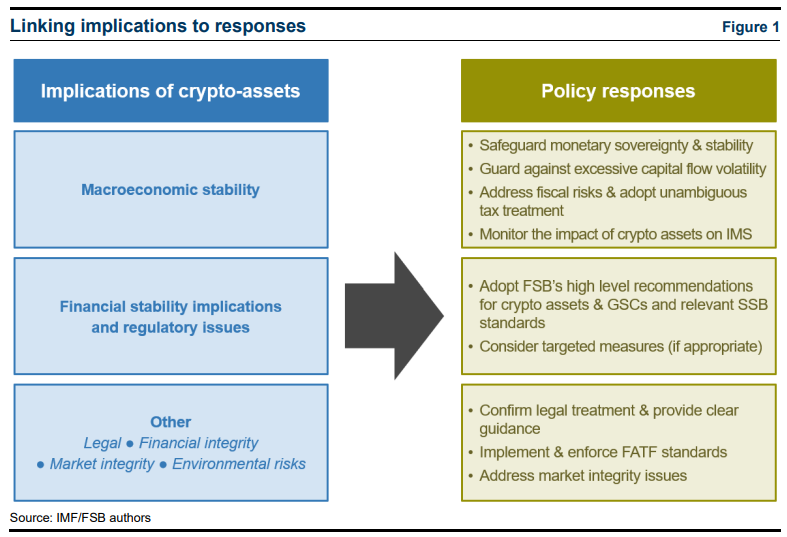 Policy response recommendations to implications of crypto assets. Source: IMF/FSB
The paper indicates that stablecoins designed to maintain a stable value can suddenly become volatile, posing significant risks to financial stability. Additionally, regarding DeFi protocols, the document contends that while the methods employed to deliver DeFi services may differ from those of traditional financial platforms, DeFi “does not significantly differ from the traditional financial system in the functions it performs.”
Related Posts
Related: Binance CEO CZ forecasts DeFi outgrowing CeFi in the next bull run
The document further observed that as DeFi seeks to replicate certain functions of the traditional financial system, it may also amplify and inherit the risks and vulnerabilities present in conventional systems. This could encompass liquidity and maturity mismatches, operational weaknesses, interconnectedness, and leverage. The paper states:
“Claims of decentralisation often do not hold up to scrutiny. Presently, DeFi may exhibit unclear, opaque, untested or easy-to-manipulate governance frameworks that may expose users to risks.”
The report also reiterated the IMF’s position against a comprehensive ban on crypto. On June 22, the IMF highlighted that prohibiting crypto may not be effective in the long term. The IMF suggested that rather than imposing a ban, various authorities should concentrate on addressing the factors driving the demand for crypto, including consumers’ needs for digital payment methods.
Magazine: DeFi faces stress test, DoJ fears run on Binance, Hong Kong’s crypto trading: Hodler’s Digest
