Disclaimer: Information found on CryptoreNews is those of writers quoted. It does not represent the opinions of CryptoreNews on whether to sell, buy or hold any investments. You are advised to conduct your own research before making any investment decisions. Use provided information at your own risk.
CryptoreNews covers fintech, blockchain and Bitcoin bringing you the latest crypto news and analyses on the future of money.


During the recent Future Innovation Summit in Dubai, Cointelegraph facilitated a panel discussion titled “Stablecoins, Central Bank Digital Currencies and Cross-Border Payments” to examine the potential coexistence of CBDCs and stablecoins and the mechanisms that could enable this.
The panel featured Jorge Carrasco, managing director of FTI Consulting; Nikita Sachdev, founder of Luna Media Corp; Jagadeshwaran Kothandapani, head of Middle East and Africa for Citibank; and Eetu Kuneinen, co-founder of the gold-backed stablecoin initiative DGC.
 The Future Innovation Summit took place at the Jumeirah Beach Hotel in Dubai. Source: Cointelegraph
The panelists discussed various issues, addressing whether stablecoins and central bank digital currencies (CBDCs) can exist together. Kuneinen noted that CBDCs would inherently be “centralized” since they would be government-issued, despite potentially being based on blockchain technology. He pointed out that government control could introduce certain risks. He elaborated:
“Let’s say that they don’t like some political rivals. They can, with one click, freeze the other party’s assets. So, what gives us any security that they won’t use this? Or if they are a smaller country, they are pressured by a bigger country to do so?”
Conversely, he suggested that establishing a framework for a stablecoin not governed by a single private entity might be more advantageous. “We could have a framework where anyone with assets and anyone with access to certain technology could be able to issue it. So, we could have multiple banks issuing the same stablecoin regulation,” he stated.
Sachdev presented a contrasting viewpoint. She indicated that if the government is determined to freeze an individual’s digital assets, they already possess various methods to accomplish this. Additionally, Sachdev contended that the government’s interest in leveraging blockchain for CBDCs could represent a progressive step that may ultimately lead to full decentralization and a complete Web3 environment.
Related Posts
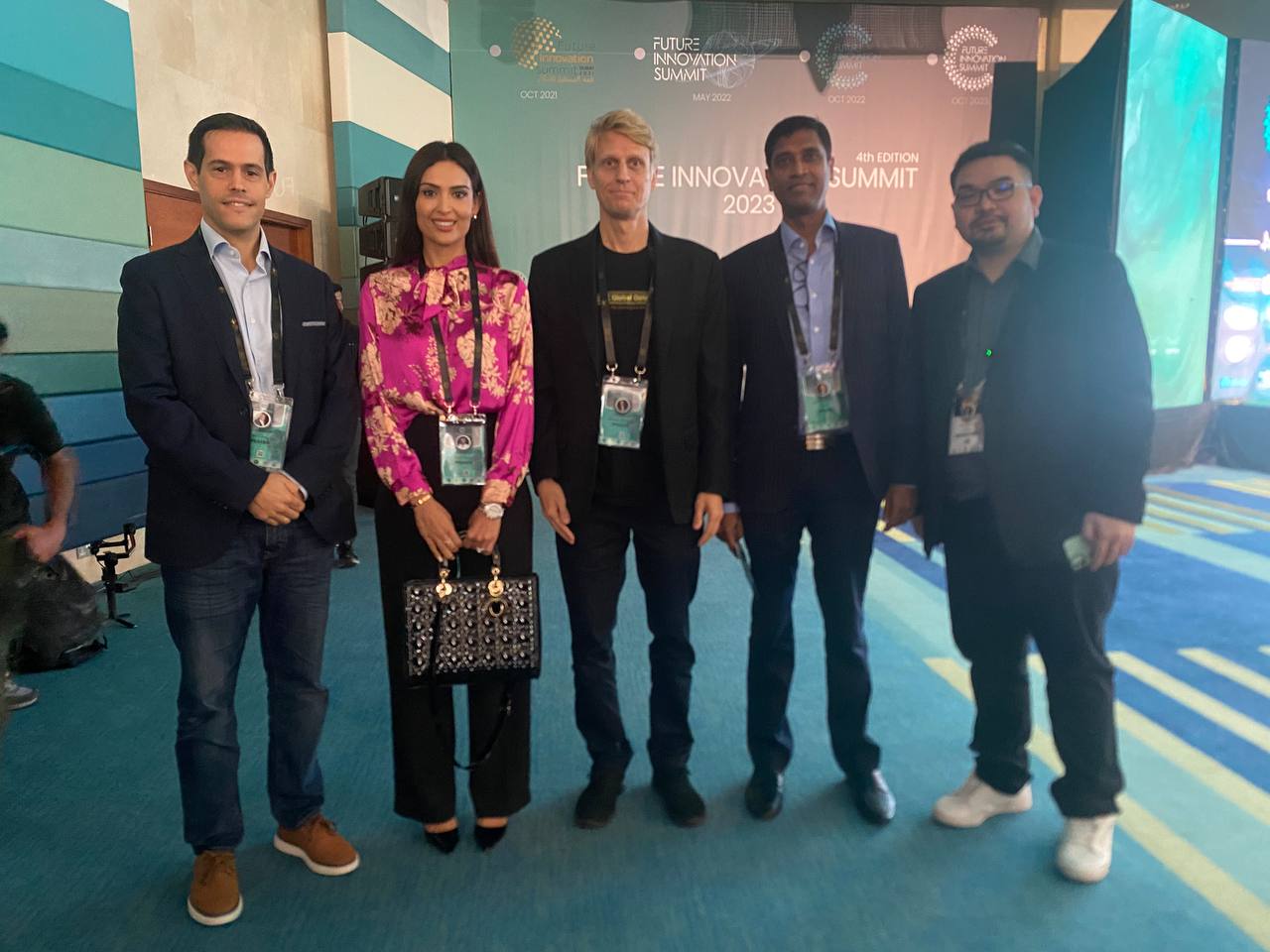 Panelists for the stablecoins and CBDCs discussion at the Future Innovation Summit in Dubai. Source: Cointelegraph
While she appeared to support CBDCs, Sachdev clarified that she does not endorse either CBDCs or stablecoins at this time, as recent events like the TerraUSD (UST) collapse have underscored the risks associated with stablecoins.
Related: Singapore central bank says three business days is ‘timely transfer’ for stablecoins
Carrasco remarked that given the nascent stage of the technology, encountering challenges is an inevitable part of progress. “I think it’s very normal to see failures and to see learnings as we move forward,” he explained. He also expressed the belief that CBDCs and stablecoins could eventually achieve interoperability. He added:
“I think they will coexist. And, probably in some years, we will see a transnational body that will take care of the CBDCs and the interoperability between them and ensure that no government can pull the plug or do something that affects the interests of the people.”
Meanwhile, Kothandapani resonated with the views of the other panelists, emphasizing that it would ultimately be companies or users who decide which solution best meets their needs.
The executive stated that they would identify the specific “pain points” and determine whether CBDCs or stablecoins would address those issues. He also believes that the two can coexist, provided that stablecoins maintain stability and decentralization.
Magazine: Yuan stablecoin team arrested, WeChat’s new Bitcoin prices, HK crypto rules: Asia Express
