Disclaimer: Information found on CryptoreNews is those of writers quoted. It does not represent the opinions of CryptoreNews on whether to sell, buy or hold any investments. You are advised to conduct your own research before making any investment decisions. Use provided information at your own risk.
CryptoreNews covers fintech, blockchain and Bitcoin bringing you the latest crypto news and analyses on the future of money.


A worldwide agreement exists regarding the fact that greenhouse gas (GHG) emissions are contributing to global warming; however, the precise measurement, reporting, and verification of these emissions remain a challenge for researchers, nonprofits, businesses, and governments.
This is particularly true for “nature-based” initiatives aimed at lowering carbon dioxide levels, such as tree planting or the restoration of mangrove ecosystems.
This situation has hindered the establishment of a voluntary carbon market (VCM) where carbon offset credits are exchanged. These “offsets” are sometimes perceived as permits to pollute, yet VCMs are generally considered advantageous for the environment as they assist in quantifying the ecological impact of industrial and consumer behaviors and, at least indirectly, encourage companies to reduce emissions.
Nonetheless, VCMs have faced significant scrutiny recently. A nine-month investigation conducted by the United Kingdom’s Guardian newspaper along with several other organizations revealed that over 90% of “rainforest offset credits” sanctioned by the prominent certification body Verra “are likely to be ‘phantom credits’ and do not signify authentic carbon reductions.”
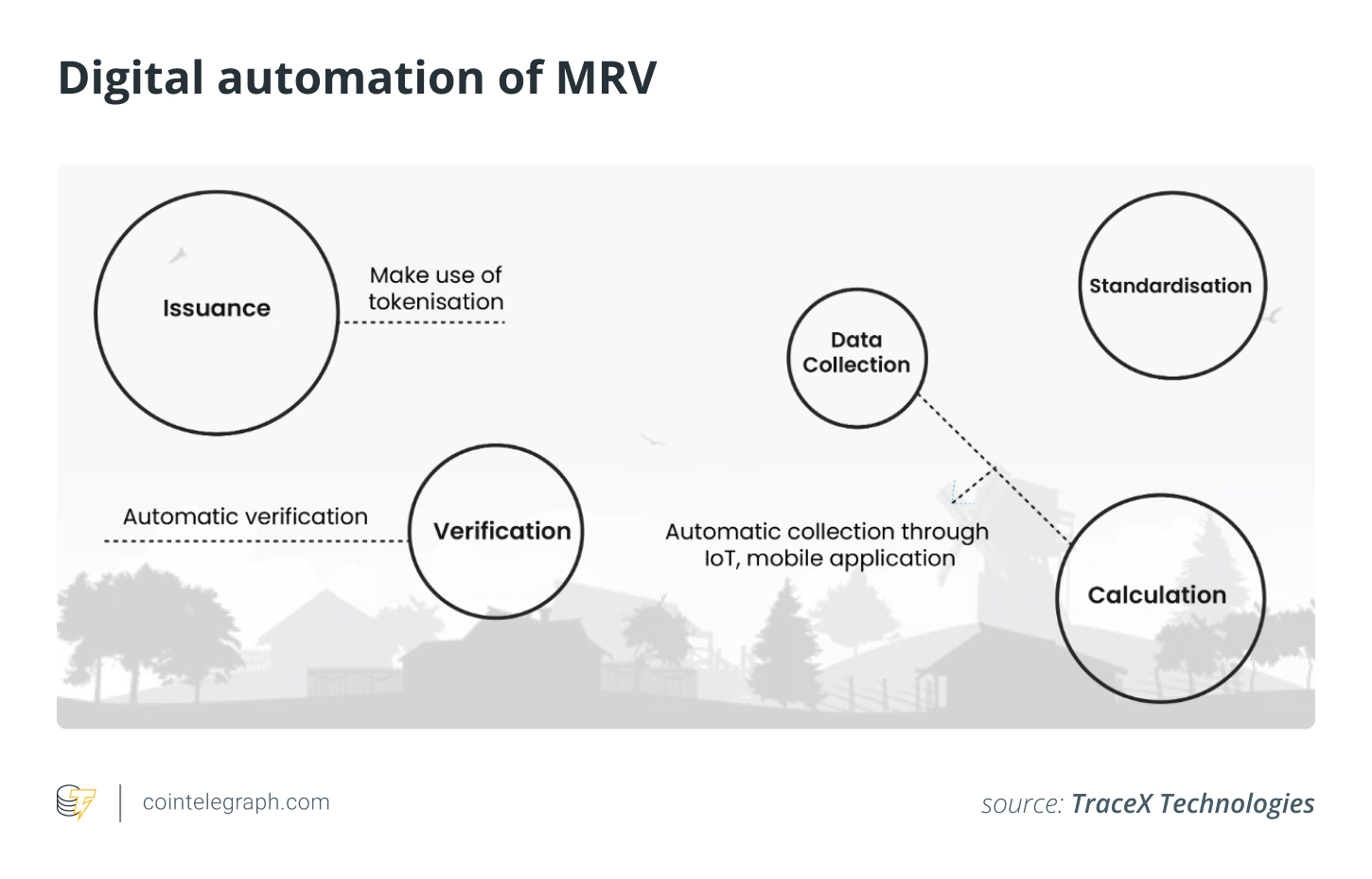
This revelation has unsettled the carbon trading industry, but it has also prompted fresh considerations regarding methods to measure, report, or verify the effectiveness of carbon-reduction initiatives. Digital monitoring, reporting, and verification (dMRV), for instance, largely automates this procedure, utilizing advanced technologies such as remote sensing, satellite imagery, and machine learning. DMRV also incorporates blockchain technology for purposes of traceability, security, and transparency.
Although this approach is still in its infancy, many believe that dMRV has the potential to revitalize carbon markets in the aftermath of the Verra controversy. It may also address the shortage of human auditors and inspectors available worldwide to evaluate GHG projects, particularly the more challenging “nature-based” initiatives. Furthermore, it can collect a wider array of data and possibly provide it in real time. Crucially, it will enable a global comparison of projects for the first time.
“A significant change”
“DMRV will create a significant change here, as it shifts the quantitative assessment of various nature-based interventions onto a global platform where they can be compared with one another — something that is currently unfeasible in existing systems where projects self-report against their own baselines,” stated Anil Madhavapeddy, a professor at the University of Cambridge and director of the Cambridge Centre for Carbon Credits, in an interview with Cointelegraph.
Some experts take it a step further. “Digital Measurement, Reporting, and Verification (dMRV) technology has the potential to transform the operation of the voluntary carbon market (VCM),” asserted dClimate, a decentralized infrastructure network for climate data, in a blog post from March.
However, uncertainties persist: Is this all too little, too late to prevent climate change? And if it is not too late, will progress stagnate if improved methodologies are not developed, such as quantifying the carbon reduction capabilities of a Brazilian rainforest? Are blockchains essential for this process, and if so, why? Can dMRV genuinely “transform” voluntary carbon markets, or is this merely exaggerated rhetoric?
“It is not too late,” asserted Miles Austin, CEO of climate tech company Hyphen Global AG, in a conversation with Cointelegraph. “We find ourselves at a crucial juncture.” The Verra scandal and ongoing accusations of “greenwashing” by corporations have made many companies hesitant to support carbon-reduction initiatives.
“The trust and feasibility perceptions associated with nature-based assets, both in the public and private sectors, have been negatively impacted,” Austin observed. Nevertheless, he added that at this pivotal moment:
“DMRV can significantly enhance these markets and potentially save them.”
It may be useful to contrast dMRV with traditional MRV, which aims to validate that an action — such as tree planting or reducing emissions from smokestacks — has genuinely taken place. This validation is essential before any monetary value can be assigned to the action and is necessary for the functioning of carbon trading markets.
MRV has been the foundation of sustainability reporting for many years, according to Anna Lerner Nesbitt, CEO of the Climate Collective, who spoke with Cointelegraph. However, “it has numerous shortcomings,” including a heavy reliance on subjective data, high costs, lengthy timelines, and a dependence on “international experts” — that is, consultants.
Magazine: Recursive inscriptions: Bitcoin ‘supercomputer’ and BTC DeFi coming soon
As noted by Cambridge Centre’s Madhavapeddy, the fundamental challenge in quantifying nature-based projects “is that the traditional methods for doing so — over the past decades — have been very manual and difficult to compare across projects.”
The quantification methods employed for these evaluations are far from standardized. They encompass assessing “additionality” (i.e., what is the net climate impact of a project?), permanence (how long will its effects endure?), and leakage (did a negative externality, such as deforestation, simply shift elsewhere?).
DMRV, according to Nesbitt, relies on emerging technologies and more detailed data for “a fully digitized MRV protocol that not only gathers digital data via the Internet of Things, sensors, and digital technologies but also processes and stores data on a fully digital and decentralized blockchain ledger.”
DMRV can also potentially lessen the workload of auditors and inspectors tasked with validating emissions-reduction projects, as noted by Daniel Voyce, chief technology officer of sustainability-focused solutions provider Tymlez, who stated:
“With manual MRV, each auditor or inspector might only be able to verify 150 projects each year due to the need to track down the necessary data and compile it all.”
Digitizing the process could reduce time and costs by 75%, he estimated.
Related Posts
Can blockchain assist in resolving a “complicated” process?
What role, if any, does blockchain play in this context? “If we are being truthful, voluntary carbon markets — as well as regulated carbon markets — require blockchain for asset issuance and traceability,” stated Michael Kelly, co-founder and chief product officer at Open Forest Protocol — an open platform for scaling nature-based solutions — in an interview with Cointelegraph.
The current MRV process is “complicated,” he remarked, with “no visibility into issuance schedules, no traceability, frequent double-spending, etc.” Consequently, “people are reluctant to engage with carbon credits.”
DMRV combined with blockchain could alter this situation. “Once they can observe everything about it [a project] — down to the upload of each tree in a sample plot over a 20-year period — we will see new participants entering the field.”
Some incremental enhancements in MRV — such as digitizing submission forms — do not necessarily require blockchain technology, Nesbitt pointed out, but that may soon change with the introduction of “features like smart contracts that facilitate more equitable asset pricing, incorporating reasonable compensation for local communities involved in carbon credit projects.”
However, there may be limitations to how much blockchain technology alone can resolve issues. Blockchains can provide “transparency, security, automation, and immutable records of data flows in an auditable manner,” but that may not suffice, suggested Austin from Hyphen, adding:
“DMRV can only be as effective as the data and methodology utilized. If you apply a flawed methodology and digitize it with blockchain, you now possess an immutable and transparently flawed dMRV.”
Enhancing methodologies is vital, in Austin’s opinion. “Activity-based approaches work well for combustion engines or industrial processes, which can be accurately measured and multiplied by a factor,” he explained to Cointelegraph.
However, these methods do not effectively apply to “nature-based solutions.” A forest in Brazil may sequester more carbon dioxide than an equally sized forest in Indonesia due to various factors, including drought, rainfall, and humidity, for instance.
“Nature is a dynamic and living asset; therefore, methodologies must measure the actual amount of CO2/CO2e [carbon dioxide/carbon dioxide equivalent] that acts as a sink or source rather than relying on estimations,” stated Austin.
Efforts are underway in this domain, particularly following the Verra controversy. “Researchers in this field are demonstrating how the quality of ‘avoided deforestation’ carbon credits could be enhanced,” noted Julia Jones, a professor in conservation science at Bangor University, in her comments to Cointelegraph. “However, there is, of course, a delay between new research and its integration into policy and practice.”
The Cambridge Center for Carbon Credits actually developed a research prototype last year of what a carbon credits marketplace might resemble on the Tezos blockchain. “Our initial observation was that the blockchain itself was not the bottleneck here — all of that infrastructure functions well and has a solid technical roadmap for scaling,” Madhavapeddy explained to Cointelegraph. The obstacle lay elsewhere.
“The hindrance to any meaningful deployment stemmed from the insufficient supply of credible projects, as the quantification mechanisms” — namely, additionality, permanence, and leakage — “are only just beginning to mature as satellite infrastructure and the related algorithms undergo peer review and implementation.”
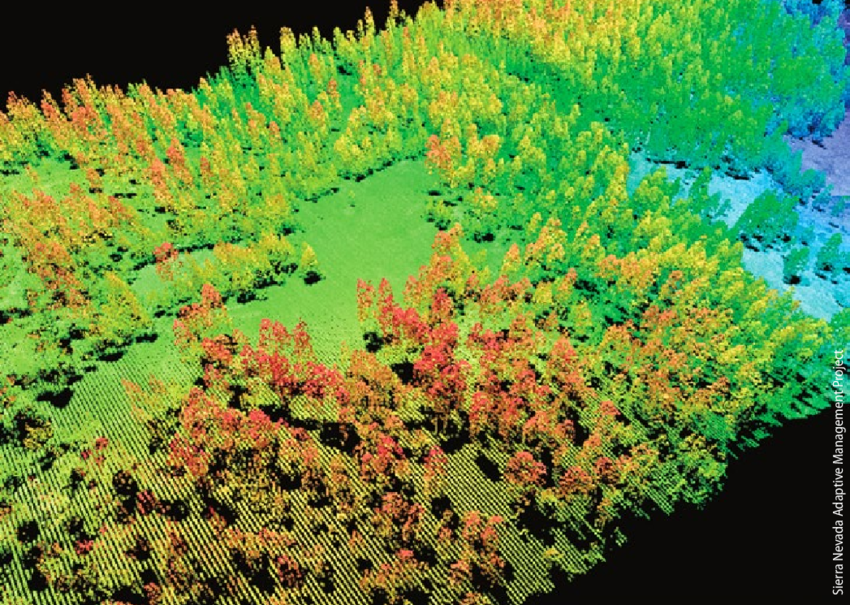 Lidar points mapping trees in the Sierra National Forest. Source: Research Gate
Kelly also pointed to a lack of “quality carbon development projects and accessible credits,” particularly in the nature-based asset sector, as a major hurdle for VCMs.
Initiatives such as reforestation, afforestation, mangrove restoration, and biodiversity conservation are currently facing funding shortages. This project deficit results in a limited supply of credits, creating a sort of chicken-and-egg dilemma.
“The outcome of this system is that carbon credits remain a relatively illiquid, complicated, and challenging-to-scale system that discourages stakeholders from financing, purchasing, and trading the assets to engage in the market,” Kelly remarked.
“The primary obstacle at present is the collective credibility of the voluntary markets, and we hope that our efforts in digitization and systematic design and publication of analyses can help bridge that gap,” Madhavapeddy stated.
A “perfect storm”?
What about assertions, like those mentioned earlier, that dMRV technology has the potential to transform the functioning of the voluntary carbon market? Is that an overstatement?
Recent: Islamic finance and Web3 take stage at Istanbul Blockchain Week
“DMRV is central to enhancing data integrity, which in turn would bolster process integrity,” stated Nesbitt. “So yes, I believe dMRV is essential for establishing the voluntary carbon market for success. However, claiming it will revolutionize the market might be an exaggeration given the numerous dMRV improvements and applications already in progress.”
Kelly identifies two encouraging trends following the Guardian expose. Established entities like Verra and Gold Standard are now more focused on digitizing their processes and “becoming more transparent and trustworthy,” he noted, while “stakeholders are increasingly open to exploring new solutions or service providers, especially if they uphold higher standards for trust, visibility, and quality.”
The result could be a “perfect storm for catalyzing a liquid voluntary carbon market — on-chain,” he added.
