Disclaimer: Information found on CryptoreNews is those of writers quoted. It does not represent the opinions of CryptoreNews on whether to sell, buy or hold any investments. You are advised to conduct your own research before making any investment decisions. Use provided information at your own risk.
CryptoreNews covers fintech, blockchain and Bitcoin bringing you the latest crypto news and analyses on the future of money.


Event management in the metaverse
The organization, coordination, and implementation of various events within virtual and augmented reality settings are known as event management in the metaverse.
The combination of physically persistent virtual reality with virtually enhanced physical reality has resulted in the metaverse, a collective virtual shared space. It encompasses immersive digital environments such as augmented reality (AR), virtual reality (VR), and more.
In this framework, event management involves creating and delivering events in these digital realms, including conferences, concerts, exhibitions, workshops, social gatherings, and beyond. This article will explore the process of hosting an event in the metaverse.
Steps to host an event in the metaverse
Organizing an event in the metaverse requires several essential steps to craft an engaging digital experience. These phases, which encompass defining the concept and objectives (pre-event preparation), selecting a platform, creating content, and executing the event in a virtual environment, lay the groundwork for an immersive experience that attracts a global audience.
In the evolving metaverse, effective event hosting is complemented by post-event activities, including gathering feedback and nurturing connections.
Step one: Define the event concept and goals
The initial phase of pre-event planning is crucial for orchestrating a successful event in the metaverse. This critical stage involves several strategic decisions and actions that establish the foundation for the entire event.
This phase includes setting clear objectives, assembling a skilled team, choosing the appropriate platform, budgeting effectively, addressing legal considerations, and crafting an engaging event concept. This comprehensive groundwork is vital for the subsequent stages of event design and execution within the dynamic and immersive metaverse.
Step two: Technical setup
The technical setup phase converts the event concept into a viable virtual experience. This involves configuring the chosen metaverse platform, creating avatars or digital representations, and designing the virtual environment.
Additionally, incorporating interactive features such as live chat, virtual networking spaces, and multimedia presentations is essential for audience engagement. Ensuring high-quality audio-visual performance, verifying user accessibility, and resolving technical issues are also critical for a seamless experience.
Step three: Marketing and promotion
The focus shifts to generating excitement and attracting attendees during the marketing and promotion stages. It is important to utilize both traditional and metaverse-specific marketing channels to reach potential participants.
Generating interest in an event can be enhanced by producing compelling event content, trailers, and teasers. Engagement can be amplified through social media platforms, partnerships with influencers, and interaction within metaverse communities. Furthermore, encouraging attendance can be achieved by implementing ticketing systems and creating tiered access options.
These tiers provide attendees with varying levels of engagement and benefits based on their preferences and budget. For example, a basic tier may grant access to the main event sessions, while premium and VIP tiers could offer additional perks such as exclusive workshops, personalized interactions, and unique content. This approach maximizes inclusivity and allows participants to choose the level of involvement that aligns with their interests and needs.
Step four: Event execution
The event execution phase represents the culmination of careful planning and preparation. At this stage, all elements come together to create an immersive experience. While attendees interact, network, and engage in activities, presenters deliver speeches, panels, or performances within the virtual environment.
Related Posts
Real-time technical support is crucial to address any issues that may arise. Monitoring engagement metrics, audience reactions, and technical performance enables prompt adjustments for an optimal experience during the event.
Step five: Post-event activities
The post-event activities phase commences once the event concludes. This stage encompasses various actions, such as collecting feedback from attendees through surveys or polls to assess satisfaction and gather insights for future improvements. Sharing highlights or recorded sessions helps maintain interest long after the event has ended.
Leveraging user-generated content, including photos and videos, can create a buzz on social media following the event. Additionally, fostering relationships established during the event can be supported by organizing follow-up sessions, virtual meetups, or networking opportunities.
How much does it cost to host an event in the metaverse?
The expenses associated with hosting an event in the metaverse can vary significantly and are influenced by several factors. These factors include the complexity of the event, the chosen metaverse platform, the anticipated number of attendees, the desired level of customization, and the range of features integrated into the event experience.
Metaverse platforms may charge users based on different criteria, such as event hosting, attendee count, and feature set. Investments in 3D modeling, interactive elements, and immersive visuals are necessary to create an engaging virtual venue, with costs reflecting the complexity of the design.
Costs also encompass audio-visual equipment, streaming services, and technical support personnel to ensure smooth technical execution. Marketing expenses include activities such as influencer collaborations, social media promotion, and the creation of promotional materials. Additional factors that may influence costs include content production, avatar customization, networking tools, security measures, training, and post-event engagement initiatives.
To obtain an accurate cost estimate, careful budget planning, quotes from relevant service providers, and a thorough analysis of metaverse platforms are advisable. It is also wise to consider potential revenue streams from ticket sales, sponsorships, or other sources against these costs to evaluate the financial viability of the event.
Traditional events vs. metaverse events
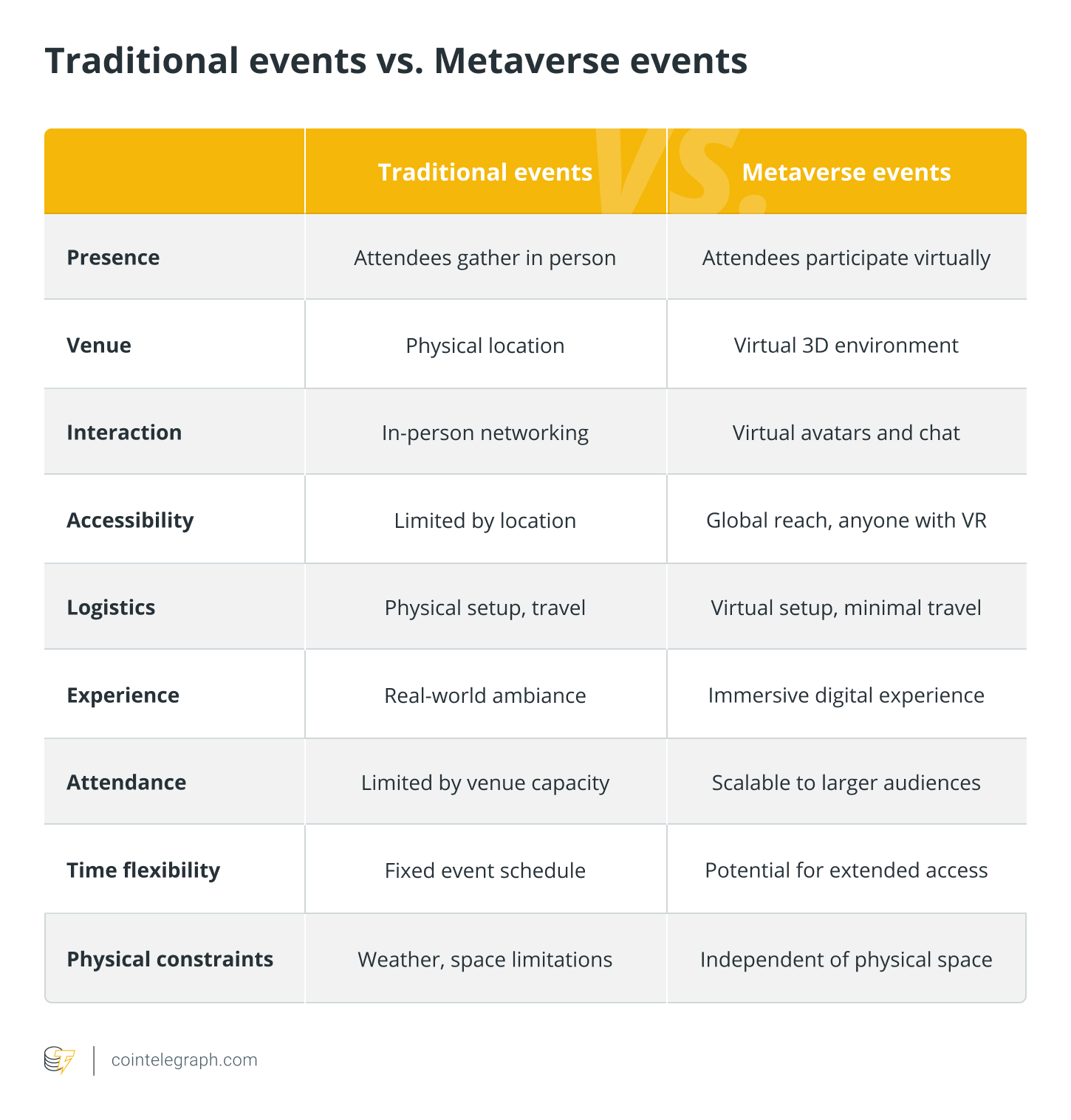
Traditional events and metaverse events represent two distinct models of gathering and engagement. In conventional events, participants physically gather at a designated location, fostering face-to-face interactions, relying on physical arrangements, and adhering to geographical limitations.
Conversely, metaverse events occur in virtual 3D environments that transcend geographical barriers, allowing participants to engage through customizable avatars and partake in interactive experiences.
While traditional events provide a sense of place, metaverse events deliver an immersive digital experience, illustrating the evolving landscape of event hosting in an increasingly interconnected world.
Here are some differences between traditional events and metaverse events:
Risks involved in hosting virtual event spaces in the metaverse
Hosting virtual event spaces in the metaverse carries risks, including heightened harassment and inappropriate conduct, as evidenced by incidents of sexual harassment directed at women. The anonymity of virtual environments may lead individuals to behave in ways they would not in real-life situations, creating an uncomfortable and unsafe atmosphere for participants.
Other concerns include privacy breaches, technical challenges, and the potential for a digital divide due to a lack of familiarity with the technology. To mitigate these risks and foster a welcoming environment, organizers should establish clear codes of conduct, implement robust moderation, prioritize data security, and provide accessible information.
Additional significant risks encompass intellectual property infringements, platform reliability issues, and misunderstandings arising from the absence of physical cues. These risks can be alleviated by employing secure content sharing protocols, carefully selecting platforms, conducting thorough testing, and ensuring transparent communication channels. By proactively addressing these risks, metaverse event planners can cultivate an environment that encourages participation, diversity, and a valuable experience for all attendees.
Collect this article as an NFT to preserve this moment in history and show your support for independent journalism in the crypto space.
