Disclaimer: Information found on CryptoreNews is those of writers quoted. It does not represent the opinions of CryptoreNews on whether to sell, buy or hold any investments. You are advised to conduct your own research before making any investment decisions. Use provided information at your own risk.
CryptoreNews covers fintech, blockchain and Bitcoin bringing you the latest crypto news and analyses on the future of money.


Generative artificial intelligence may currently be experiencing significant attention, yet the technology has been in existence long before ChatGPT and DALL-E. Its origins trace back to 2014 with a publication by Ian Goodfellow and several colleagues titled “Generative Adversarial Networks” (GANs). Goodfellow, a computer scientist previously affiliated with Google Brain and Apple, is now part of DeepMind. His paper has been referenced over 55,000 times and serves as the foundation for numerous AI applications.
Almost ten years ago, Goodfellow made a pivotal discovery: by utilizing technology to analyze extensive datasets, AI systems can produce “synthetic” data under optimal conditions. With ongoing training and feedback, the system gradually learns to generate synthetic data that closely matches the intended results. Presently, this synthetic data may encompass smart contract code, fraud detection algorithms, and, notably, hyperrealistic avatars featuring your likeness in the metaverse.
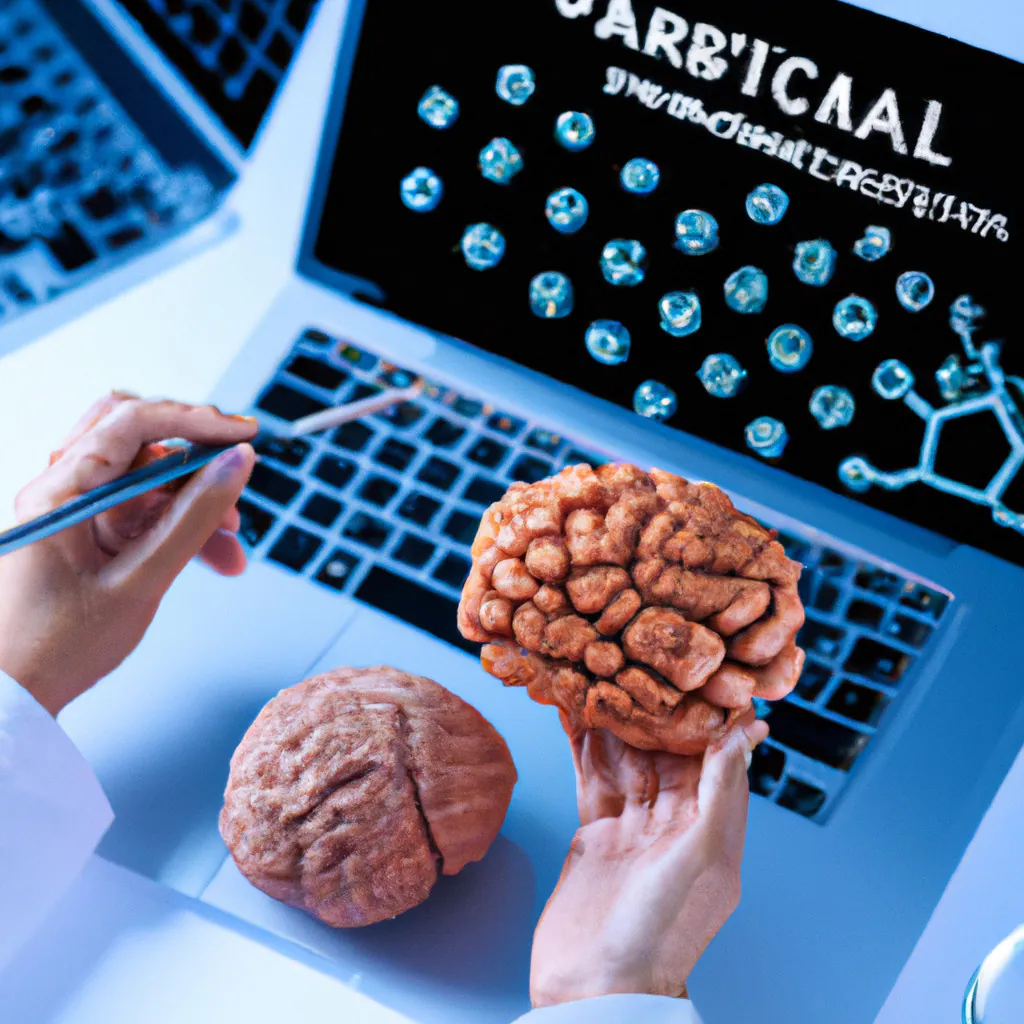
Generative AI not only addresses challenges in coding and risk management but also fosters significant advancements in biotechnology. Despite progress in manufacturing and discovery, the timeline to develop a drug from initial discovery to market remains 10-15 years, incurring costs in the millions. Rather than decreasing with technological advancements, the expenses associated with bringing a drug to market continue to rise.
AI has the potential to enhance speed and efficiency in drug discovery by optimizing new targets, designing novel drugs, and even assessing the probability of success in clinical trials.
Generative AI enters the chemistry world
In 2016, Dr. Alex Zhavoronkov, the founder of the drug discovery company Insilico Medicine, made a significant impact in the chemistry field by showcasing generative AI technology at conferences from London to San Francisco. His research findings were seen as implausible by some but revolutionary by others—GANs, when paired with reinforcement learning, could create new molecules for disease treatment.
Seven years ago, many still regarded AI as a concept from science fiction. Zhavoronkov provided tangible examples of the technology’s capability to innovate, such as adding petals to images of flowers and generating unique faces to illustrate how AI can create new molecules. Although chemists were doubtful, Zhavoronkov remained resolute. AI was destined to revolutionize our health experiences; it merely required time.
Insilico ultimately demonstrated that its AI could identify new disease targets. By employing generative AI technology to generate and assess candidates and drug targets, their platform designed new molecules that could be synthesized, tested, and developed into potential therapies.
Related Posts
WuXi AppTec partnered with Insilico to develop its initial generative AI-created molecules and subsequently invested in the company for further advancement. Their first drug targets may come as a surprise: treatments for rare diseases. Due to the infrequency of these conditions, scientists possess limited knowledge about their chemical structures. AI filled in the void to design potential candidates where no structure was known.
They focused on the JAK3 isoform, a DNA sequence associated with rheumatoid arthritis and psoriasis. The system generated 300,000 molecules and refined the selection to 100 promising targets. Human involvement began at this stage, with medicinal chemists selecting the most suitable candidate for further development. The findings were published in 2018 in Molecular Pharmaceutics, indicating a clear promise: generative AI was poised to disrupt the drug discovery landscape.
When will AI reach our pharmacies?
Insilico secured patents for its AI technology, as well as for its research on biological aging biomarkers. The company aims to utilize AI to discover effective anti-aging treatments. While it may take several years for these to appear on pharmacy shelves, Insilico is also investigating the aging process, including the measurement of biological age. Aging clocks provide researchers with crucial insights into individual aging mechanisms.
In 2020, Insilico Medicine’s generative chemistry initiative was launched as Chemistry42. This platform employs deep learning and reinforcement learning to generate chemical structures aimed at specific medical targets. Chemistry42 identified a completely new and potentially groundbreaking molecule, PandaOmics, for treating fibrosis. The Insilico team designed and synthesized 80 molecules, with one small molecule showing exceptional promise for treating idiopathic pulmonary fibrosis (IPF), a rare and severe progressive lung condition.
The company made significant strides by integrating deep learning with chemistry. Major pharmaceutical firms took notice, with Pfizer, Arvinas, Fosun Pharma, and Sanofi forming partnerships with Insilico.
By February 2022, Insilico achieved another milestone by advancing its IPF drug to Phase 1 clinical trials in under 30 months. In January 2023, those Phase 1 trials reported positive topline results, and in February 2023, the IPF drug received Orphan Drug Designation from the FDA. The next step involves Phase 2 clinical trials, where actual IPF patients will participate in testing this potentially transformative treatment option.
What’s next for AI-generated drugs? COVID-19. Insilico’s oral treatment, ISM3312, is set to enter clinical trials in China. This drug aims to provide protection against mutations and adverse outcomes for COVID patients. The world urgently requires swift solutions to emerging diseases.
Generative AI extends beyond creative imagery and complex coding. It will alter how healthcare professionals address diseases and potentially save countless lives. There is ample opportunity for blockchain as well—drug discovery scientists can utilize distributed ledger technology to securely share clinical research data.
My recommendation for the crypto community? Engage with the movement. Your commitment has propelled crypto, blockchain, and stablecoins into the mainstream. You possess the vision for a future that others may not see, and the field of longevity requires your unique insights to help advance this next generation of technology. Experiment with AI tools in your work environment, stay informed about AI tokens, and keep an eye on medical news for future breakthroughs. We are in a remarkable era of technological advancement, and it is our duty to support its transformative outcomes. The integration of cutting-edge technology with traditional research and discovery is what will bring these life-altering innovations to a broader audience.
