Disclaimer: Information found on CryptoreNews is those of writers quoted. It does not represent the opinions of CryptoreNews on whether to sell, buy or hold any investments. You are advised to conduct your own research before making any investment decisions. Use provided information at your own risk.
CryptoreNews covers fintech, blockchain and Bitcoin bringing you the latest crypto news and analyses on the future of money.


Europe continues to be a promising environment for the cryptocurrency sector to thrive, especially when compared to more stringent regulatory frameworks, as noted by key speakers at this year’s Blockchain Expo in Amsterdam.
Cointelegraph participated in the event held at the RAI conference center for the second consecutive year, with the Blockchain Expo being part of the broader Tech Expo taking place in the Netherlands.
The gathering has consistently attracted notable mainstream industry figures from the financial sector to demonstrate how blockchain technology is being utilized to drive innovative products and solutions across various industries.
From finance to logistics, healthcare, and marketing, blockchain technology and Web3 capabilities remain a significant growth area for diverse industry participants.
MiCA encourages institutional engagement
Regulatory issues were a focal point, as highlighted during a fireside chat featuring Coinbase’s co-head of institutional sales James Morek and Zodia Markets co-founder Nick Philpott.
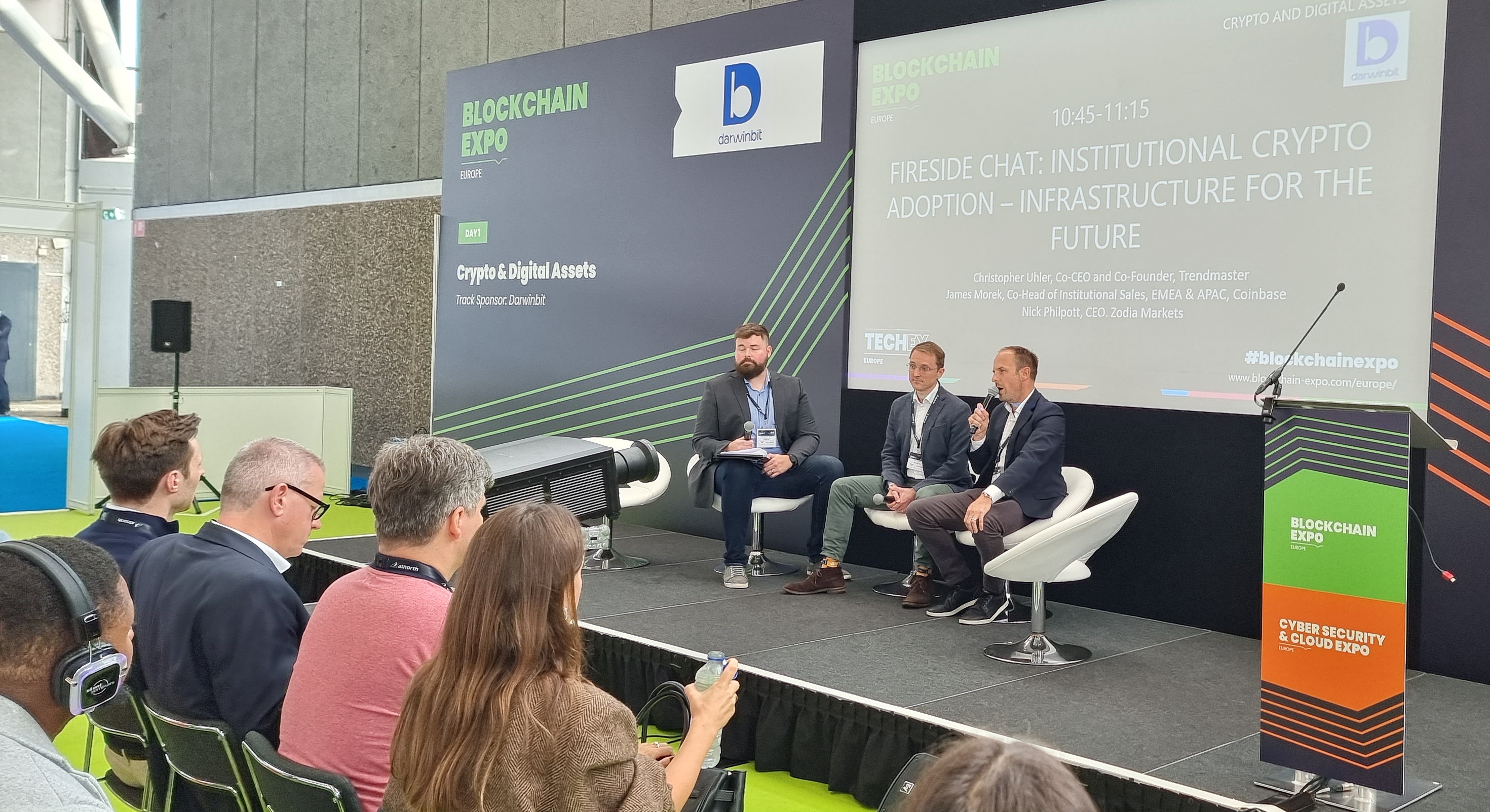 Trendmaster co-founder Chris Uhler, Zodia Markets co-founder Nick Philpott, and Coinbase co-head of EMEA and APAC institutional sales James Morek onstage in Amsterdam. Source: Cointelegraph
Philpott, who co-founded the institutional-grade cryptocurrency trading platform, characterized the European Union’s Markets in Crypto-Assets (MiCA) regulation as a forward-thinking regulatory framework designed to foster sector growth while safeguarding users.
“Institutions feel more at ease knowing there is a framework within which they can operate, which contrasts with the situation in countries like America.”
Philpott’s comments regarding the regulatory environment in the United States focused on the prevailing uncertainty affecting the cryptocurrency sector. This uncertainty has largely stemmed from the Securities and Exchange Commission’s distinct enforcement actions against major industry players, including Coinbase, Ripple, and Binance.US, for alleged violations of securities laws.
Morek, who oversees Coinbase’s institutional sales in the EMEA and APAC regions, also emphasized the establishment of clear regulatory guidelines across the EU and the United Kingdom, which have enabled crypto-related businesses to continue their operations.
Informal discussions also indicate that significant players like Coinbase are still attracting interest from institutional clients seeking exposure or custody of specific cryptocurrencies outside the U.S.
Related: EU’s new crypto law: How MiCA can make Europe a digital asset hub
This encompasses a wide range of potential clients, including traditional fund managers, large corporations, private banks, and various businesses. Morek informed Cointelegraph that Coinbase currently serves over 1,300 institutional clients worldwide.
Legal frameworks that have historically permitted companies to maintain both onshore and offshore entities remain crucial in enabling cryptocurrency exchanges and firms to provide services across different jurisdictions.
Philpott also pointed out the United Arab Emirates as a rapidly expanding crypto and Web3 hub actively seeking to attract leading firms in the industry. Companies like Binance have already established a presence in the UAE, while Coinbase was reportedly considering setting up operations in the region earlier in 2023.
Related Posts
A tokenized future
Tokenization continues to attract various institutions, including mainstream banks and financial firms looking to issue and manage debt and investments.
Cointelegraph also spoke with Martijn Siebrand from Dutch bank ABN AMRO. Siebrand, the bank’s digital assets ecosystem manager, shared insights into ABN AMRO’s recent issuance of a digital green bond that utilized Polygon’s layer-2 Ethereum scaling technology to raise 5 million euros ($5.3 million).
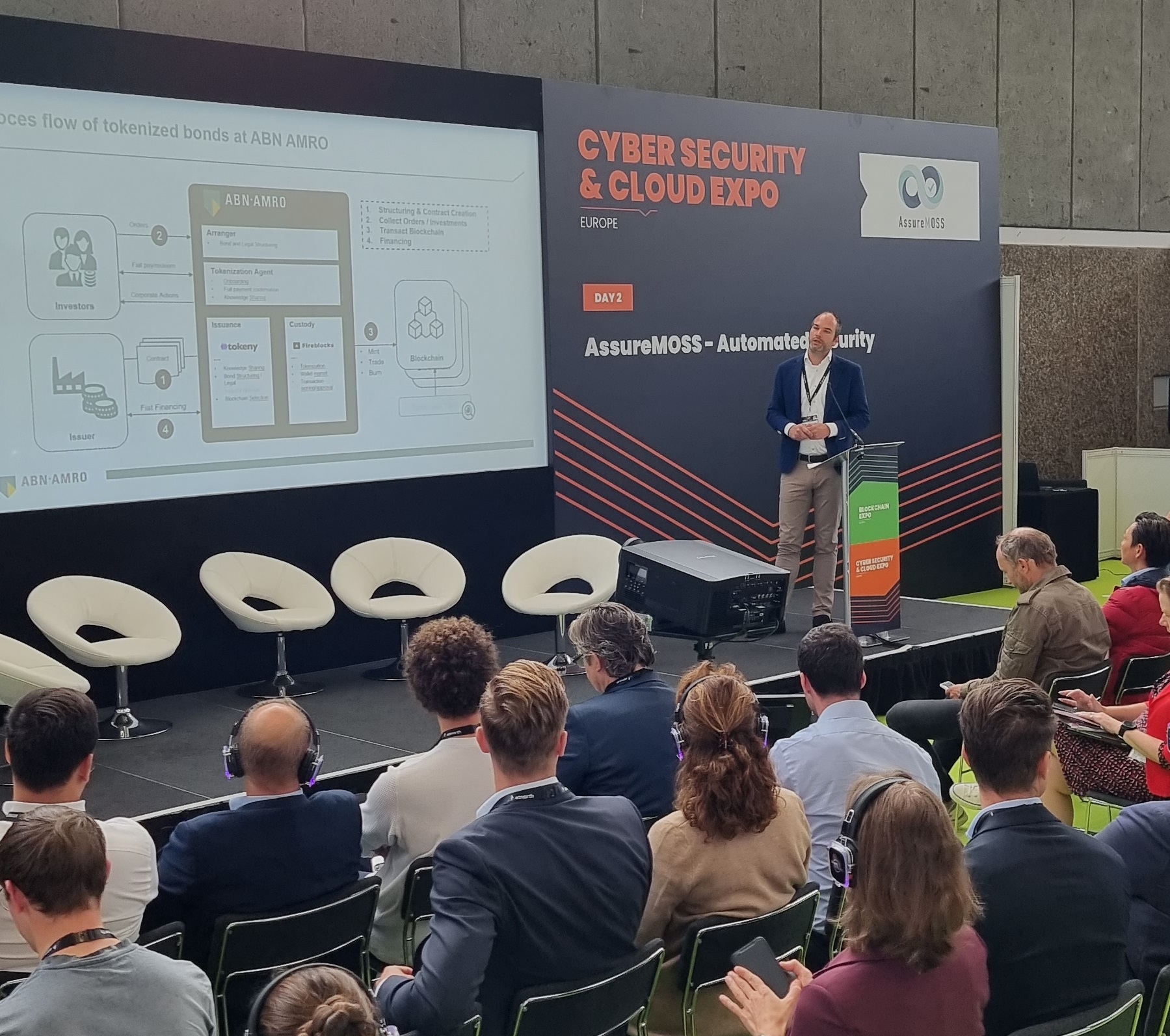 ABN AMRO’s Martijn Siebrand answers questions from the audience during his presentation on the first day of the conference.
Siebrand stated that blockchain technology is proving to be an effective tool for banks to enhance their services in capital markets:
“It’s interesting; during discussions within the bank, people mention that capital markets have existed for a long time, yet we haven’t seen many innovations. This could be a significant change that many banks are investing in.”
Siebrand added that ABN AMRO is already showcasing its blockchain-based digital bond initiatives at conferences and exhibitions to both capital market participants like mainstream banks and private companies seeking to raise funds:
“We see two paths. We have the institutional one serving traditional capital markets. But we also have the opportunity to assist clients that are too large for crowdfunding but too small for capital markets.”
Siebrand noted that tokenized debt offerings can be advantageous for companies wishing to avoid equity sales. However, jurisdictional regulatory frameworks need further development before ABN AMRO can establish a viable roadmap to expand its blockchain tokenization offerings:
“We believe that private markets involving private issuances, which are one-on-one or with two or three investors, will be easier to scale than the institutional one.”
NFTs hold value for institutions
Mia Van, Mastercard’s EMEA blockchain and digital assets lead, explored the significance of non-fungible tokens (NFTs) for institutional users. The sector has generated $1.9 billion in sales volumes over the past year, according to Van, with the average number of Web3 wallets increasing despite sellers dominating NFT marketplaces in recent months.
According to Van, luxury brands such as Breitling and Louis Vuitton are actively utilizing NFTs to create digital twins of items that also verify their provenance. Meanwhile, mainstream brands like Adidas and Nike continue to investigate NFTs and metaverse activations that provide users ownership of items in both the physical and metaverse realms.
Related: NFT-styled debit cards the future of Web3 — Animoca founder on $30M Hi investment
Mastercard is also becoming an integral part of the Web3 ecosystem. Earlier this year, Animoca Brands announced a $30 million investment in the neobank platform Hi. A distinctive feature of the platform is a customizable NFT-styled crypto debit card. Users can personalize their Mastercards with NFTs they own digitally, allowing them to potentially showcase that prized Bored Ape in the physical world.
Van refrained from commenting on Mastercard’s blockchain and digital asset strategy and partnerships.
Magazine: Blockchain detectives: Mt. Gox collapse saw birth of Chainalysis
