Disclaimer: Information found on CryptoreNews is those of writers quoted. It does not represent the opinions of CryptoreNews on whether to sell, buy or hold any investments. You are advised to conduct your own research before making any investment decisions. Use provided information at your own risk.
CryptoreNews covers fintech, blockchain and Bitcoin bringing you the latest crypto news and analyses on the future of money.


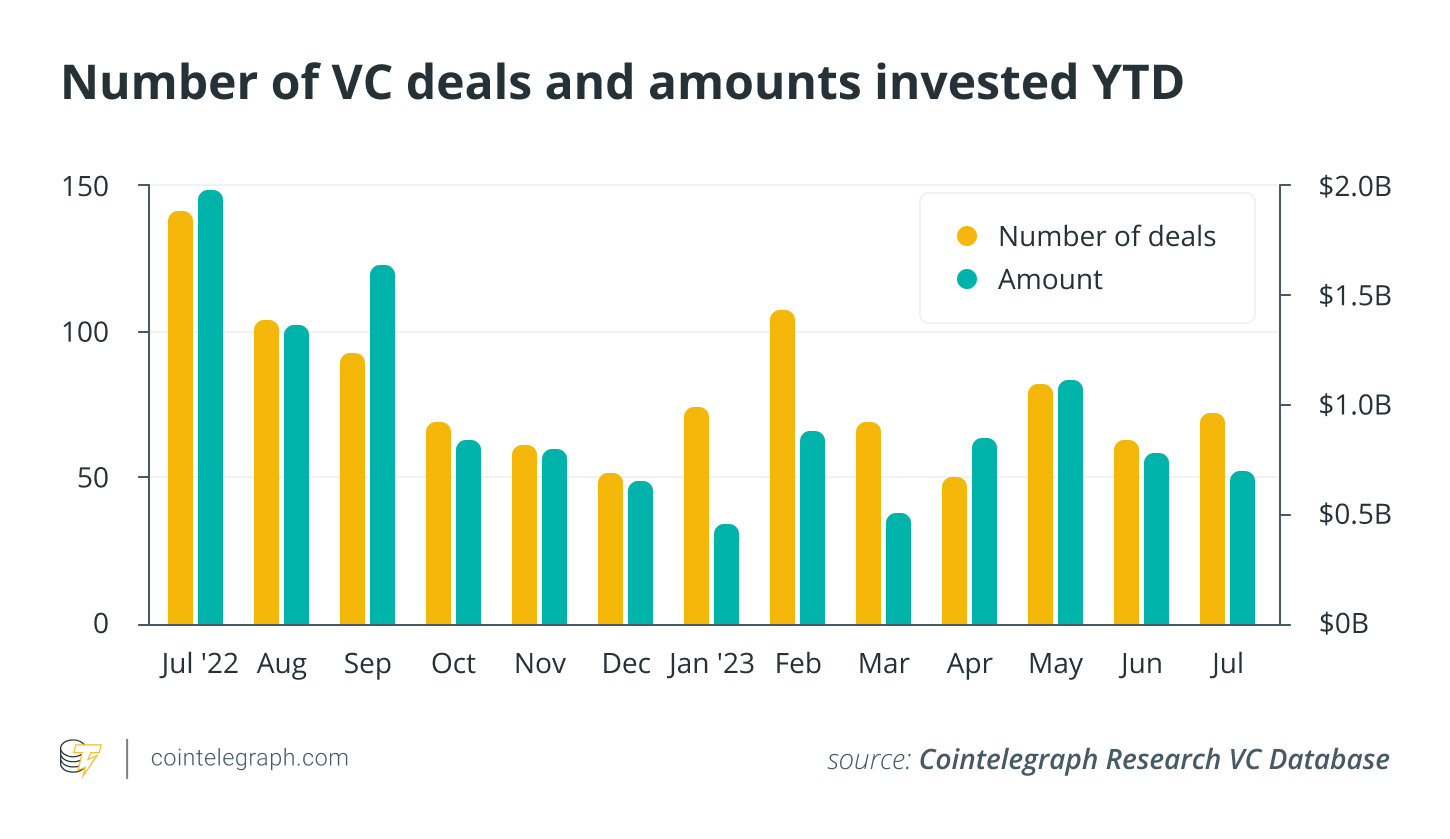
In July, there was a 10.26% decline in capital inflows from venture capitalists, totaling $700 million raised, as reported by Cointelegraph Research VC Database. The previous two months did not support a potential upward trend, as macroeconomic factors related to the United States Federal Reserve’s rate hikes and geopolitical developments continue to exert a significant influence on VCs’ decision-making processes.
Given this context, many firms are adopting a risk-averse approach with the majority of their reserves, while some are allocating portions of their capital towards value investments. Overall, VCs are meticulously evaluating each new project for potential investment prospects, opting to follow established trends rather than making speculative investments.
Gain access to the Cointelegraph Research VC Database.
Nonetheless, the situation in the crypto VC sector is not entirely bleak. Polychain Capital introduced Investment Fund IV, raising $200 million, and CoinFund launched Seed Fund IV, securing $152 million in July. Under the current circumstances, these can be regarded as significant exceptions. In contrast, June witnessed only three crypto funds being established, accumulating less than $100 million collectively.
The excitement surrounding the possible approval of spot Bitcoin (BTC) exchange-traded funds (ETFs) in the U.S. is also intensifying, and if one receives SEC approval, it could rejuvenate the industry and catalyze the next crypto bull market. Such approval is likely to send a positive signal to crypto VCs and attract additional attention and capital to the sector. However, it remains to be seen whether this will reverse the current investment trend.
Infrastructure and Web3 lead the way
Related Posts
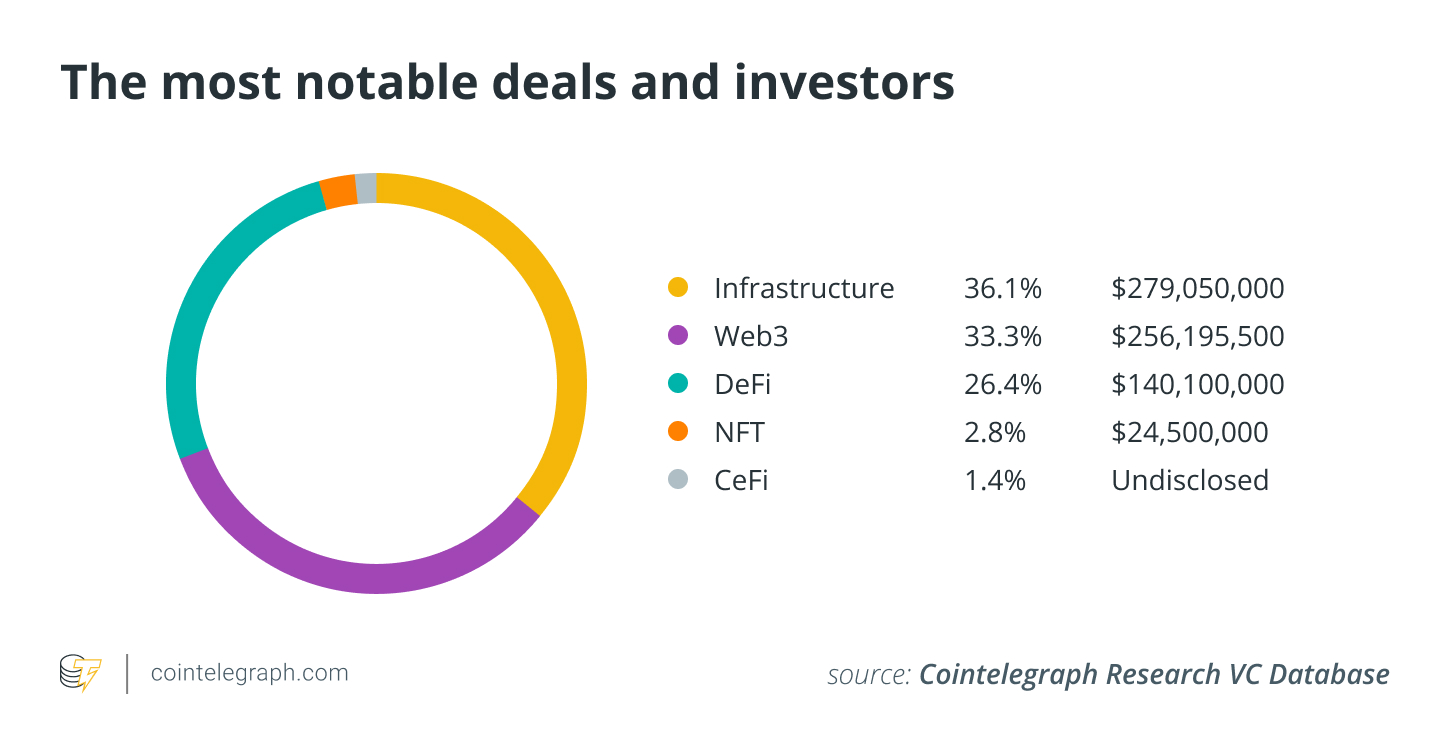
Web3 has emerged as one of the most dynamic sectors in terms of deal volume, with July recording 26 individual deals that raised $256.2 million. In contrast, the infrastructure sector has attracted the highest capital inflows recently, continuing this trend with $279 million across 24 deals in July. Decentralized finance followed with $140.1 million invested in 19 deals, while centralized finance and non-fungible tokens (NFTs) once again rounded out the list.
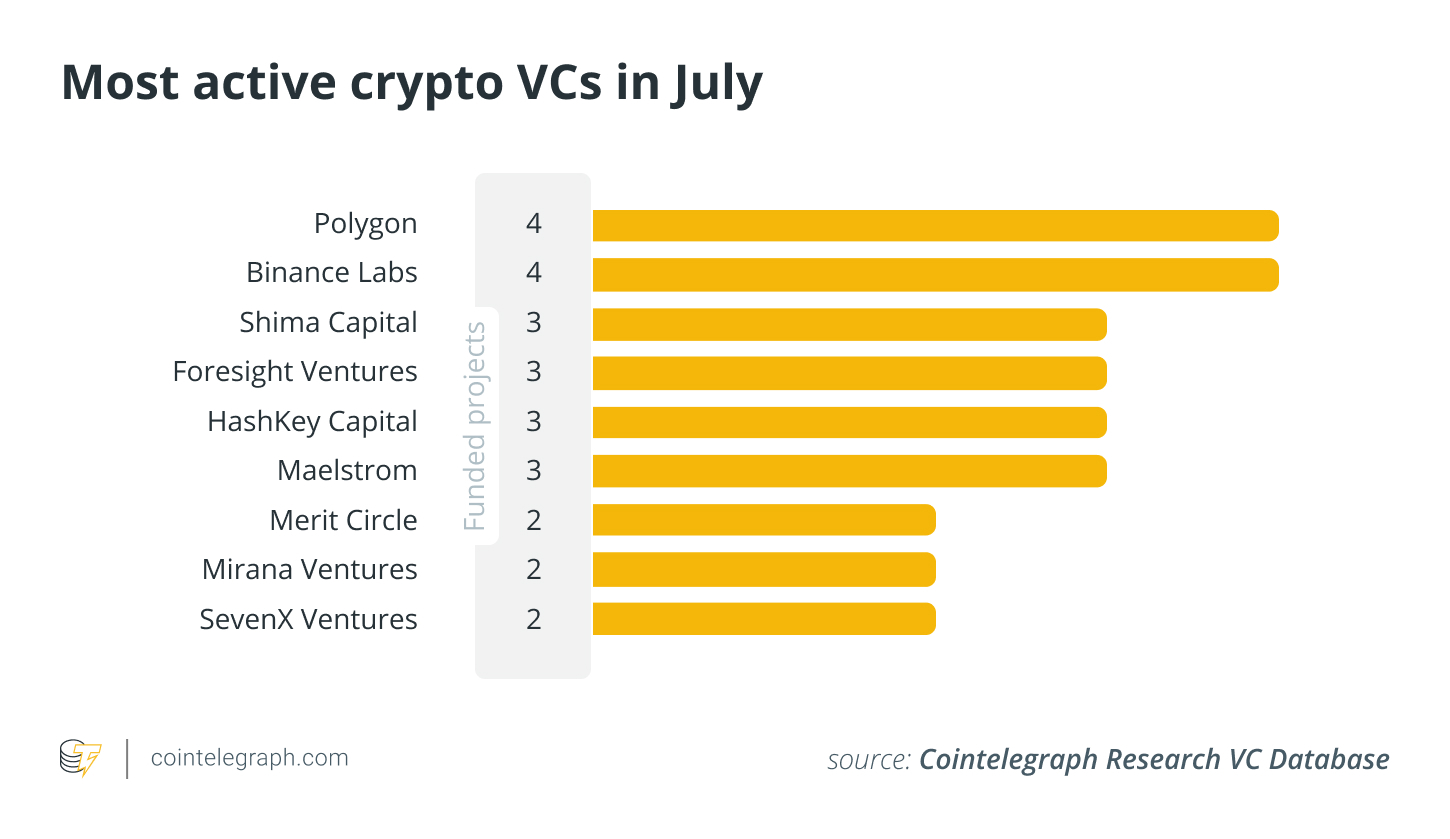
Polygon and Binance Labs were involved in four funding rounds during July. Notably, 0xBoost Finance, Aethir, Dappos, and Delabs Games secured investments from several well-known investment firms, including Polygon, Binance Labs, HashKey Capital, among others.
However, none of these projects rank among the top fundraisers. Web3 startup Zyber 365 leads the list with a Series A round of $100 million, making Zyber another fintech unicorn valued at over $1.2 billion, with the funds aimed at supporting global expansion.
Infrastructure solution provider Flashbots, which focuses on mitigating the adverse effects of maximal extractable value on the Ethereum blockchain, successfully closed a Series B round of $60 million from Sanctor Capital, HashKey, Animoca, and others. Meanwhile, the artificial intelligence (AI) metaverse startup Futureverse secured a $54 million Series A round from 10T Holdings and Ripple. Futureverse comprises 11 startups across various domains, including blockchain, AI, NFTs, and gaming, and aims to enhance the company’s ecosystem.
The upward trend did not persist in July, leading to another month of declining investments. Investor activity remains subdued, and while the optimistic sentiment regarding Bitcoin and Ether (ETH) ETF approvals in Europe and the U.S. may alter the VC landscape, a swift return to a consistent upward trend in the blockchain industry appears unlikely.
