Disclaimer: Information found on CryptoreNews is those of writers quoted. It does not represent the opinions of CryptoreNews on whether to sell, buy or hold any investments. You are advised to conduct your own research before making any investment decisions. Use provided information at your own risk.
CryptoreNews covers fintech, blockchain and Bitcoin bringing you the latest crypto news and analyses on the future of money.


The Chamber of Digital Commerce (CDC), a U.S. advocacy group, on August 1, released an extensive “impact and analysis” report regarding the SEC’s lawsuit against Ripple. The document analyzes the case’s outcome, emphasizing its significant consequences for the future of the cryptocurrency sector.
As per the CDC’s assessment, Judge Analisa Torres’s decision establishes a crucial precedent in the realm of digital currencies. It differentiates between an investment contract and the asset itself, marking a pivotal advancement in cryptocurrency regulation.
The report delves into Judge Torres’s classification of Ripple’s XRP token distributions into three categories: institutional sales, programmatic sales, and other distributions. She meticulously applied the ‘Howey Test’ to ascertain whether these distributions amounted to an offer and sale of investment contracts.
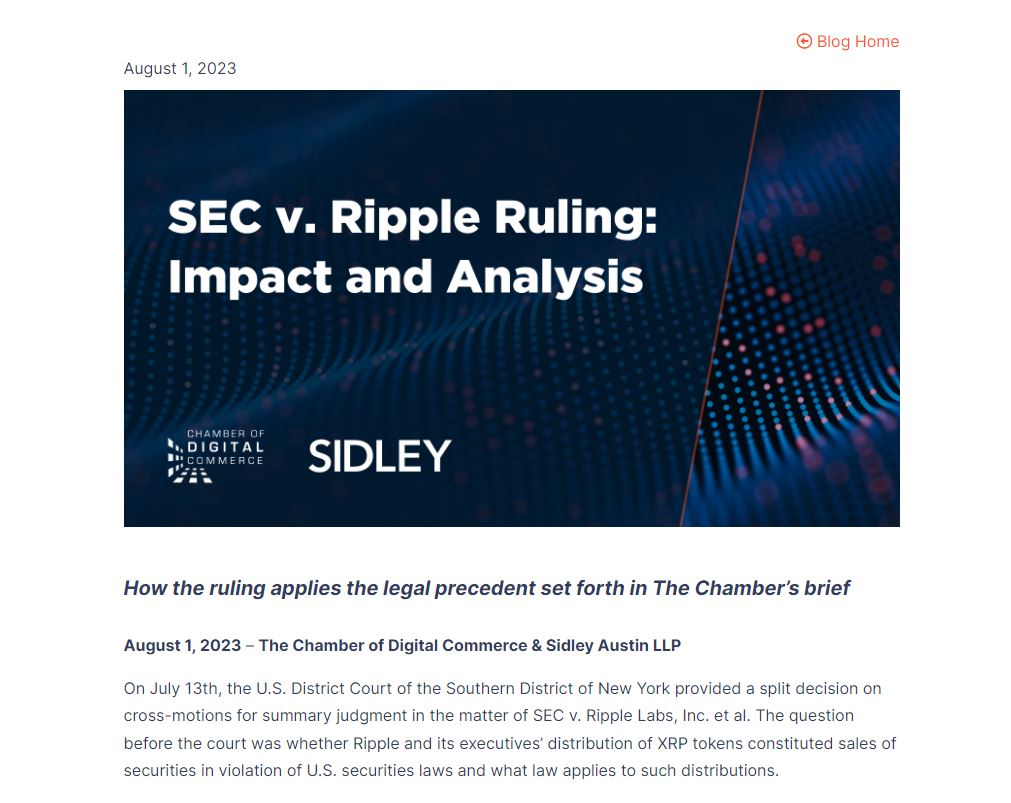 Screenshot of the CDC Impact analysis report. Source: CDC Blog
The CDC expressed approval of the ruling, which resonated with their position as outlined in their amicus brief supporting Ripple, marking a success for their advocacy efforts. Perianne Boring, the CDC’s founder and CEO, emphasized the ruling’s significance in setting precedents for future legal disputes within the cryptocurrency sector.
Related Posts
Boring highlighted the necessity of a fair playing field in the digital asset arena and the organization’s dedication to promoting policies that bolster U.S. leadership in the digital economy. While Judge Torres’s ruling represents progress toward rational cryptocurrency regulations, the CDC firmly asserts that clear regulatory guidance can only be achieved through effective legislative action by Congress.
Related: Blockchain arms race risks being won by ‘adversarial nations’ — US crypto lobby group
The CDC recognizes the introduction of various blockchain and digital asset regulatory proposals in both the House and Senate. However, they express doubt regarding the passage of these proposals, mainly due to limitations imposed by the legislative schedule.
In spite of the obstacles, the CDC continues to advocate for a comprehensive legal framework for digital assets, fostering an environment conducive to the launch of digital asset products. In February, the CDC accused the United States Securities and Exchange Commission of exceeding its authority and unjustly categorizing crypto assets as securities in its insider trading case against former Coinbase employees.
Magazine: Deposit risk: What do crypto exchanges really do with your money?
