Disclaimer: Information found on CryptoreNews is those of writers quoted. It does not represent the opinions of CryptoreNews on whether to sell, buy or hold any investments. You are advised to conduct your own research before making any investment decisions. Use provided information at your own risk.
CryptoreNews covers fintech, blockchain and Bitcoin bringing you the latest crypto news and analyses on the future of money.


In the realm of digital assets, private keys serve as the key guardians, providing access to your precious cryptocurrencies and confidential information. Properly securing your private keys is critical for the protection of your digital assets. This article will examine seven strategies for safely storing private keys.
Hardware wallets
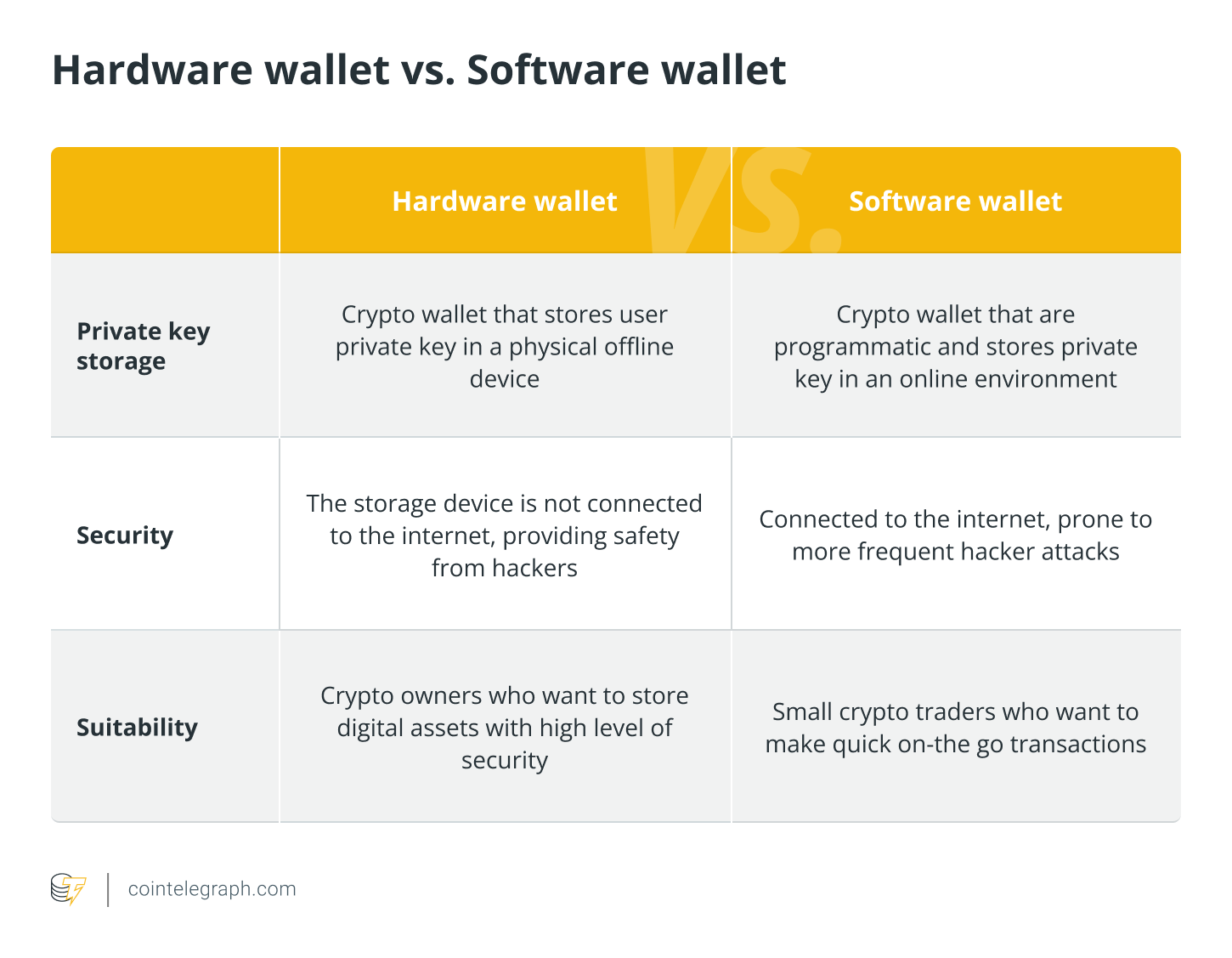
Hardware wallets are tangible devices designed to securely keep private keys offline. Notable examples include Ledger Nano S, Ledger Nano X, and Trezor. These devices are resistant to online threats and malware, providing a strong layer of protection.
Paper wallets
A paper wallet consists of printing the private key onto a physical sheet of paper and storing it in a secure place. Websites like bitaddress.org can assist users in generating paper wallets. However, it’s important to ensure that both the paper and ink are of high quality to avoid deterioration over time.
Encrypted USB drives
Users can encrypt a USB drive with robust encryption software, such as VeraCrypt, and then save their private key file on it. Store the encrypted USB drive in a safe physical location or a safety deposit box.
Related: How to protect your identity online
Cold storage
Cold storage refers to keeping your private keys entirely offline, disconnected from the internet. This can be accomplished by setting up an air-gapped computer or utilizing a dedicated offline device for key storage.
Cryptocurrency vaults
Related Posts
Certain exchanges and platforms provide cryptocurrency vault services, such as Coinbase Custody, where private keys are kept in extremely secure, monitored environments. Nevertheless, it is vital to remember the adage “not your keys, not your crypto.”
While vault services can bolster security, they create an element of trust by permitting a third party to hold your keys. In cases of an exchange breach or regulatory intervention, your access to funds might be restricted. It’s crucial to evaluate the benefits of enhanced security against potential risks and to consider diversifying your storage strategies to maintain control over your digital assets.
Password managers
Contemporary password managers, like LastPass and Dashlane, provide secure storage for not only passwords but also private keys. Be sure to select a reputable and highly secure password manager.
Related: How to use a VPN for online security and privacy
Splitting the key
This technique entails dividing one’s private key into several segments and distributing them across various secure locations. An example of this is Shamir’s Secret Sharing, which can split a user’s key into “n” parts, requiring a minimum of “m” parts to reconstruct the key.
This cryptographic method enhances security by ensuring that no single party has knowledge of the complete secret, making it ideal for applications such as key management and data protection. The secret can only be reconstructed when the minimum necessary shares are combined, ensuring resilience against individual breaches.
2. Shamir's Secret Sharing and Threshold Signing:
The algorithm allows you to reconstruct the private key without needing every piece of it.
Shamir's secret sharing employs a set limit, so not all participants are required to recreate the secret or sign messages.— Mohak Agarwal (@mohakagr) August 10, 2023
Making informed choices to safeguard your digital assets
Securing your private keys is essential when it comes to protecting one’s digital assets and confidential information. Each method discussed above has its advantages, and the selection should depend on your individual requirements, technical proficiency, and risk tolerance.
Keep in mind that redundancy, access management, and regular updates are vital, no matter which method you choose. By dedicating time to establish a secure storage plan, you can protect your digital assets and navigate the digital landscape with assurance.
