Disclaimer: Information found on CryptoreNews is those of writers quoted. It does not represent the opinions of CryptoreNews on whether to sell, buy or hold any investments. You are advised to conduct your own research before making any investment decisions. Use provided information at your own risk.
CryptoreNews covers fintech, blockchain and Bitcoin bringing you the latest crypto news and analyses on the future of money.


The San Francisco-based SoFi bank reports holding nearly $170 million in cryptocurrency on its balance sheet, as indicated in its second quarter (Q2) earnings report. The U.S. bank, which caters to over six million clients, has experienced a notable rise in its crypto assets compared to the prior quarter.
The bank’s cryptocurrency portfolio includes Bitcoin (BTC), Ether (ETH), Litecoin (LTC), Cardano (ADA), Solana (SOL), Dogecoin (DOGE), and Ethereum Classic (ETC). Of the total $166 million in crypto investments, SoFi possesses $82 million in BTC and $55 million in ETH. DOGE ranks third with nearly $5 million, while ADA holdings amount to $4.5 million. An investor presentation also disclosed that SoFi has onboarded over 500,000 customers and currently facilitates trading for more than 22 cryptocurrencies.
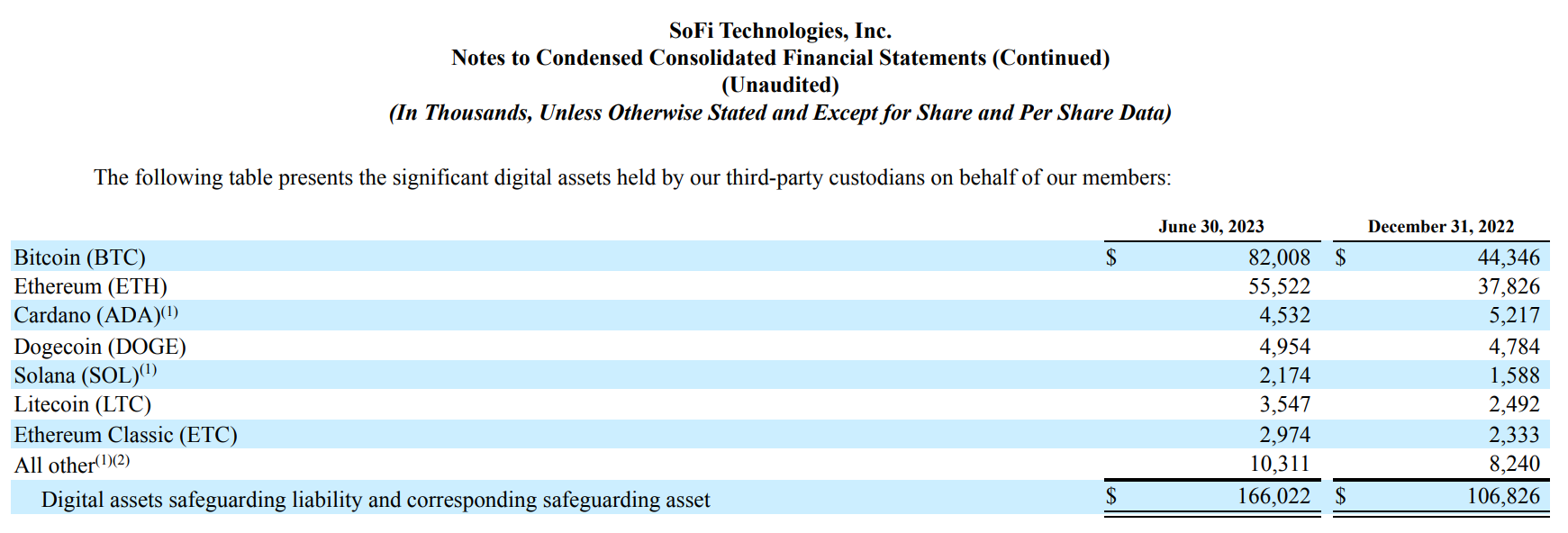 SoFi crypto holdings, Q2 2023. Source: SoFi
SoFi not only holds cryptocurrency; it also enables customers to buy and sell a variety of digital currencies, although it does not provide staking services. The U.S. bank began offering crypto services to its clients in September 2019 in collaboration with the Coinbase crypto exchange.
At the time it initiated crypto services, it was not yet a bank and only acquired a banking license in February 2022, positioning itself as one of the few conventional banks to offer crypto services.
Related Posts
However, SoFi Bank’s cryptocurrency offerings have faced scrutiny from the Federal Reserve and lawmakers. In November 2022, a U.S. Senate committee raised concerns regarding SoFi’s compliance with banking regulations, reminding it of the January 2024 deadline. Cointelegraph reached out to SoFi Bank for clarification on its compliance timeline and potential changes to its crypto holdings, but did not receive a response by the time of publication.
Related: Bitcoin ETFs: Even worse for crypto than central exchanges
The integration of cryptocurrency with mainstream banking was viewed as a vital step toward widespread adoption. However, the decline of several major crypto firms, followed by the failure of crypto-friendly banks, has raised concerns about the future of such integrations.
U.S. lawmakers acted swiftly to mitigate the fallout and protect customer funds, but this has undoubtedly impacted future partnerships as regulators have attributed the banks’ failures to cryptocurrency.
Magazine: Deposit risk: What do crypto exchanges really do with your money?
