Disclaimer: Information found on CryptoreNews is those of writers quoted. It does not represent the opinions of CryptoreNews on whether to sell, buy or hold any investments. You are advised to conduct your own research before making any investment decisions. Use provided information at your own risk.
CryptoreNews covers fintech, blockchain and Bitcoin bringing you the latest crypto news and analyses on the future of money.

Exchanges emphasize that restoring victim confidence is crucial to combat cryptocurrency scams.

Cryptocurrency exchanges in Australia have been enhancing their communication with users as a preventive strategy against scams. Local crypto companies assert that such communication is crucial in thwarting scams, as it can effectively “break trust” between victims and fraudsters.
On August 31, executives from prominent Australian crypto firms, including Cointree, CoinSpot, and Swyftx, convened at a panel during the fintech conference Intersekt 2023 in Melbourne to address the challenges posed by scams and fraud in the crypto space.
During the discussion, the executives outlined various initiatives implemented by their platforms to safeguard users from fraudulent activities, which encompass both automated and manual Anti-Money Laundering (AML) checks, investigations, educational efforts, and user communication.
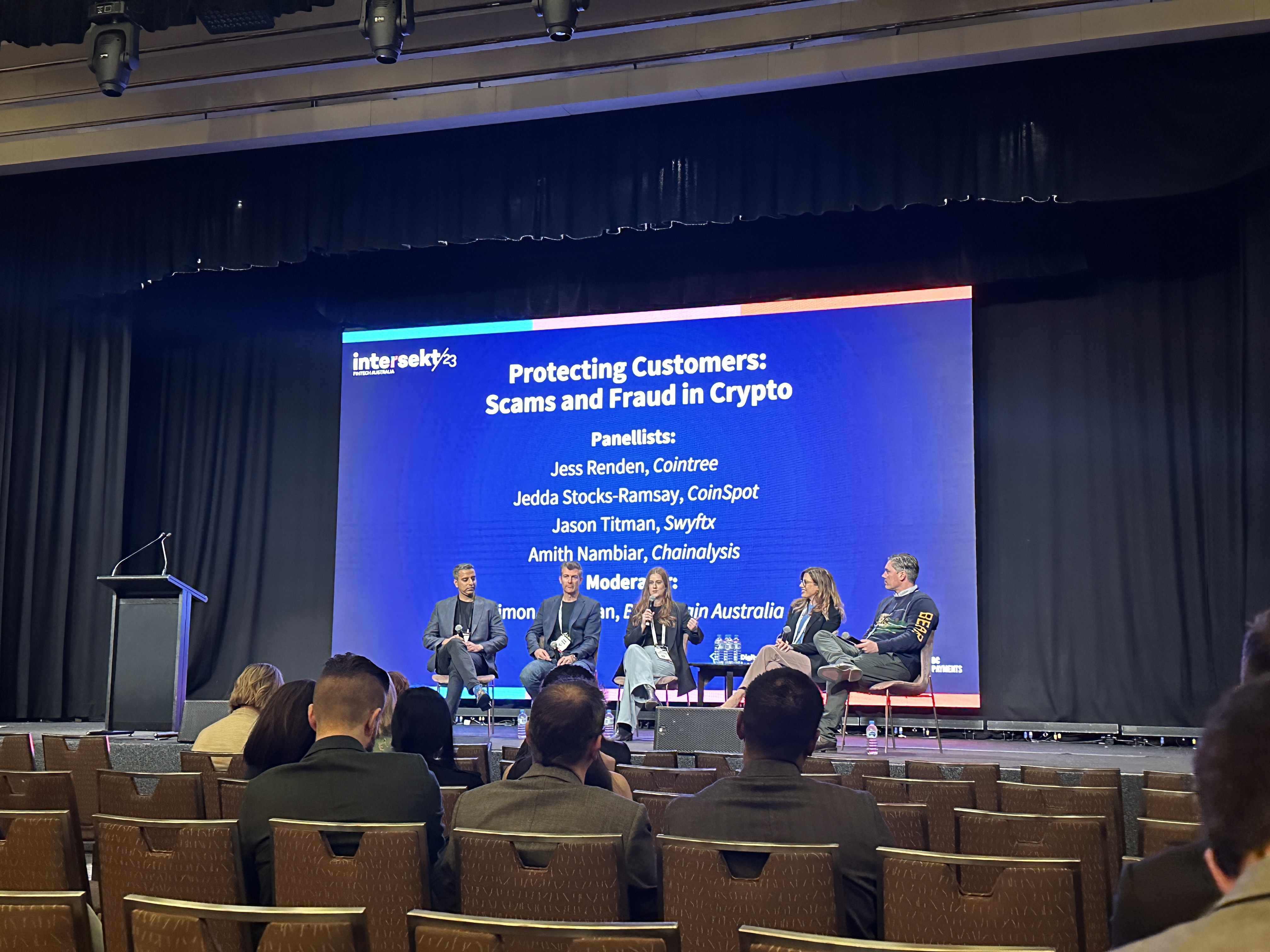 Cointree, CoinSpot, Swyftx, and Chainalysis executives at Intersekt 2023. Source: Cointelegraph
As per CoinSpot’s AML officer Jedda Stocks-Ramsay, the firm has placed significant emphasis on “just talking” to its customers, finding it to be highly effective.
“We find that we’ll engage with our customers at least once throughout their relationship or the duration of their account with us,” Stocks-Ramsay remarked. He emphasized that discussing scams is vital due to the social engineering component involved.
Stocks-Ramsay indicated that CoinSpot has particularly concentrated on aiding customers in comprehending the trust issues that scammers try to establish with their victims. He pointed out that scammers frequently spend extensive time on calls with victims, and a straightforward email from the exchange could help users avoid this situation entirely. He added:
“One really effective way we find of breaking that trust or at least planting the seed for the victim to question it is talking to them and giving them that human element because that’s what the scam is doing.”
In addition to communication, education is another critical aspect of safeguarding crypto users, as noted by Swyftx executive Jason Titman. He highlighted that often, individuals fall prey to disclosing personal information and passwords to scammers due to insufficient education.
Related Posts
“It’s always been important because, as this is a new asset class, we’ve been educating our customers, particularly on matters that are very relevant and significant,” he stated.
The panelists also underscored the necessity of educating users beyond the cryptocurrency sector.
Cryptocurrency is “just one industry within the scams ecosystem,” Stocks-Ramsay remarked, noting that numerous other sectors are implicated in crypto scams, including social media, banking, telecommunications, and more.
Related: Thailand threatens Facebook over crypto scams and other fraudulent ads
Cointree CEO Jess Renden concurred with the CoinSpot executive, emphasizing that cryptocurrency scams are “not crypto’s fault.” She mentioned that crypto firms in Australia have been proactively engaging with regulators and other businesses, including telecommunications and social media companies, adding:
“Our industry is constantly sort of badgered saying that it’s our fault and it’s up to us. And I think all of you today have seen the measures we go through to try and protect customers.
This information comes a few months after major banks in Australia claimed that 40% of scams involve cryptocurrency, which was used to justify certain local banks’ decisions to limit specific crypto transactions due to scams in early June 2023.
Data from the Australian Competition and Consumer Commission indicates that local individuals lost approximately $150 million from investments where cryptocurrency was utilized as the payment method in 2022. This figure represents an increase of over 160% compared to 2021.
Additional reporting by Cointelegraph author Tom Mitchelhill.
Magazine: How to protect your crypto in a volatile market — Bitcoin OGs and experts weigh in
