Disclaimer: Information found on CryptoreNews is those of writers quoted. It does not represent the opinions of CryptoreNews on whether to sell, buy or hold any investments. You are advised to conduct your own research before making any investment decisions. Use provided information at your own risk.
CryptoreNews covers fintech, blockchain and Bitcoin bringing you the latest crypto news and analyses on the future of money.


Bitcoin (BTC) miners have secured a profit margin of approximately 37% from mining operations since the network’s inception, according to new data.
Calculations by on-chain analytics firm Glassnode indicate that since 2010, block rewards and transaction fees have generated over $50 billion in net revenue for miners.>
Bitcoin miner revenue surpasses $50 billion
Amid ongoing discussions regarding miner costs and their vulnerability to Bitcoin price declines, new figures demonstrate that miners remain profitable in the long term.
According to Glassnode, miners’ total all-time income is nearly 40% higher than their estimated costs, totaling $50.2 billion compared to $36.6 billion.
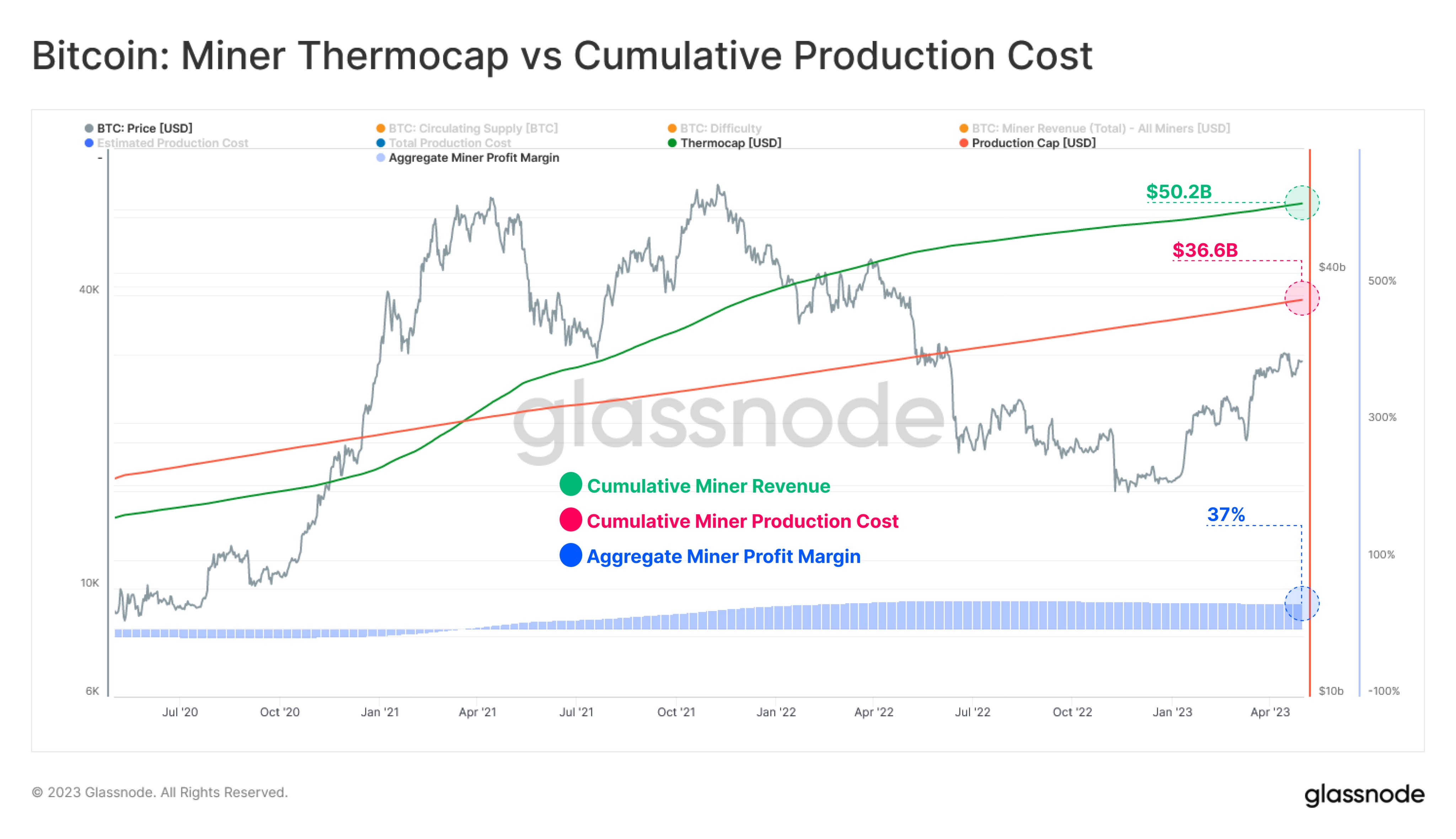
Bitcoin miner thermocap vs. cumulative production cost annotated chart. Source: Glassnode/ Twitter
Researchers derived these figures using two primary metrics: thermocap and transaction fees, defined as “the cumulative sum of issuance multiplied by spot price in addition to all-time generated fee revenue,” alongside difficulty production cost.
In a dedicated report released in late March, Glassnode detailed the nuances behind these calculations, confirming that the 37% profit margin persists.
“In this model, the Thermocap and Transaction Fees can be considered the realized revenue by miners, whilst the Difficulty Production Cost is considered the aggregate mining input expense,” the report states.
These results counter concerns that a low BTC/USD price could trigger mass capitulation across the mining industry, which continues to expand.
Bitcoin network fundamentals support this outlook, with both difficulty and hash rate reaching new all-time highs throughout 2023.
However, current estimates from BTC.com suggest that this week’s difficulty adjustment will be the first negative one for Bitcoin since mid-February 2023.
Related Posts
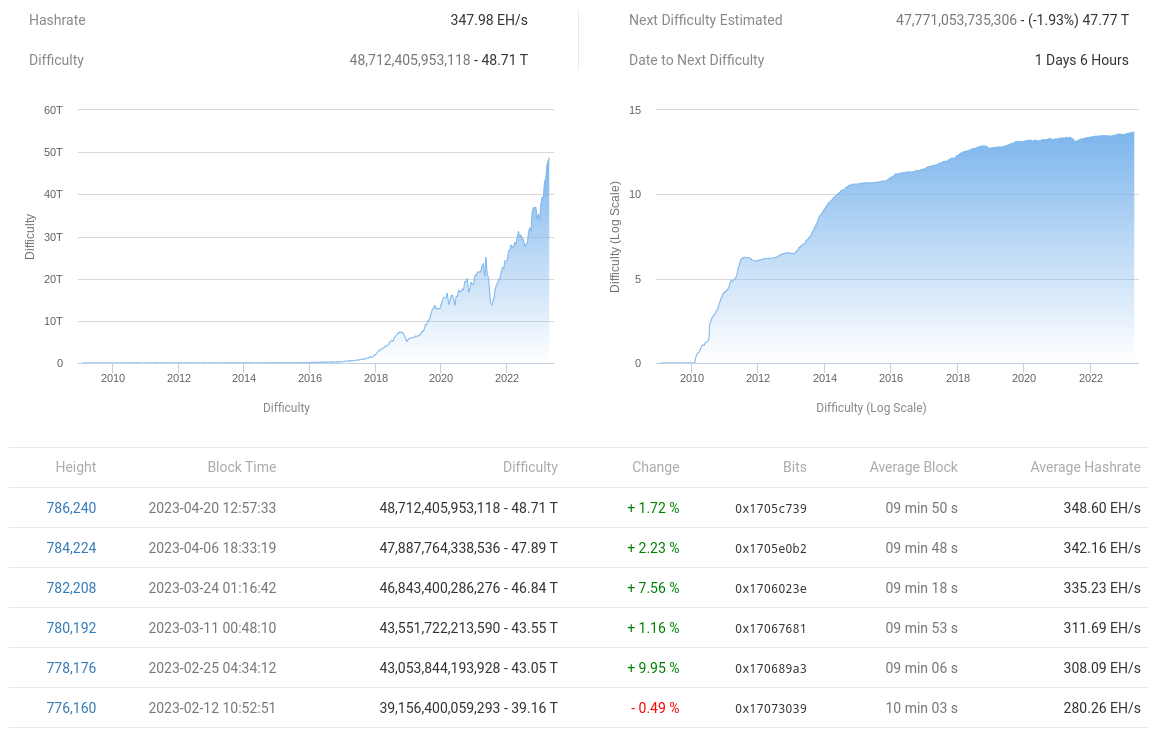
Bitcoin network fundamentals overview chart (screenshot). Source: BTC.com
Bitcoin transaction fees surge
Meanwhile, an influx of newly created unspent transaction outputs (UTXOs) driven by Ordinals is making on-chain transactions less economical this month.
Related: BTC price may need a $24.4K dip as Bitcoin speculators stay in profit
Glassnode data shows that created UTXOs spiked to their highest levels since 2015 in May, leading to a corresponding rise in fees.
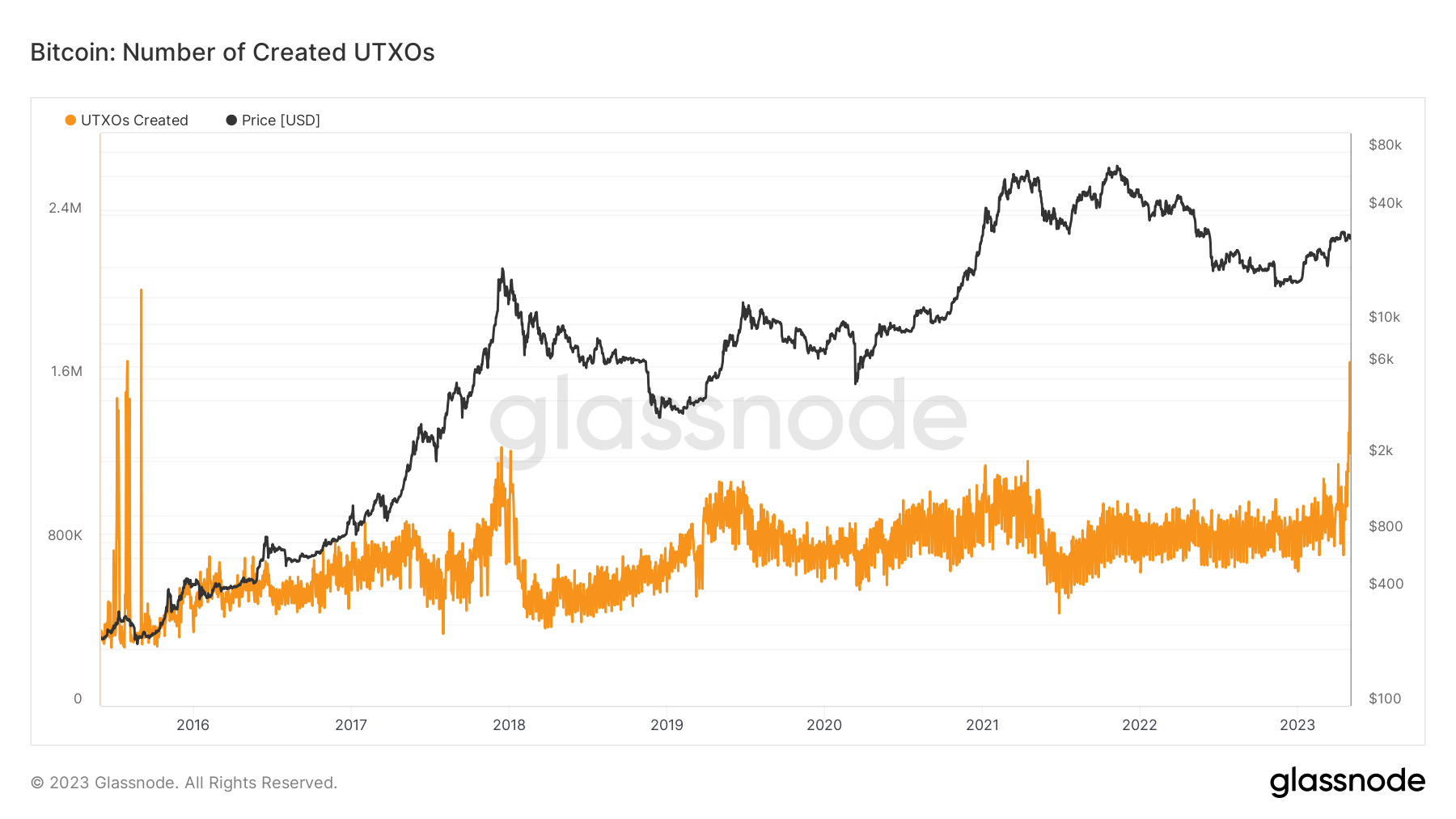
Bitcoin number of created UTXOs chart. Source: Glassnode
Blockchain.com reports that the 1-day moving average transaction fee rate reached $6.91 on May 2, a level not seen since July 2021.
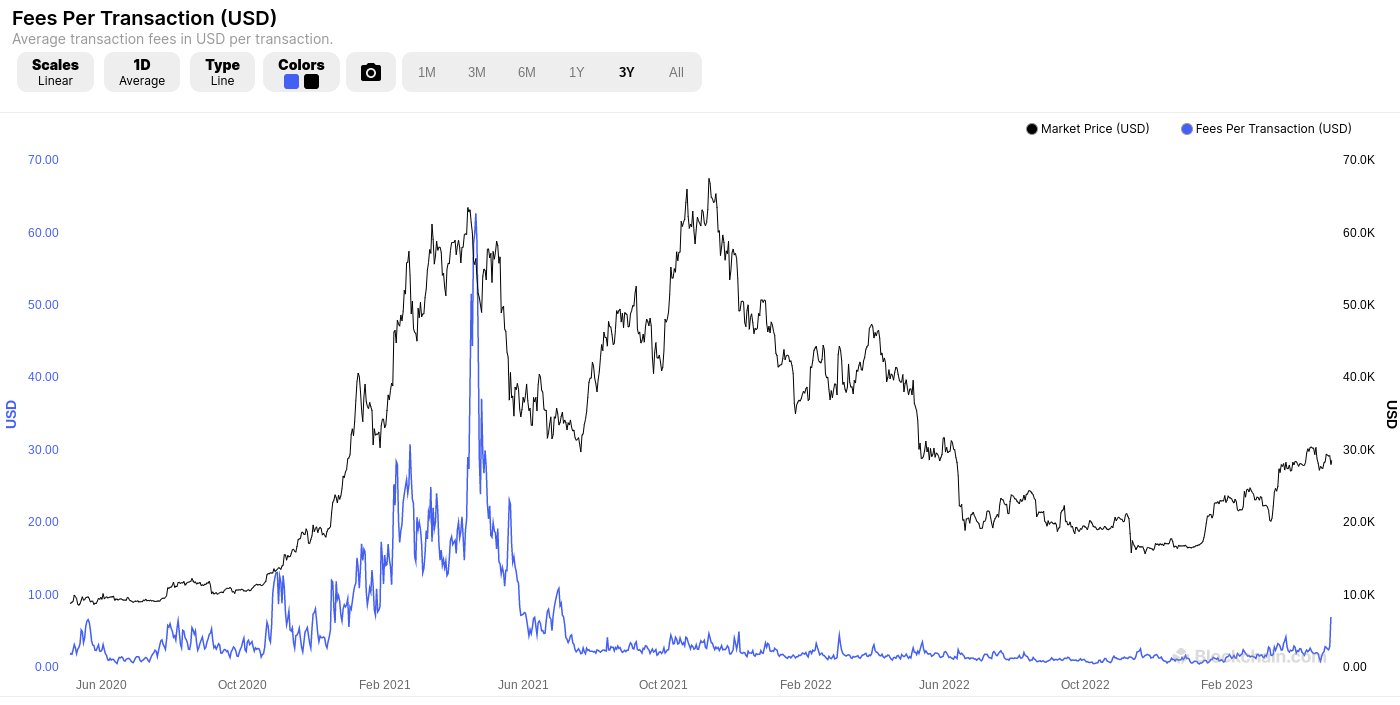
Bitcoin fees per transaction 1-day average chart (screenshot). Source: Blockchain.com
Magazine: How to control the AIs and incentivize the humans with crypto
This article does not contain investment advice or recommendations. Every investment and trading move involves risk, and readers should conduct their own research when making a decision.
