Disclaimer: Information found on CryptoreNews is those of writers quoted. It does not represent the opinions of CryptoreNews on whether to sell, buy or hold any investments. You are advised to conduct your own research before making any investment decisions. Use provided information at your own risk.
CryptoreNews covers fintech, blockchain and Bitcoin bringing you the latest crypto news and analyses on the future of money.

Bitcoin drops below $71,000, while stocks finish at session lows as expectations for a 2026 Federal Reserve rate reduction diminish.

Federal Reserve Chair Jerome Powell indicated that increasing energy costs are influencing the inflation forecast, yet "nobody knows" at this point how enduring the effects will be.
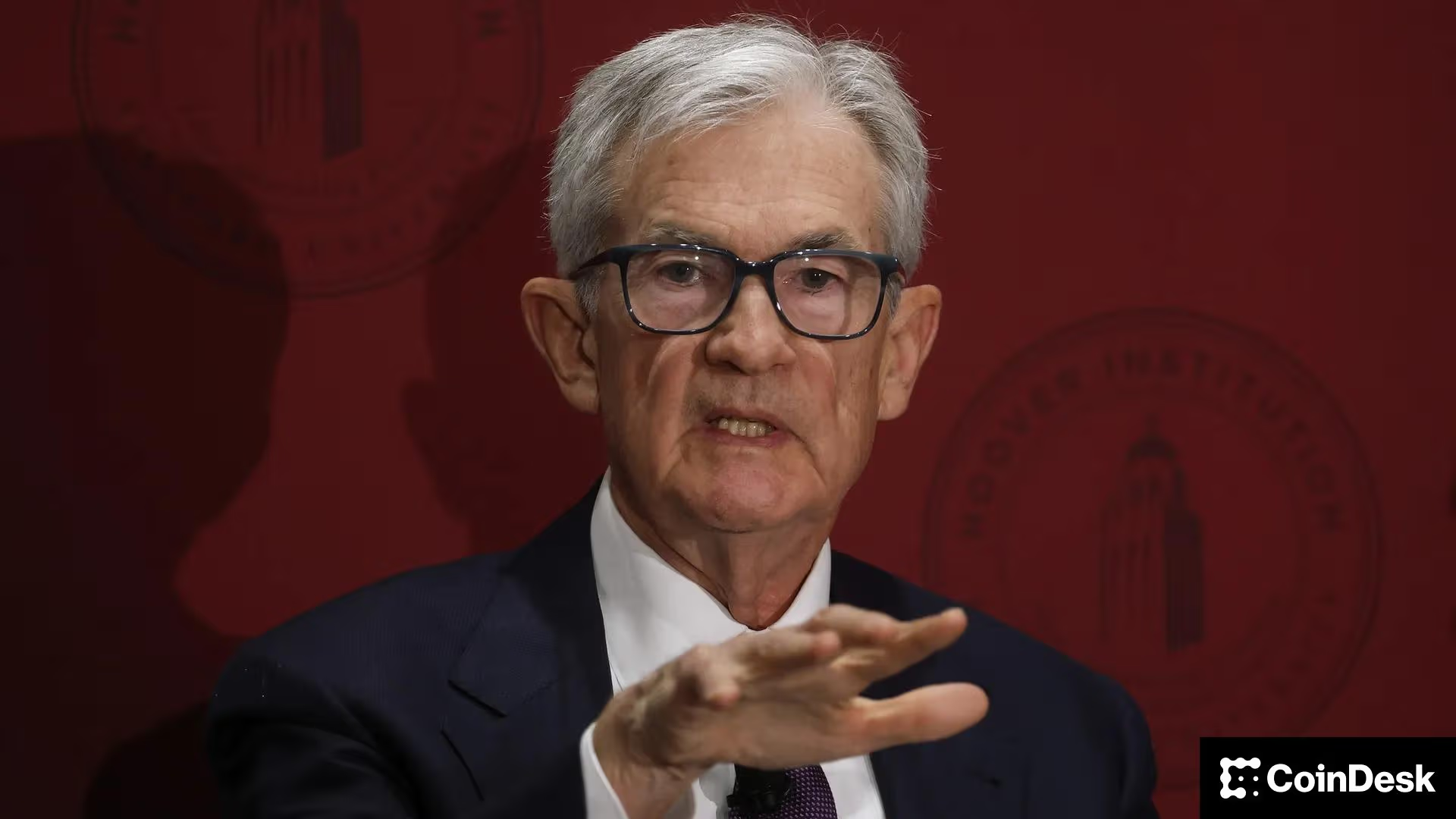 Federal Reserve Bank Chair Jerome Powell (Justin Sullivan/Getty Images)
Key points:
- Federal Reserve Chair Jerome Powell noted that increasing oil prices "for sure showed up" in policymakers’ heightened inflation forecast for this year, raising their prediction to 2.7% from 2.4%.
- He countered comparisons to stagflation from the 1970s, asserting that unemployment is close to long-term averages and inflation is only slightly above the target.
- Markets declined further after the Fed meeting outcomes and Powell’s press conference, with bitcoin falling back to $70,900 and the Nasdaq closing at its session low, down 1.5%.
Bitcoin dipped below $71,000 on Wednesday as Federal Reserve Chair Jerome Powell highlighted rising oil prices amid the ongoing conflict in Iran as a new inflation concern.
The Fed maintained interest rates at their current levels as anticipated, but during his post-meeting press conference, Powell acknowledged that the recent spike in energy prices is already influencing the central bank’s projections.
"The oil shock for sure shows up" in elevated inflation forecasts, he remarked, while warning that "nobody knows" how long the effects will persist.
Policymakers increased their 2026 inflation prediction to 2.7% from 2.4%, emphasizing worries that price pressures may stay high longer than expected.
Related Posts
Nevertheless, Powell dismissed the idea of stagflation reminiscent of the 1970s, even as the central bank grapples with increasing tension between slow growth and persistent inflation.
"That’s not the case right now," he stated, pointing out that unemployment is close to long-term averages while inflation is only slightly above the target. "I would reserve the term stagflation for a much more serious set of circumstances."
"What we have is some tension between the goals, and we’re trying to manage our way through it," he added.
Cautious markets
Already facing pressure prior to the Fed announcement due to disappointing February inflation data and no indication of progress in the conflict in Iran, markets dropped further late in the trading session.
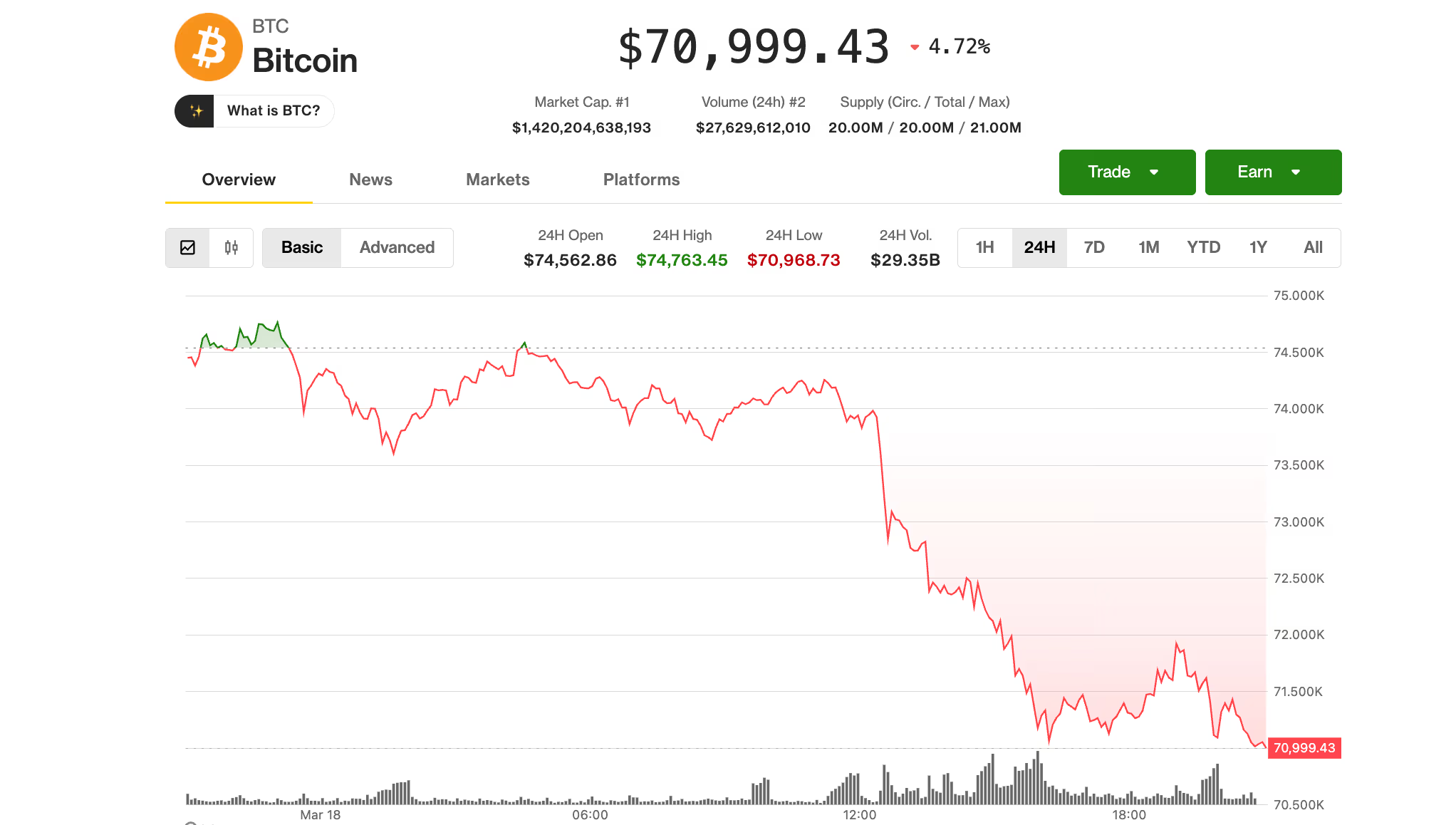 Bitcoin (BTC) price on Wednesday after FOMC (CoinDesk)
Bitcoin late Wednesday afternoon dropped to $70,900, reflecting a nearly 5% decrease over the past day. Ether (ETH) experienced a 6.5% drop.
The S&P 500 and Nasdaq finished at the day’s lows, declining 1.4% and 1.5%, respectively. Gold prices fell below $4,850 per ounce, marking a 3.1% decrease on the day, reaching their lowest price in over a month.
Stocks related to digital assets continued to decline sharply, following the trends in cryptocurrency prices. MicroStrategy (MSTR), the largest corporate BTC holder, and Bitmine (BMNR), a leading Ethereum treasury firm, saw declines of 5%-6%. Investment firm Galaxy (GLXY) dropped nearly 7%, while the crypto exchange Gemini (GEMI) plummeted 15%, nearing its lowest point since going public last year.
