Disclaimer: Information found on CryptoreNews is those of writers quoted. It does not represent the opinions of CryptoreNews on whether to sell, buy or hold any investments. You are advised to conduct your own research before making any investment decisions. Use provided information at your own risk.
CryptoreNews covers fintech, blockchain and Bitcoin bringing you the latest crypto news and analyses on the future of money.

The surge in ZKsync’s price on Upbit exchange has prompted an investigation., 2026/02/05 15:07:48

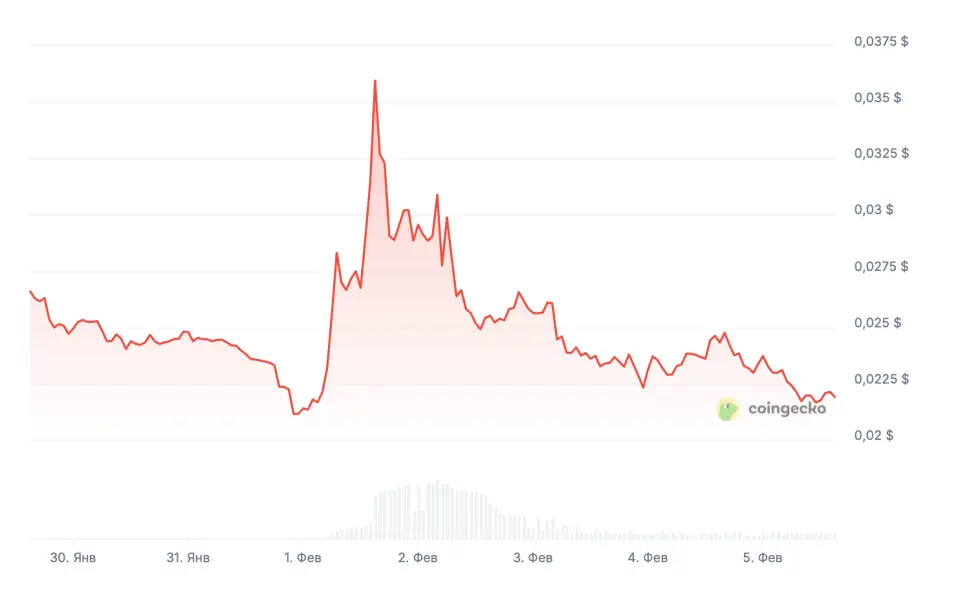
The Financial Security Service of South Korea (FSS) has initiated an investigation into suspicious activities on the cryptocurrency exchange Upbit: on February 1, the price of the ZKsync token from Matter Labs surged by 970% within just three hours.
Just prior to a scheduled maintenance on Upbit on Sunday, February 1, the token was trading at $0.023. At 11:30 AM KST, right before the maintenance began, the price sharply increased to $0.24. By 6:30 PM that same day, after the technical work on the exchange was completed, the price returned to its original level of $0.023.
Related Posts
The FSS is examining the theory that traders had preemptively created a so-called “buy wall” — that is, they placed numerous orders to purchase ZKsync. This was allegedly done to artificially inflate demand and significantly raise the asset’s price, according to officials.
According to CoinGecko, the trading volume of ZKsync on Upbit on February 1 increased by over 4000% — nearly 40% of all transactions involving ZKsync occurred there. In contrast, on the American exchange Coinbase, the volume rose by only 150%, and the token’s price on February 1 increased by less than 40%. In South Korea, the token is rarely traded in large volumes: on February 4, it accounted for less than 2% of the exchange’s daily turnover.
Such an artificial price spike may violate the user protection law for virtual assets enacted in 2023, according to lawyers interviewed by the Korean newspaper Hanguk Kyungjae. Under this law, those found guilty of manipulation could face imprisonment for over a year. The court is also authorized to impose a fine up to five times the amount of illegal profits obtained. If it is proven that other traders incurred losses due to manipulation, additional penalties may apply, stated Jin Hyeon-su, managing partner of the law firm Decent Law.
On February 1, there was a significant influx of buy orders for the token within a very short time frame, explains Jin Hyeon-su. Immediately afterward, there was a sharp drop in volume. The expert suggests that such actions are highly likely to be price manipulation, indicating collusion among participants and constituting unfair trading practices.
On February 4, a court in Seoul sentenced the CEO of an unnamed cryptocurrency asset management company, Jong-hwan Lee, to three years in prison. He was found guilty of manipulating the price of an unknown token on the Bithumb exchange in 2024.
