Disclaimer: Information found on CryptoreNews is those of writers quoted. It does not represent the opinions of CryptoreNews on whether to sell, buy or hold any investments. You are advised to conduct your own research before making any investment decisions. Use provided information at your own risk.
CryptoreNews covers fintech, blockchain and Bitcoin bringing you the latest crypto news and analyses on the future of money.

The sale of the Pikachu Illustrator card has sparked a debate over the fragmentation of tokenized assets., 2026/02/17 11:05:45

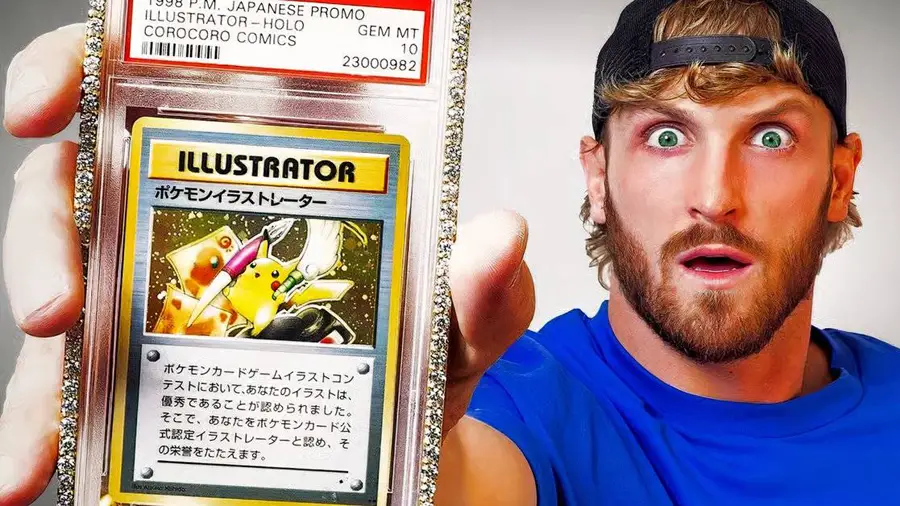
YouTube blogger Logan Paul sold a rare Pokémon card, the Pikachu Illustrator, for $16.5 million. This transaction ranks among the largest sales of collectible cards in history and has ignited significant controversy regarding the fragmentation of tokenized assets.
After deducting fees, Paul realized a profit of approximately $8 million, having purchased the card in July 2021 for $5.3 million. The buyer was AJ Scaramucci, the son of SkyBridge Capital founder Anthony Scaramucci.
However, critics pointed out that in 2022, Paul had offered investors on the Liquid Marketplace platform the opportunity to share ownership of the Pikachu Illustrator. Users could buy tokenized shares representing a portion of the card’s value and now hold rights to profits from its sale.
Related Posts
Subsequently, the platform was shut down, and investors encountered challenges when attempting to withdraw funds. This situation drew the attention of regulators: in June 2024, the Ontario Securities Commission filed a lawsuit against Liquid Marketplace, accusing its executives of misappropriating $3 million.
Notably, Logan Paul was not named as a defendant in the case. Last December, the blogger stated that he had repurchased the card from Liquid Marketplace and had no involvement in the investigation. Last week, he announced that users could now withdraw previously frozen funds.
Gabriel Shapiro, chief counsel at Delphi Labs, described the situation as a “fiasco of NFT fragmentation,” noting that such tokenization schemes can create confusion regarding ownership rights. He indicated that the tokens were linked to the underlying asset but did not grant holders any legal rights to it.
Paul responded to the criticism by asserting that the closure of Liquid Marketplace was due to circumstances beyond his control. Upon learning about the withdrawal issues, he funded the restoration of the site to enable users to reclaim their money. He stated that instead of the anticipated 51% ownership rights, only 5.4% of the card was fragmented, as investors contributed around $270,000.
It was previously reported that the global market for tokenized goods grew by 53% in less than six weeks, surpassing $6.1 billion. This represents the most dynamic segment of the real-world asset tokenization market.
